

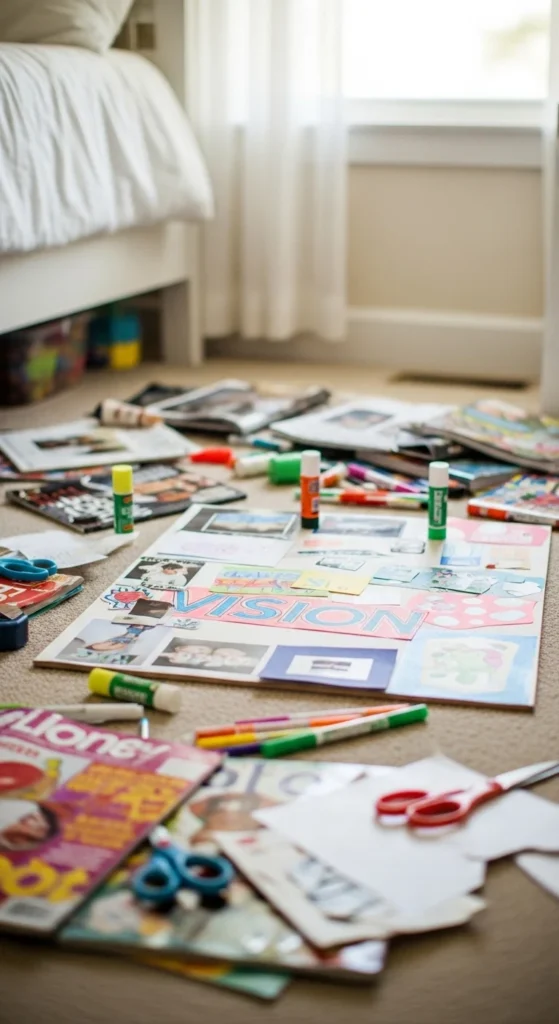
Helping kids imagine their future builds confidence and curiosity. Vision boards turn big dreams into something visual and playful. They allow children to explore interests, express personality, and set gentle goals without pressure. With simple craft supplies, families can create boards that spark motivation, creativity, and conversation. These ideas focus on affordable materials, easy activities, and realistic DIY approaches that make vision boards fun for every child.
1. Dream Job Vision Board
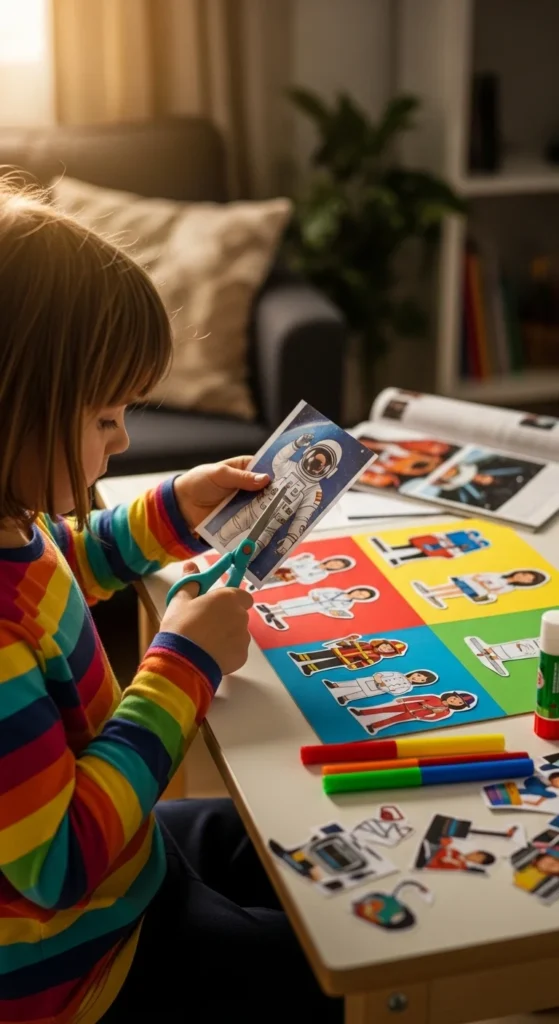
Kids enjoy imagining future careers. A dream job board lets them explore many possibilities in a playful way. Gather magazines, print images, or draw pictures of different roles. Ask what looks fun rather than what seems realistic.
Children can include uniforms, tools, workplaces, or people doing the job. This keeps the board visual and exciting. Add handwritten notes that explain why each idea feels interesting.
Encourage variety. Today they may want to be a vet. Tomorrow a game designer. That flexibility supports confidence and curiosity.
Budget tip: reuse newspapers, packaging photos, or free printable images. No need to buy special supplies.
Make space for updates. Leave blank areas so kids can add new ideas later. This keeps the board active and meaningful over time.
2. Favorite Hobbies Board
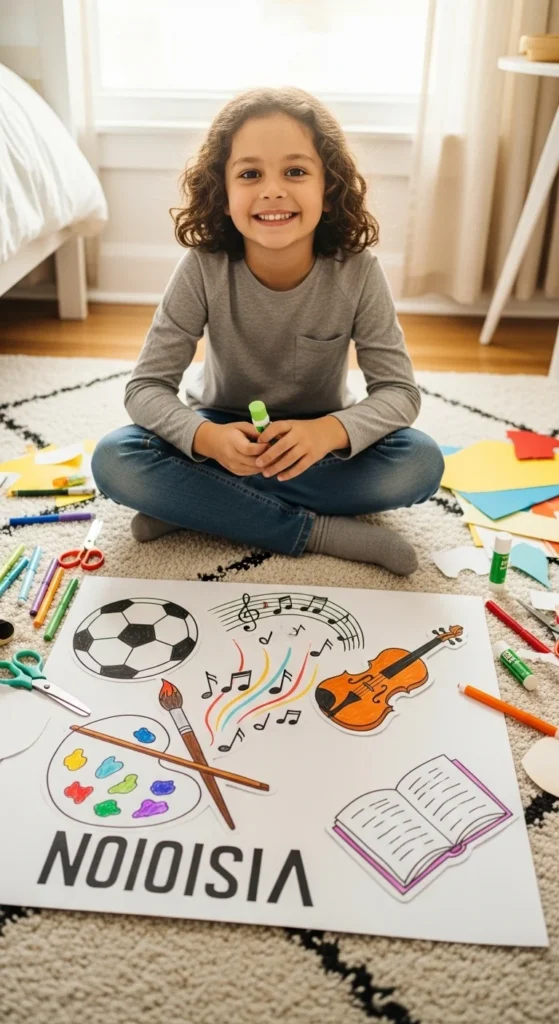
A hobbies board celebrates what kids love doing right now. It highlights activities that bring joy and helps them see patterns in their interests.
Start by listing favorite activities. Sports, drawing, building, dancing, or gaming. Find pictures or draw scenes that represent each hobby. Kids can also glue small objects like ribbon, yarn, or stickers.
This board works well for younger children because it focuses on the present. It also encourages trying new hobbies when space is left open.
Budget tip: print black-and-white images and let kids color them. It saves ink and adds creativity.
Rotate hobbies every few months. This keeps the board exciting and prevents it from feeling permanent. Kids learn that interests evolve, and that is completely normal.
3. Travel Dreams Board
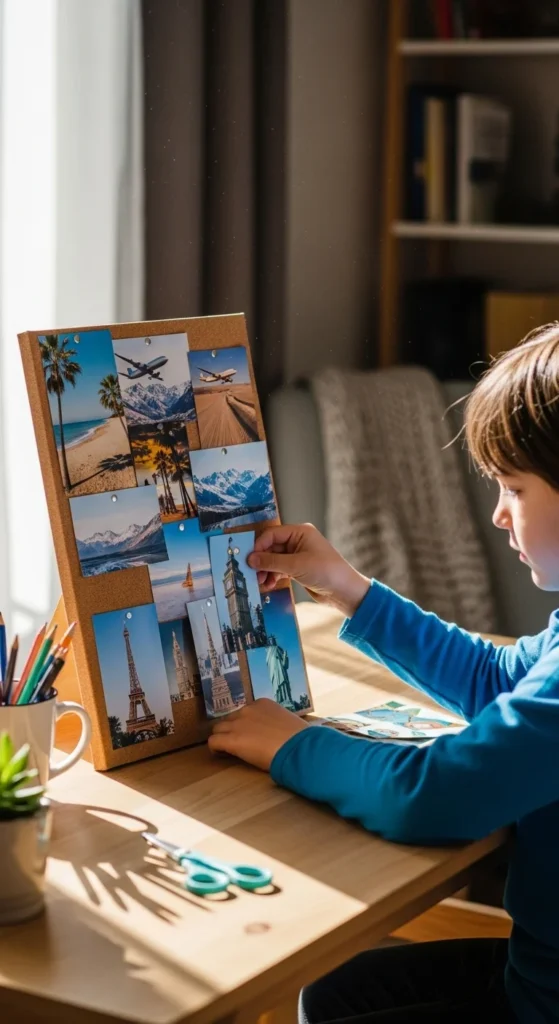
Travel boards expand imagination. Kids explore places they want to visit and cultures they find interesting.
Use maps, postcards, or printed photos. Children can draw foods, animals, or landmarks from each destination. This turns the board into a learning activity too.
Talk about what they would do in each place. Swim, explore, eat new foods, or meet new friends. These conversations build excitement.
Budget tip: old travel brochures are perfect and usually free. Libraries also have magazines that work well.
Encourage storytelling. Kids can describe their dream trip next to each image. Writing short notes builds creativity without pressure.
4. Friendship Goals Board
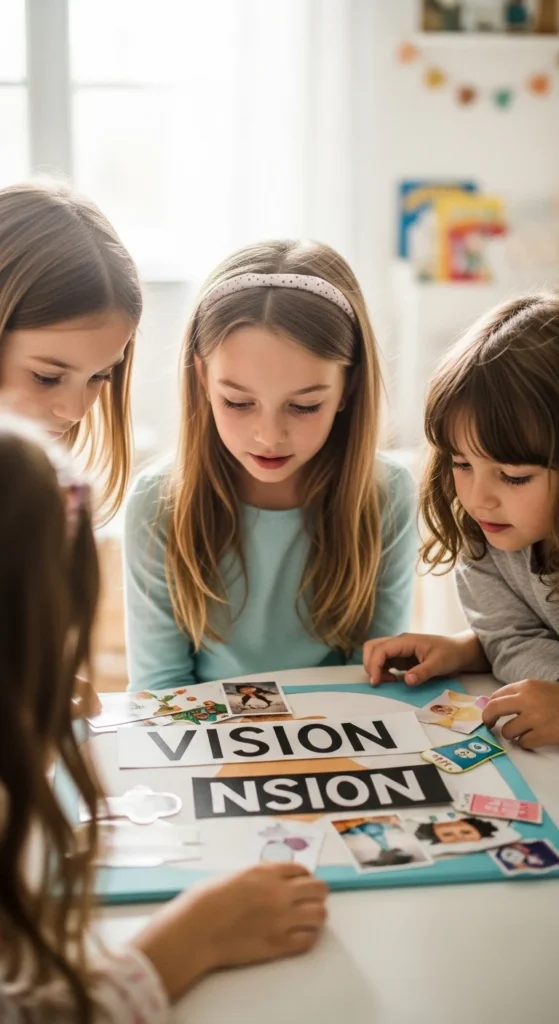
Friendship boards focus on social growth. They help kids think about how they want to treat others and what good friendship looks like.
Include pictures showing teamwork, kindness, laughter, and shared activities. Kids can draw moments with friends or write simple phrases.
This board works well for emotional learning. It opens conversations about empathy, respect, and communication.
Budget tip: use printed emojis or simple drawings instead of buying stickers.
Encourage kids to update the board after positive experiences. Adding memories makes it meaningful and personal.
5. Creative Skills Board
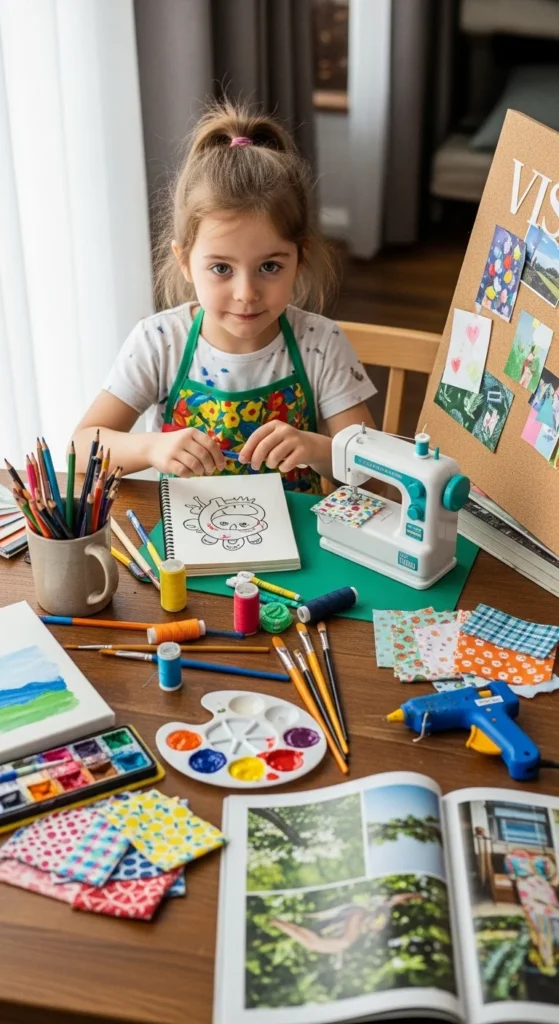
A creative skills board highlights things kids want to learn. Drawing, baking, crafting, coding, or photography all fit here.
Use step-by-step images showing progress. For example, beginner drawings next to advanced ones. This shows growth visually.
Kids can add a practice checklist using sticky notes. Moving notes creates motivation without pressure.
Budget tip: print small images to save paper. Kids can decorate around them.
This board works best near a workspace. Seeing it often reminds children to practice little by little.
6. Reading Goals Board
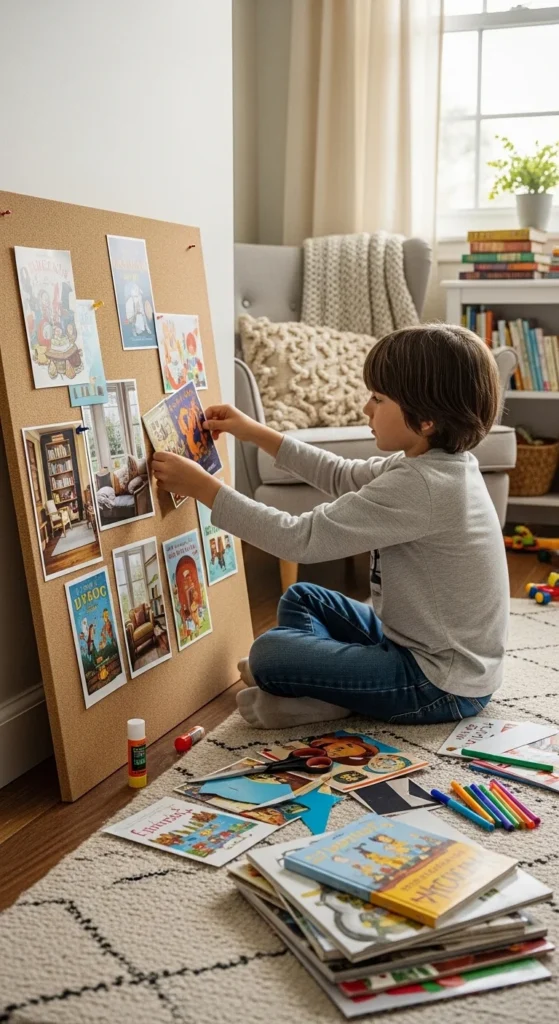
A reading board encourages curiosity about books. Kids can include stories they want to read, favorite characters, or cozy reading spaces.
Draw shelves, bookmarks, or reading corners. Visual cues make reading feel inviting rather than required.
Budget tip: libraries provide free book lists and magazines that can be cut out.
Track finished books by adding stars or stickers. This creates a simple reward system that feels fun.
The board grows over time. New titles can replace old ones, keeping excitement alive.
7. Kindness Vision Board
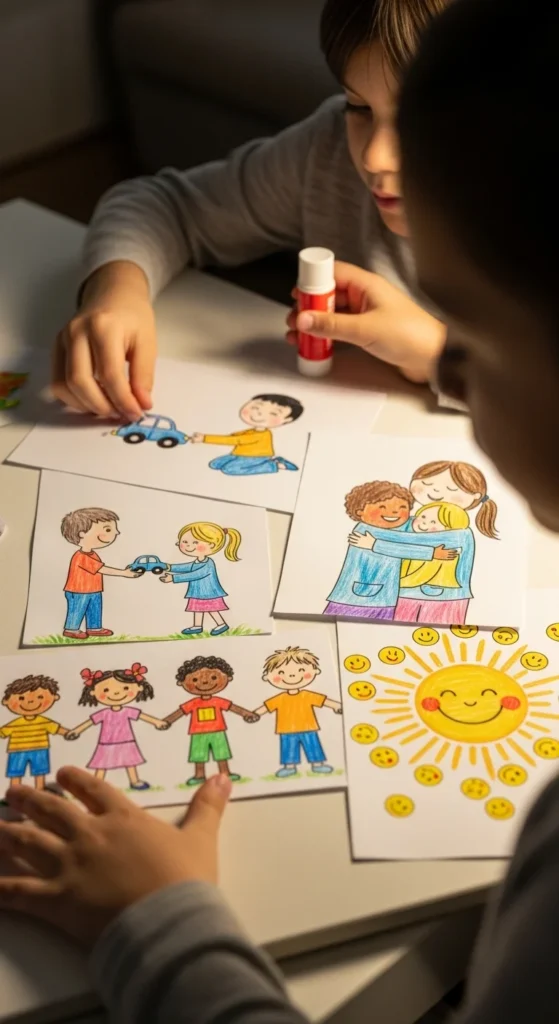
Kindness boards focus on actions. Kids choose ways they want to treat others daily.
Include small acts like helping at home, sharing toys, or writing notes. Visual reminders support habit building.
Use drawings instead of photos if needed. Personal artwork makes the board more meaningful.
Budget tip: reuse scrap paper for drawing kindness scenes.
Celebrate real moments by adding new pictures or notes. This helps children connect actions with feelings.
8. Confidence Board
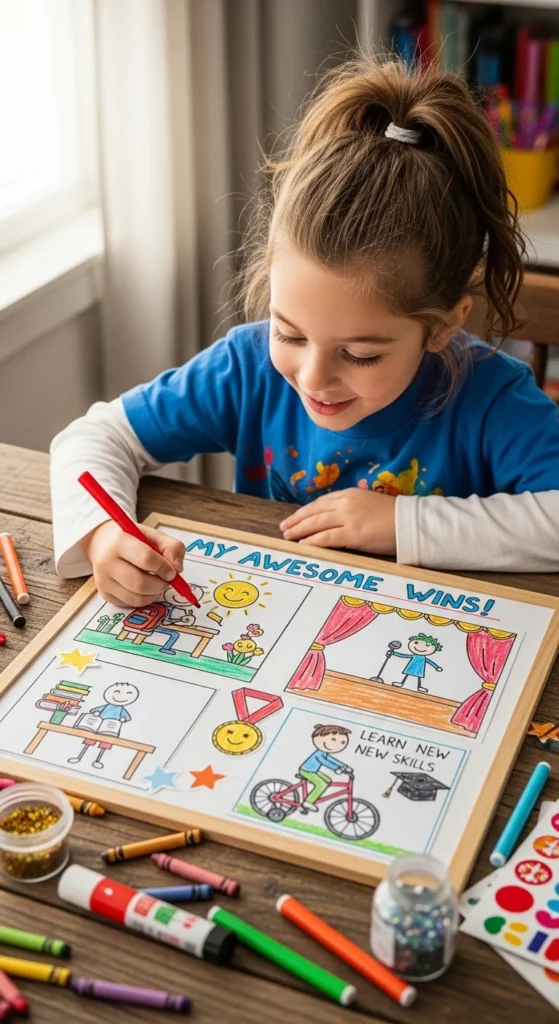
Confidence boards show what kids can do. Include achievements, proud moments, and skills they want to grow.
Photos from school events work well. Kids can also draw themselves succeeding.
Budget tip: print photos in small sizes to save ink.
Encourage kids to add wins weekly. Even small progress matters. This keeps the board encouraging rather than overwhelming.
9. Healthy Habits Board
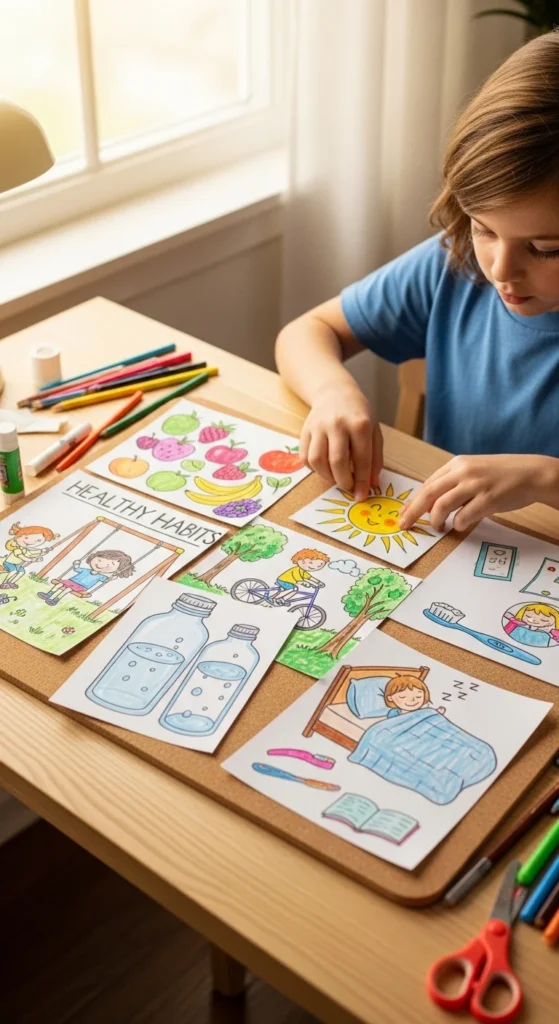
Healthy habits boards help kids visualize daily routines. Include sleep, movement, food, and self-care.
Use icons and simple drawings. Visual reminders are easier than written lists.
Budget tip: cut food images from grocery flyers.
Add check marks using removable stickers. Kids enjoy tracking habits visually.
10. Learning Goals Board
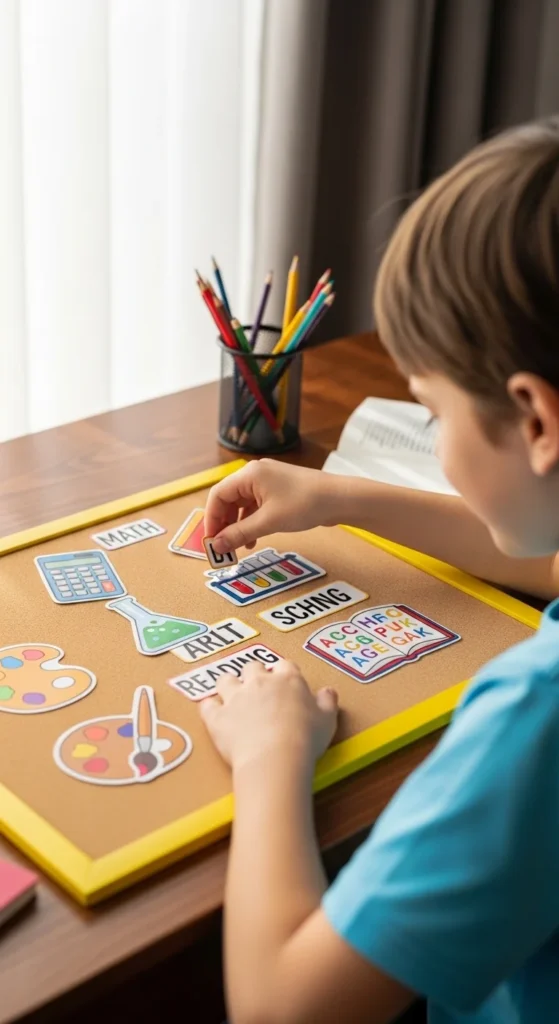
A learning board highlights skills kids want to improve. Focus on curiosity rather than pressure.
Include subjects, projects, or experiments. Kids can draw goals instead of writing them.
Budget tip: print icons instead of full photos.
Leave space for completed projects. Seeing progress builds motivation naturally.
11. Adventure Board
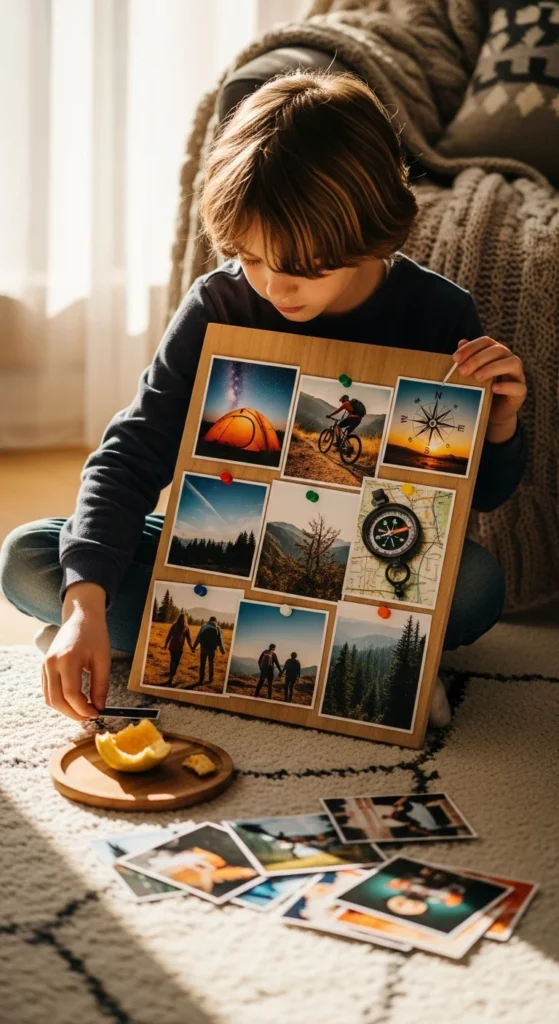
Adventure boards spark excitement about experiences. Include nature, activities, and local trips.
Kids can draw future outings with family. This makes planning collaborative.
Budget tip: reuse old calendars with nature photos.
Add check marks after each adventure. The board becomes a memory space.
12. Family Memories Board
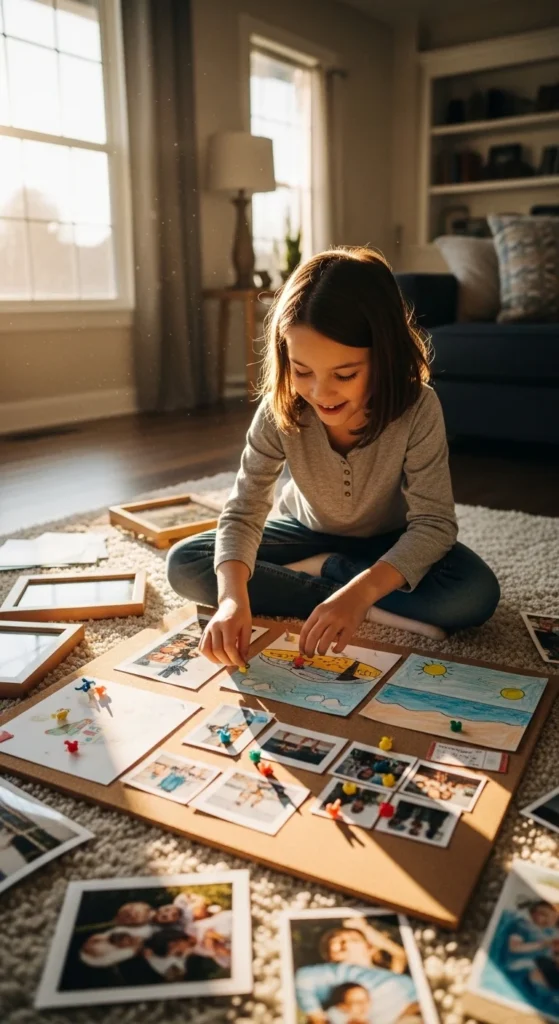
Family boards highlight connection. Use printed photos, drawings, or memory notes.
Kids enjoy adding moments after events. This builds gratitude and storytelling skills.
Budget tip: print photos in black and white.
Rotate old memories to keep the board active.
13. Pet Dreams Board
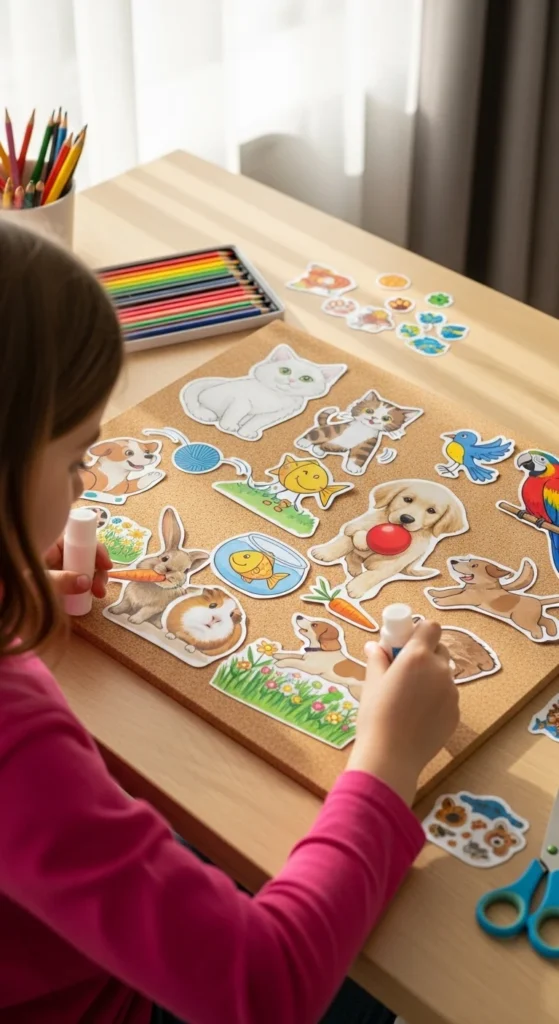
Pet boards explore animal interests. Include care tasks, favorite animals, or future pet ideas.
Kids can draw habitats or routines. This encourages responsibility.
Budget tip: use animal magazine cutouts.
Add care checklists using sticky notes.
14. Art Style Board
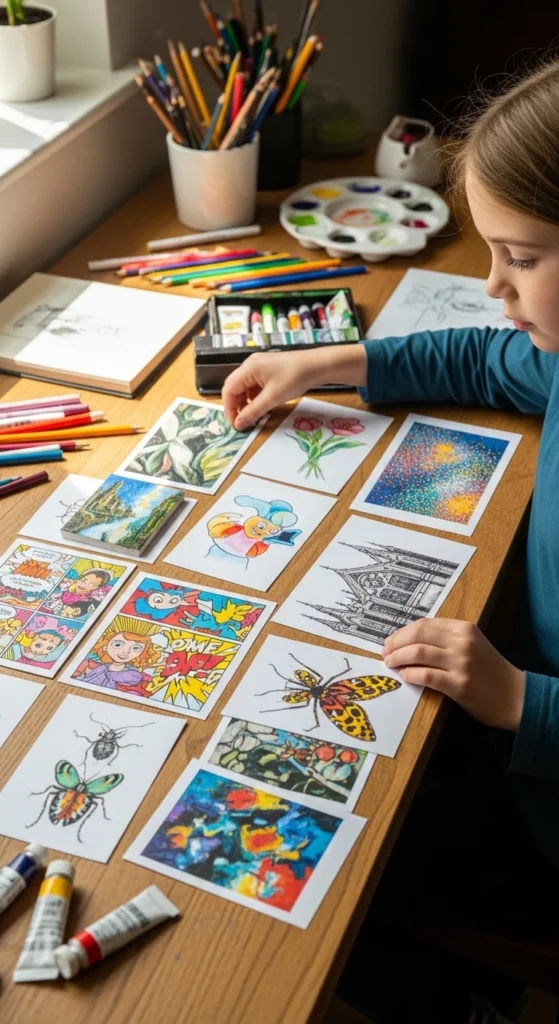
Art boards help kids explore style. Include colors, patterns, and artists they like.
Use swatches made from scrap paper. Kids experiment freely.
Budget tip: create color palettes from packaging.
Update often to reflect new interests.
15. STEM Dreams Board
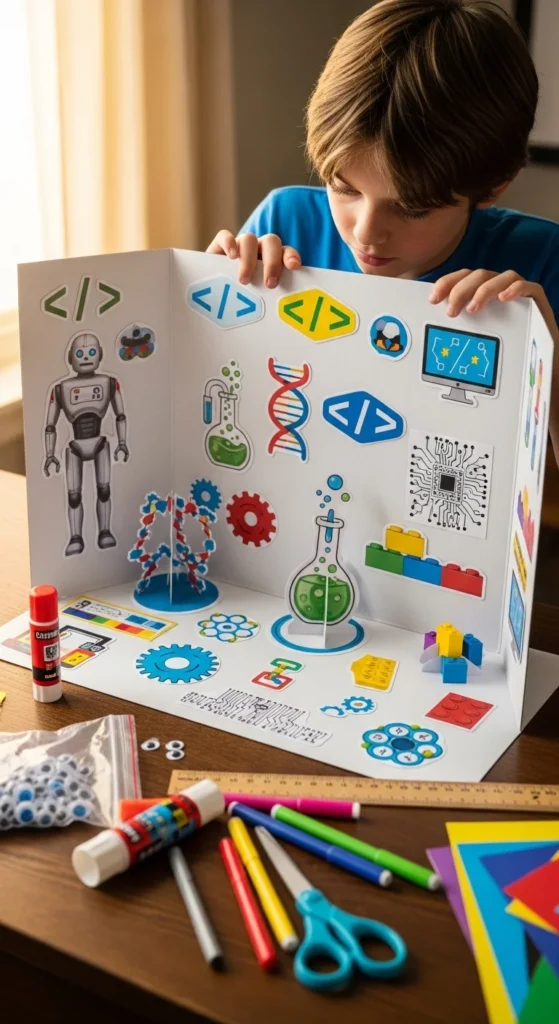
STEM boards focus on curiosity. Include experiments, building ideas, and problem solving activities.
Kids can draw inventions. This keeps imagination active.
Budget tip: print simple icons.
Add experiment photos after trying them.
16. Sports Goals Board
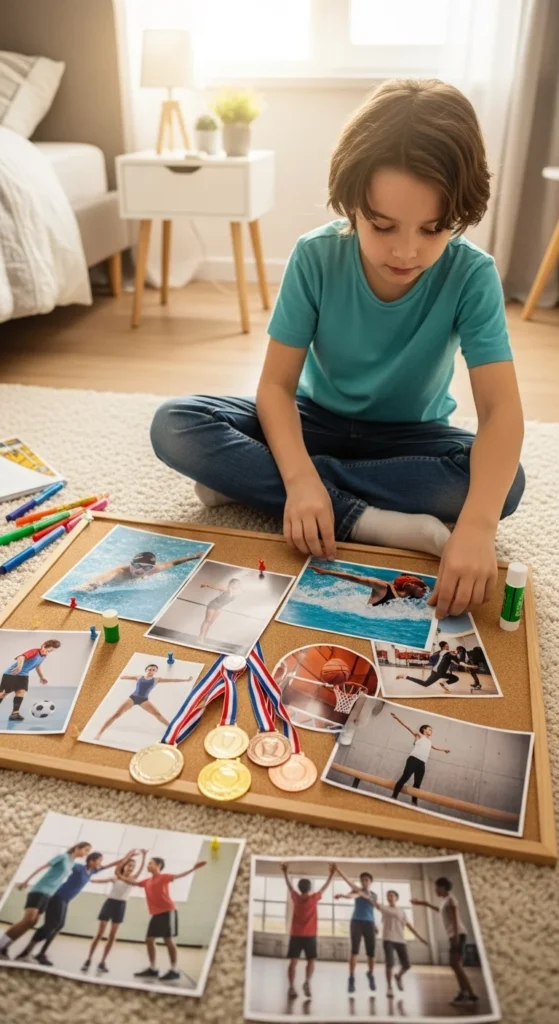
Sports boards highlight effort. Include practice scenes, role models, and skills.
Kids track practice using stickers. This feels playful.
Budget tip: reuse sports magazines.
Add milestones visually.
17. Music Dreams Board
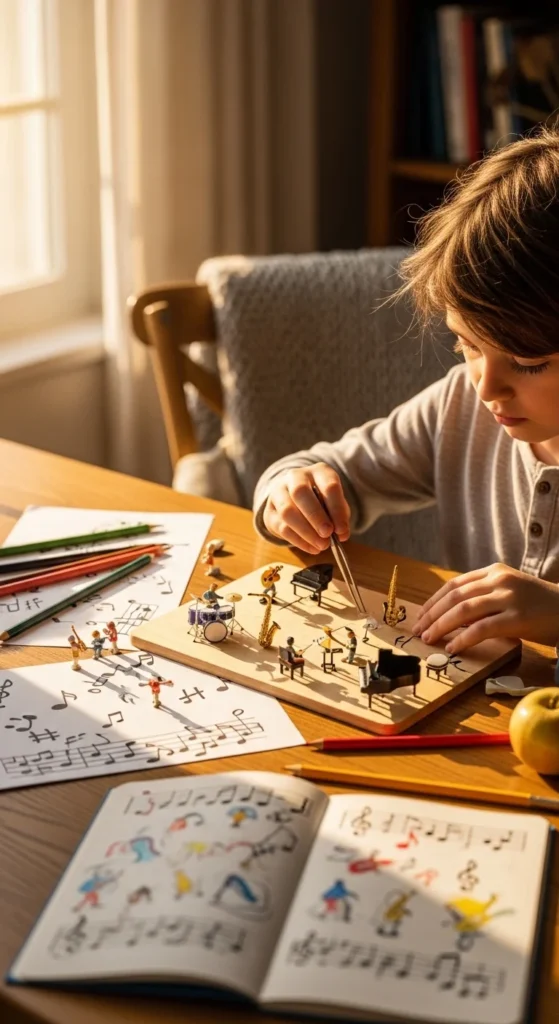
Music boards support creativity. Include instruments, practice spaces, and performance ideas.
Kids draw concerts or playlists visually.
Budget tip: print instrument outlines for coloring.
Track practice with stars.
18. Daily Routine Board
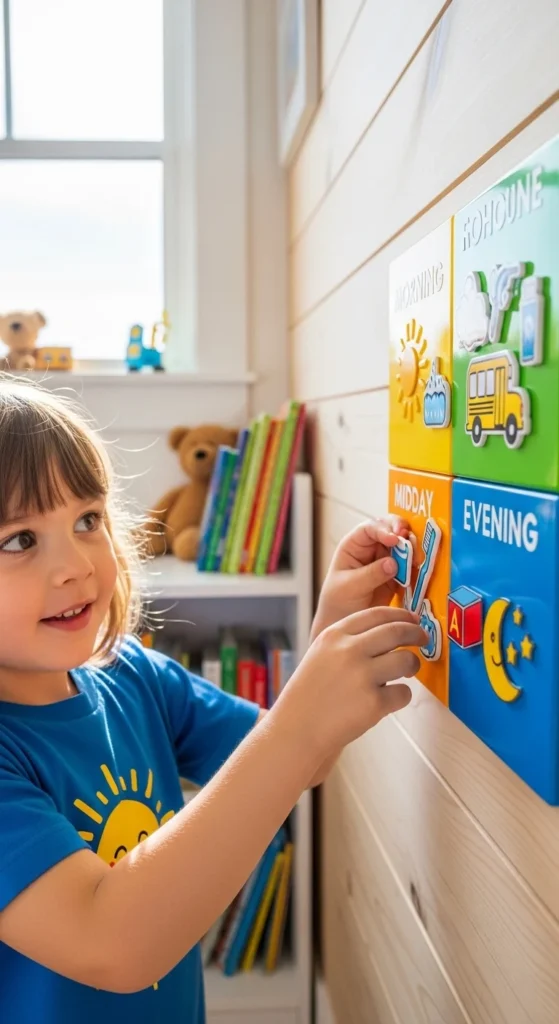
Routine boards help structure the day. Use icons rather than text.
Kids move pieces daily. This builds independence.
Budget tip: hand-draw icons.
Adjust routines as schedules change.
19. Dream Room Board
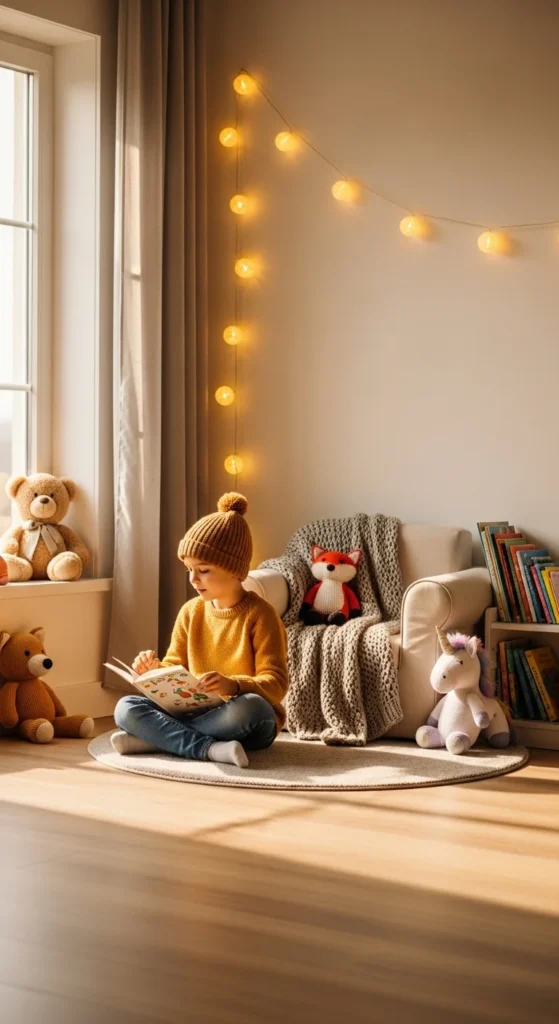
Dream room boards encourage creativity. Include colors, furniture ideas, and decor.
Kids design spaces visually.
Budget tip: use catalog images.
Pick one small idea to implement.
20. Seasonal Fun Board
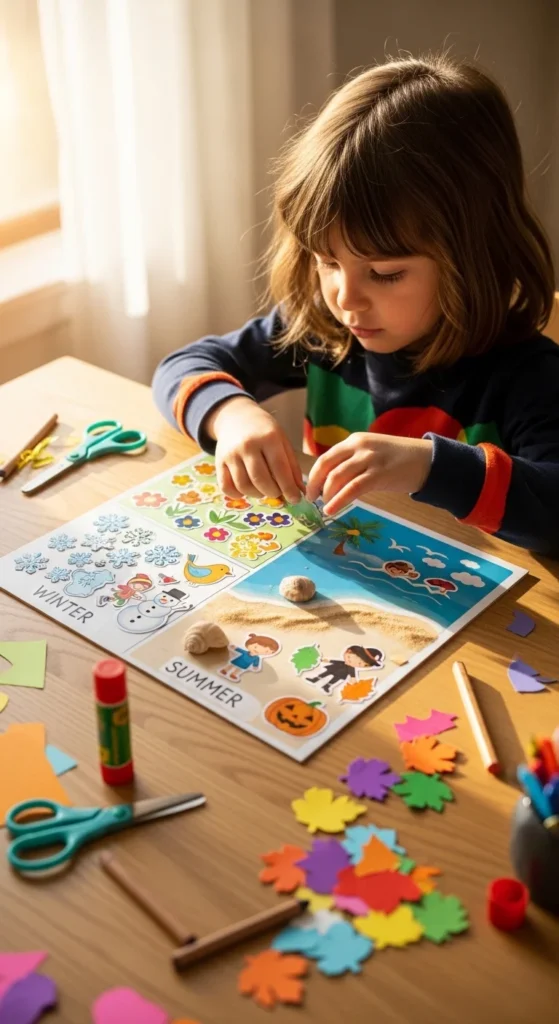
Seasonal boards keep excitement year round. Include activities for each season.
Rotate items as seasons change.
Budget tip: reuse holiday packaging images.
Add photos after activities.
21. Gratitude Board
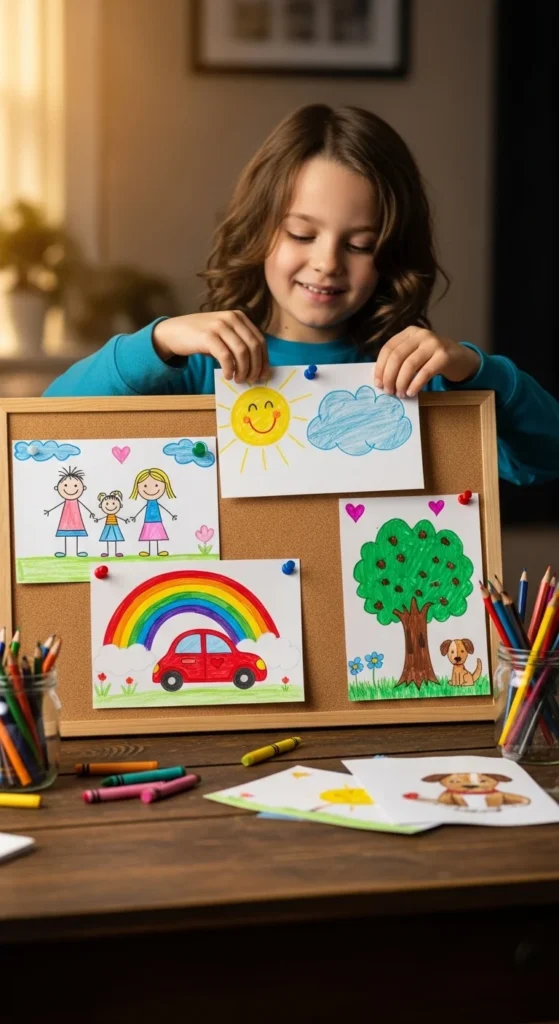
Gratitude boards highlight appreciation. Kids add moments that make them happy.
Use drawings or photos.
Budget tip: scrap paper works well.
Update weekly.
22. Skill Building Board
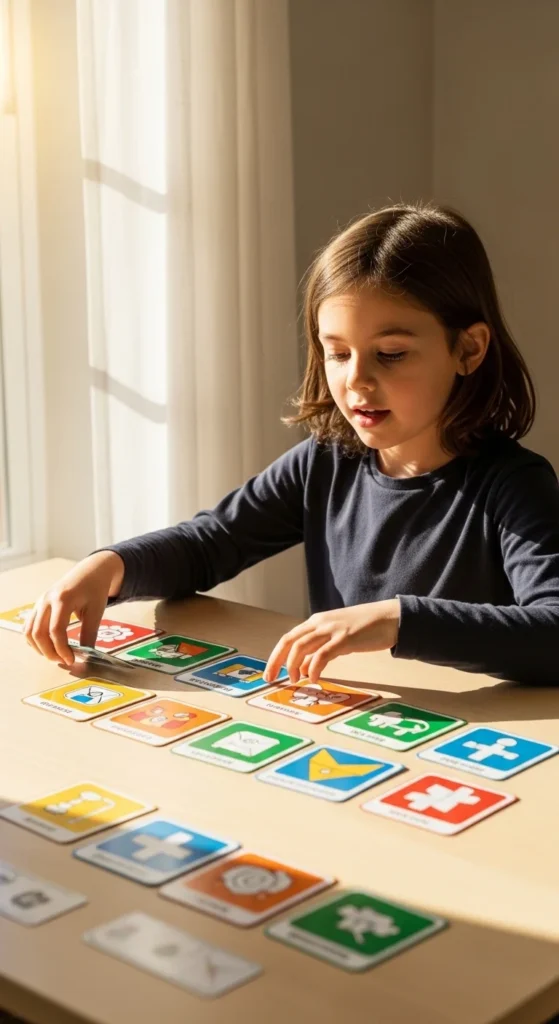
Skill boards show growth. Break skills into steps visually.
Kids mark progress with stickers.
Budget tip: print icons small.
Celebrate each step.
23. Dream Projects Board
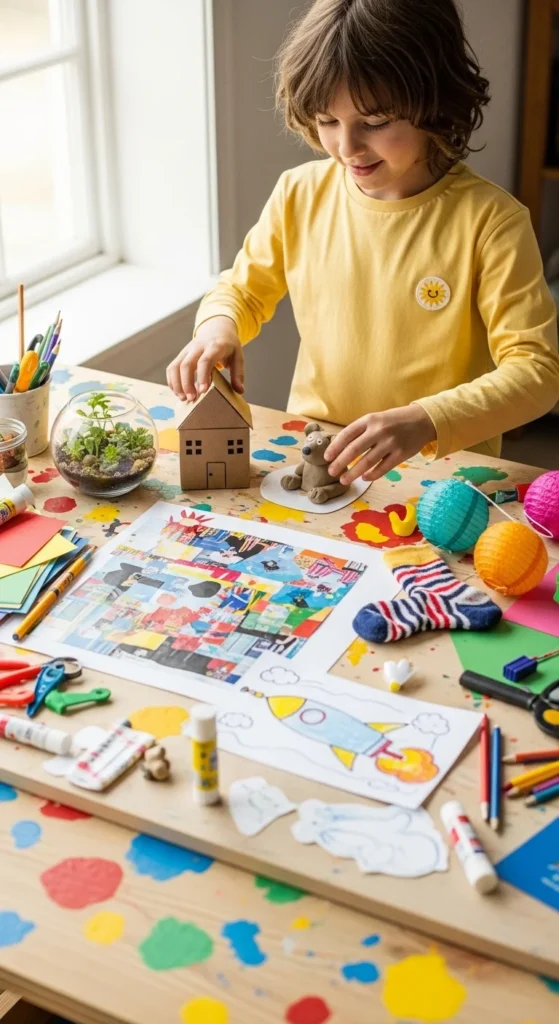
Project boards inspire making. Include craft ideas, builds, and experiments.
Kids choose one project at a time.
Budget tip: reuse packaging images.
Add completed project photos.
24. Imagination Story Board
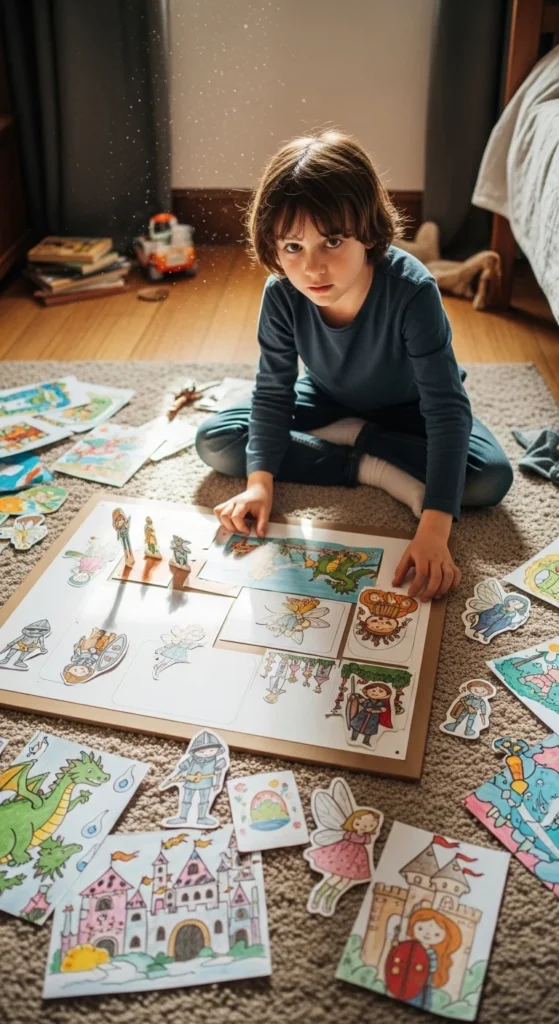
Story boards support creativity. Kids build visual stories using images and drawings.
Encourage storytelling aloud.
Budget tip: draw characters instead of printing.
Stories can change anytime.
25. Big Dreams Board
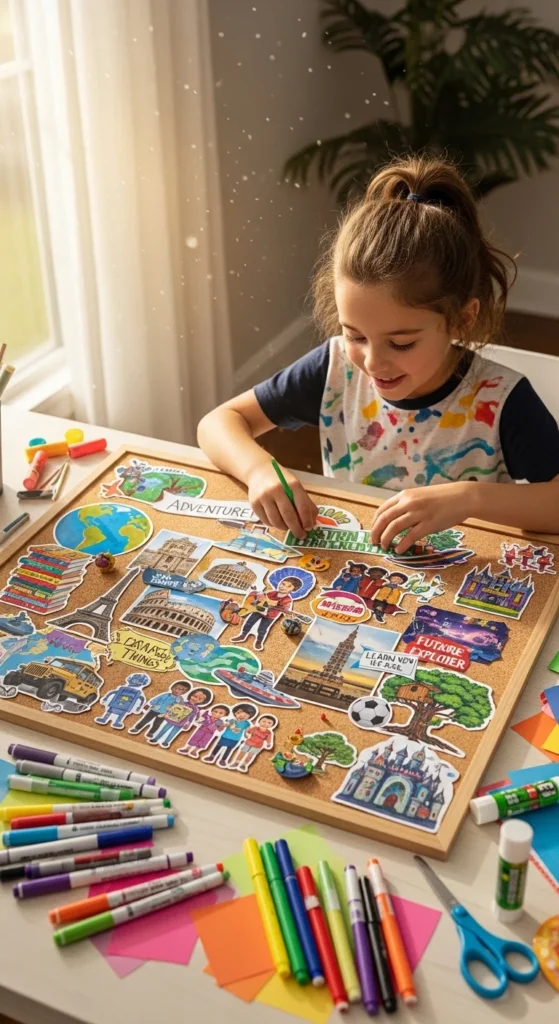
A big dreams board combines everything. It allows kids to explore many ideas without limits.
Mix goals, interests, and fun ideas. This keeps the board exciting.
Budget tip: reuse leftover materials from other boards.
Encourage updates often. Dreams change, and that is part of growth.
Conclusion
Vision boards give kids a visual way to explore dreams, interests, and goals. They create space for creativity, conversation, and growth using simple materials. Start small, keep it playful, and allow boards to change over time. The goal is expression, not perfection. When children see their ideas displayed, they build confidence and feel excited about what comes next.

Leave a Reply