

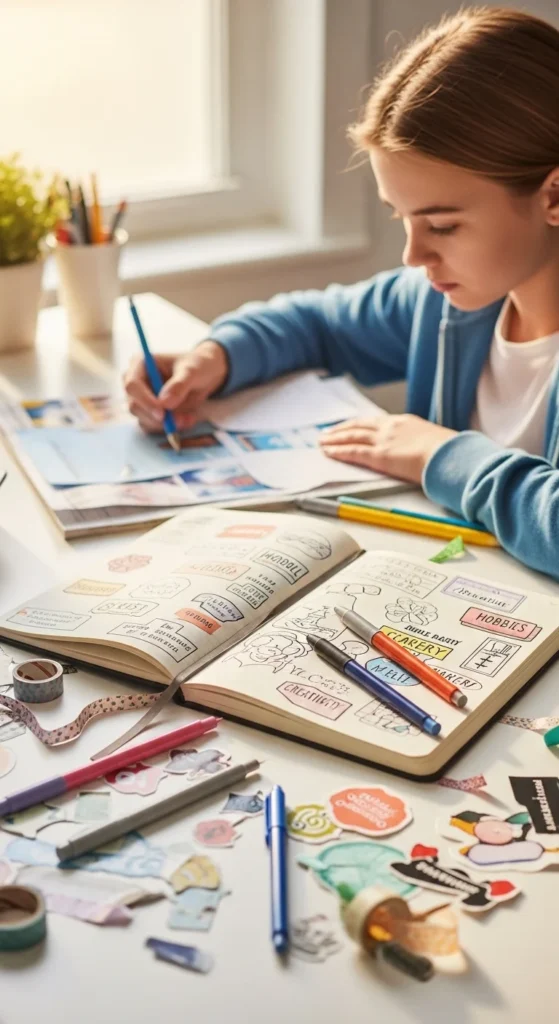
Journaling often starts with excitement and slowly turns into a blank-page struggle. Creative journal ideas change that experience by making writing playful, visual, and low pressure. Mixing prompts, doodles, lists, and unusual layouts keeps pages interesting. These ideas help you build consistency, explore thoughts, and enjoy the process again using simple supplies you already own.
1. Silly Scenario Prompts
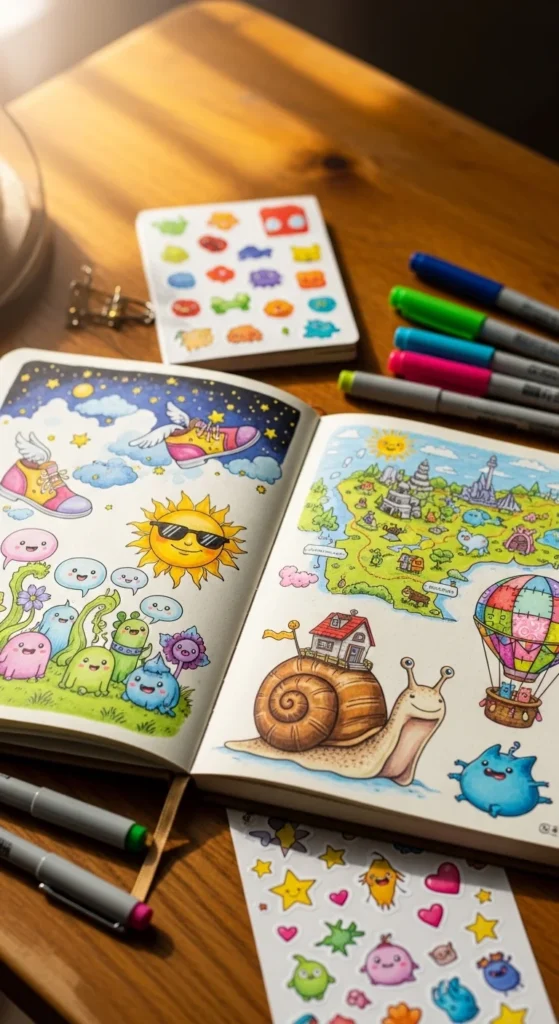
Silly prompts remove pressure immediately. Instead of writing about real life, imagine strange situations. Superpower socks. A cat running a coffee shop. A day where gravity stops working.
Start with one question. Write fast. No editing. Let ideas move freely across the page.
This method works well when writing feels stuck. Humor makes pages easier to fill.
Budget tip: use scrap paper for rough drafts before writing in your journal.
Add doodles beside each idea. Visual elements make entries feel playful. You can also create a list of weird prompts on the inside cover for quick access.
Short sessions work best. Five minutes is enough. The goal is momentum, not perfection.
2. Freewriting Timer Pages
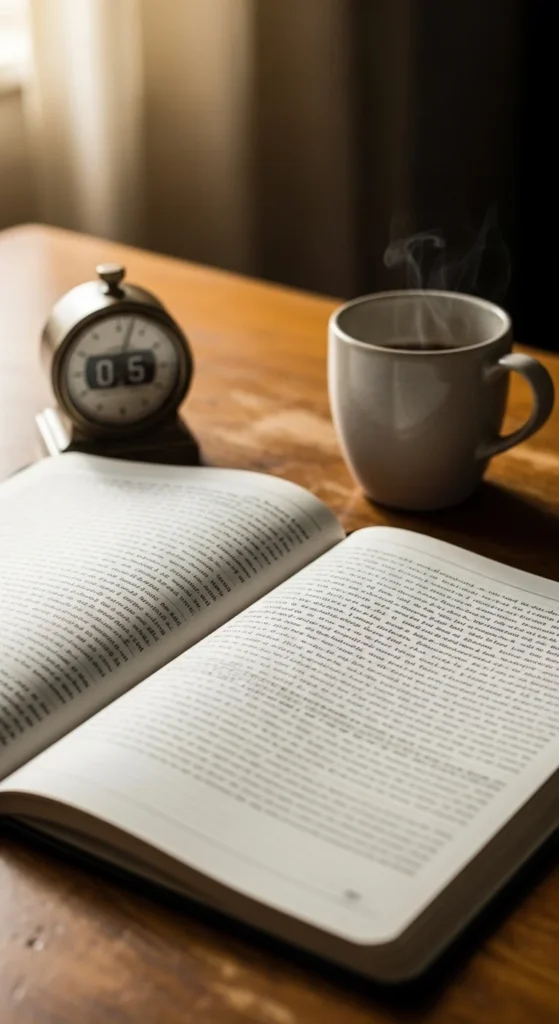
Freewriting means writing nonstop for a set time. Choose five or ten minutes. Start writing anything that appears in your mind.
No editing. No pausing. Even writing “I don’t know what to write” counts.
This clears mental clutter and builds flow.
Budget tip: use your phone timer instead of buying tools.
Messy pages are part of the process. You can highlight interesting ideas afterward.
Doing this regularly builds comfort with blank pages. Many writers use this as a daily warm-up.
3. Mixed-Media Journal Pages
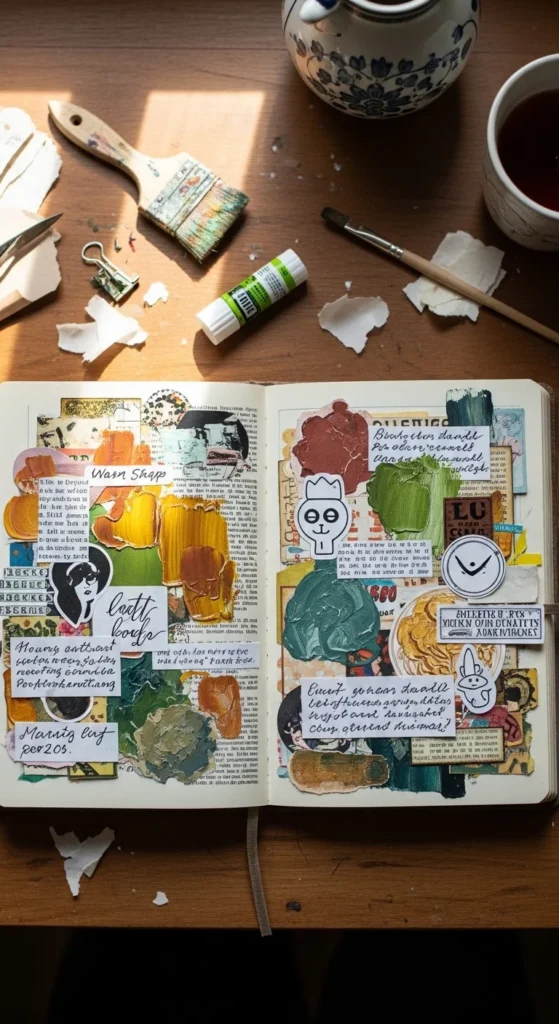
Mixed-media pages combine writing with visuals. Use magazine cutouts, stickers, paint, or textured paper.
Start with one visual. Write around it. Let the image guide the entry.
This makes journaling feel like crafting rather than writing.
Budget tip: packaging, flyers, and old magazines work perfectly.
Try layering paper pieces. Tape, glue, or staples create texture.
Mixed pages help when words feel limited. Visual storytelling keeps creativity moving.
4. Gratitude Twist Lists
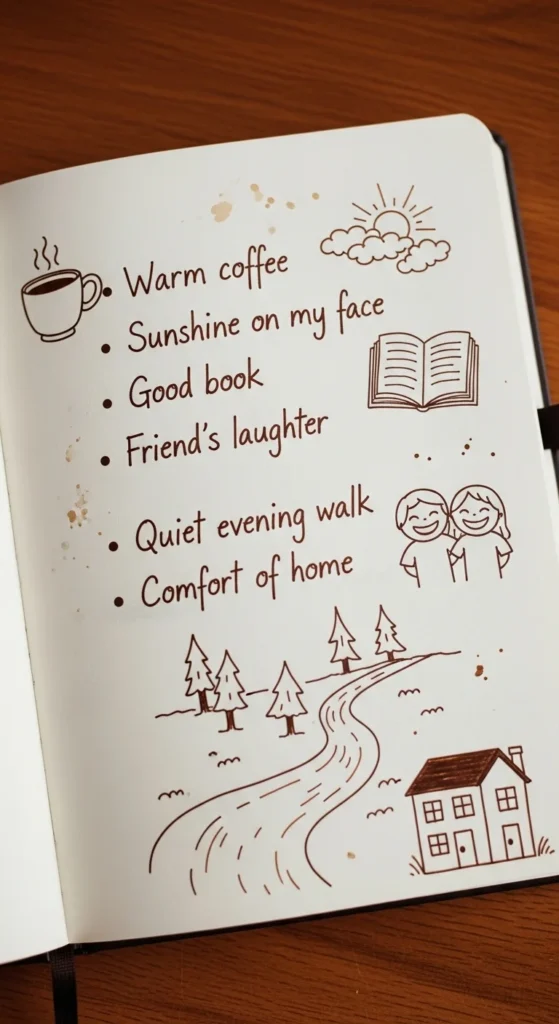
Gratitude lists become more engaging with variety. Instead of repeating the same items, add themes.
Examples: tiny wins today, things that made you laugh, favorite sounds, comforting moments.
Short lists keep entries easy.
Budget tip: draw icons instead of buying stickers.
Rotate themes weekly. This prevents routine from feeling repetitive.
Gratitude pages work well before bed. They create a calm ending to the day.
5. Sideways Writing Layouts
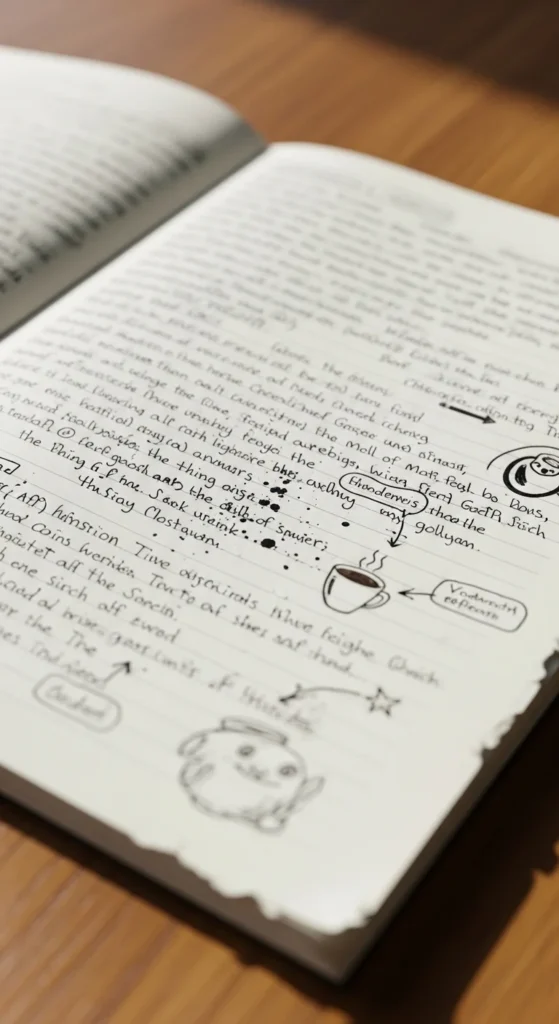
Breaking layout rules creates freedom. Write sideways, diagonally, or around drawings.
This removes the pressure of neat pages.
Start by drawing shapes. Write inside them.
Budget tip: use colored pens you already have for variety.
Unusual layouts help when journaling feels rigid. They encourage experimentation.
Pages feel more expressive and personal.
6. One-Line-A-Day Challenge
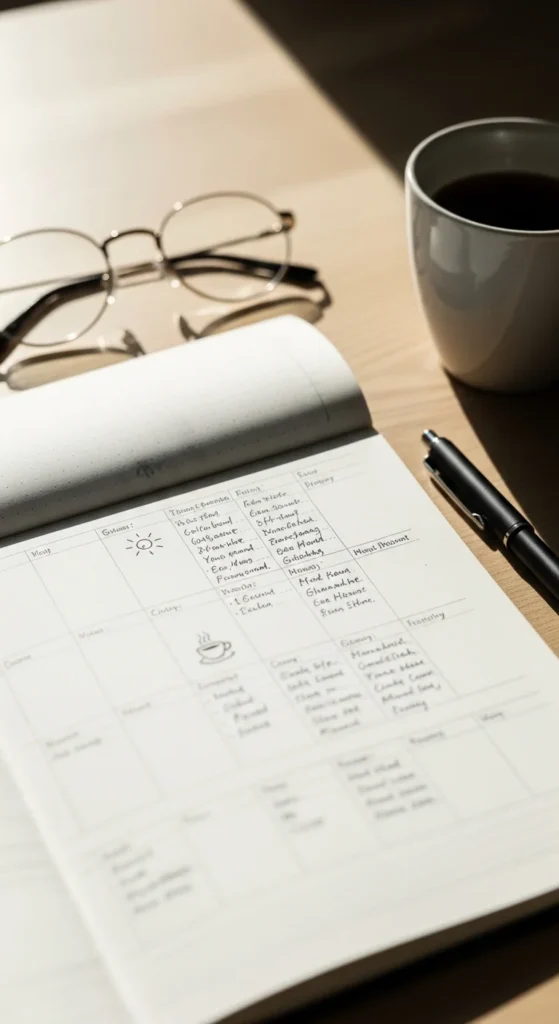
One line daily builds consistency. No long entries required.
Write one highlight, thought, or observation.
Budget tip: create a grid on blank pages.
This works for busy days. Small entries reduce resistance.
Over time, patterns appear across pages.
7. Comic Strip Journaling
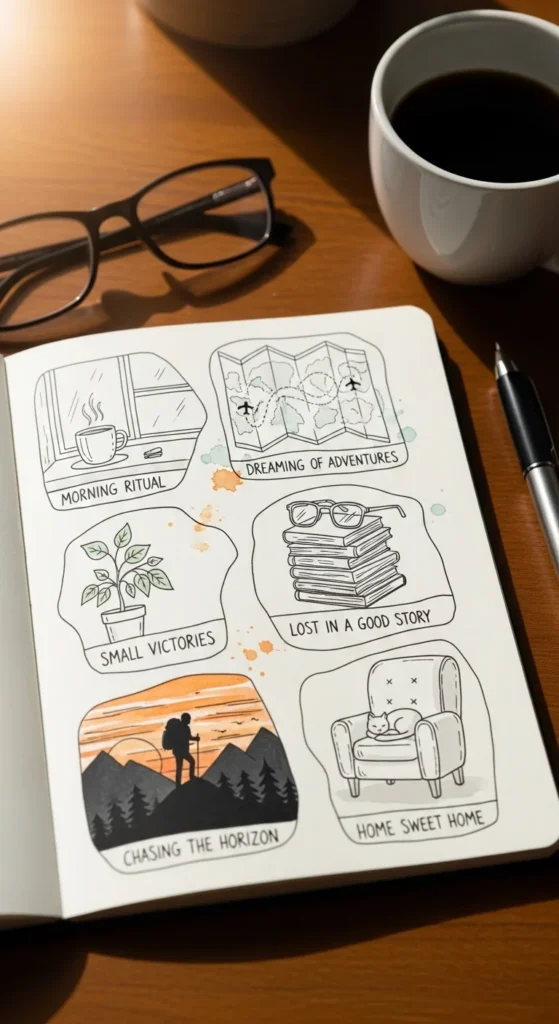
Comic journaling turns your day into panels. Four boxes are enough.
Draw simple scenes. Stick figures work.
Budget tip: draw boxes with a ruler.
Visual storytelling makes journaling playful.
8. Letter Writing Entries
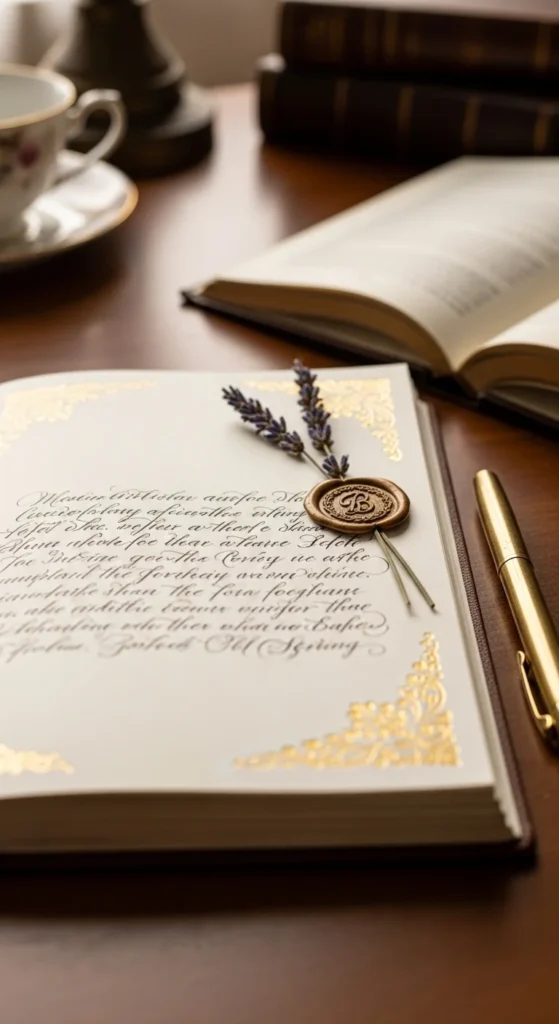
Write letters to future self, past self, or objects.
This format changes perspective and makes writing personal.
Budget tip: decorate with scrap paper borders.
Letters often lead to deeper reflection naturally.
9. Doodle-First Pages
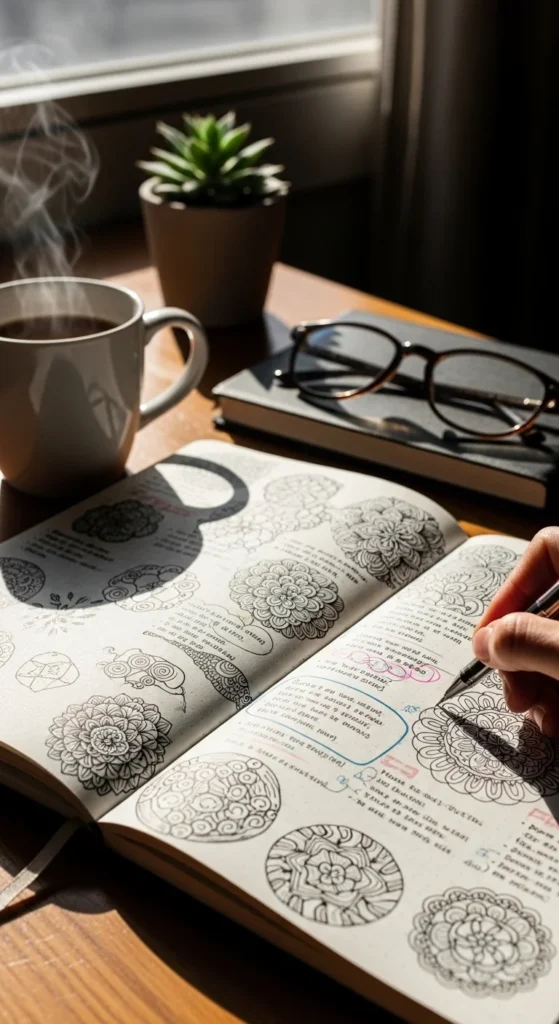
Start with doodles. Then write.
Drawing relaxes the mind before words appear.
Budget tip: black pen only works perfectly.
Doodle pages remove writing pressure.
10. Currently List Pages
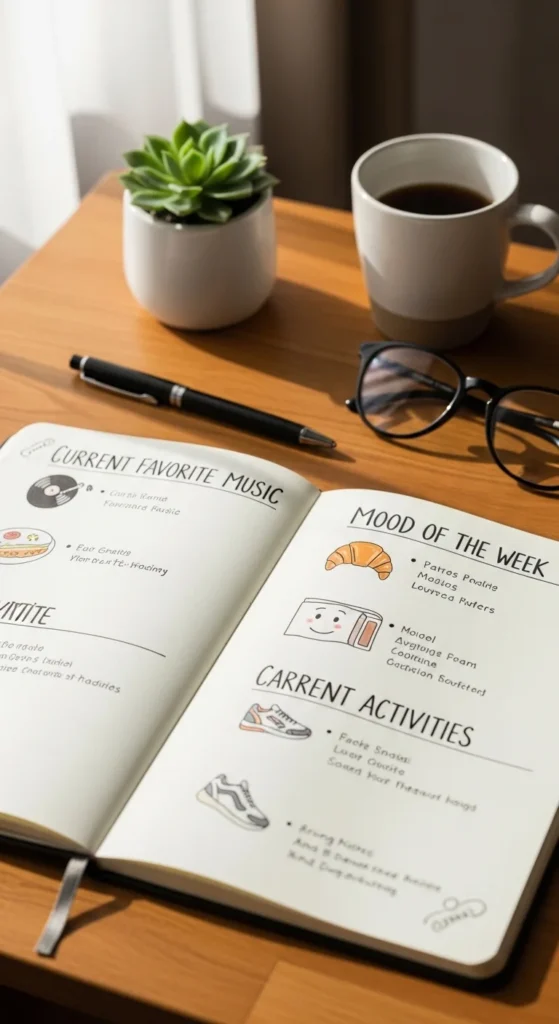
Currently lists capture life snapshots. Music you love. Food you enjoy. Thoughts on your mind.
Short categories keep writing easy.
Budget tip: create simple icons beside each category.
These pages show how life changes over time.
11. Morning Pages Brain Dump

Morning pages focus on writing immediately after waking. Write continuously for a few pages without editing.
This clears mental noise and helps ideas surface naturally.
You do not need perfect sentences. Random thoughts are welcome. Even repeating phrases counts.
Budget tip: use inexpensive notebooks because these pages are meant to be messy.
Many people find creative ideas hiding inside these entries. Highlight anything interesting later.
Morning pages build consistency because they become part of routine rather than a creative task.
Keep sessions short if three pages feel long. Consistency matters more than length.
12. Playlist Inspired Pages
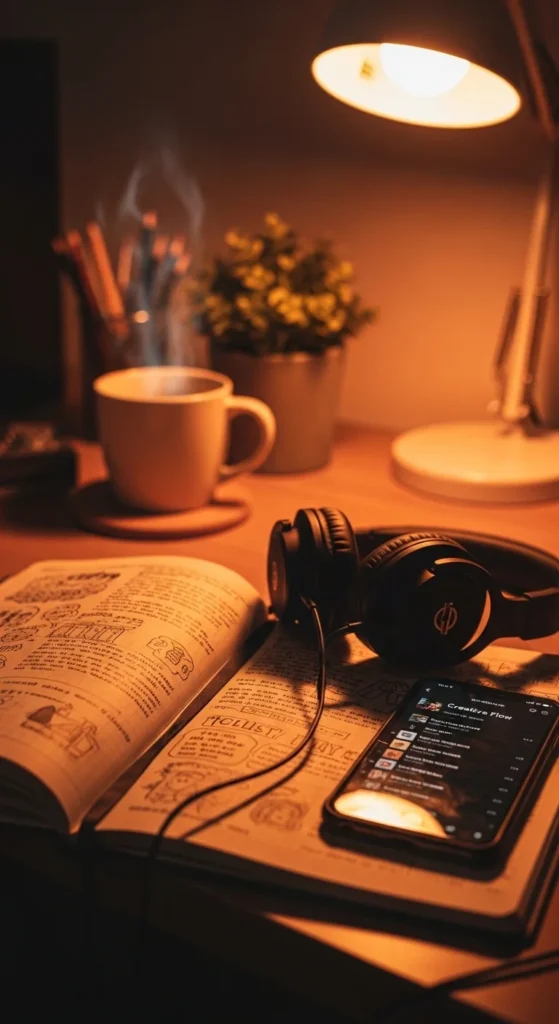
Music creates emotional direction for writing. Choose one song and write what it makes you feel, imagine, or remember.
You can describe scenes, write lyrics-inspired stories, or list memories connected to the track.
Budget tip: free streaming playlists work perfectly.
Try different moods each day. Calm, energetic, nostalgic.
This keeps journaling varied and emotionally expressive without forcing topics.
Add small doodles that match the music mood for extra visual depth.
13. Scrapbook Journal Mashups
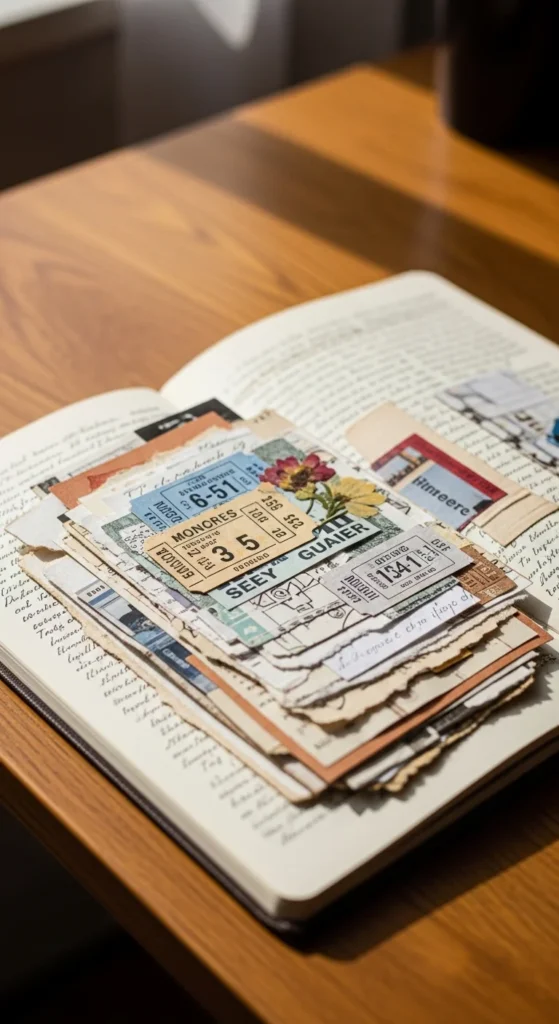
Scrapbook journaling mixes memory keeping with writing. Glue small items from daily life onto pages.
Receipts, packaging, tags, or printed photos all work.
Write short notes describing each item.
Budget tip: save everyday paper instead of buying supplies.
These pages become visual memory collections. They feel meaningful without long writing sessions.
Layering materials adds texture and keeps pages interesting.
14. Mood Color Tracker Pages
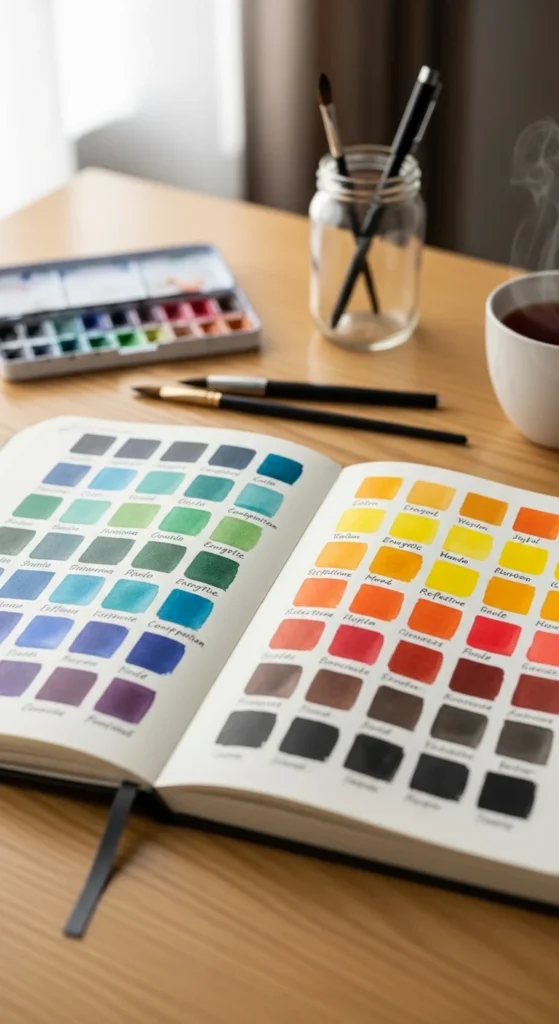
Mood trackers use color instead of long entries. Assign each mood a color.
Fill one square daily.
Over time, patterns appear visually.
Budget tip: use colored pencils you already own.
You can add small notes beside unusual days for context.
This method helps journaling feel simple and consistent.
Visual patterns often reveal emotional cycles that writing alone may miss.
15. Object Conversation Entries
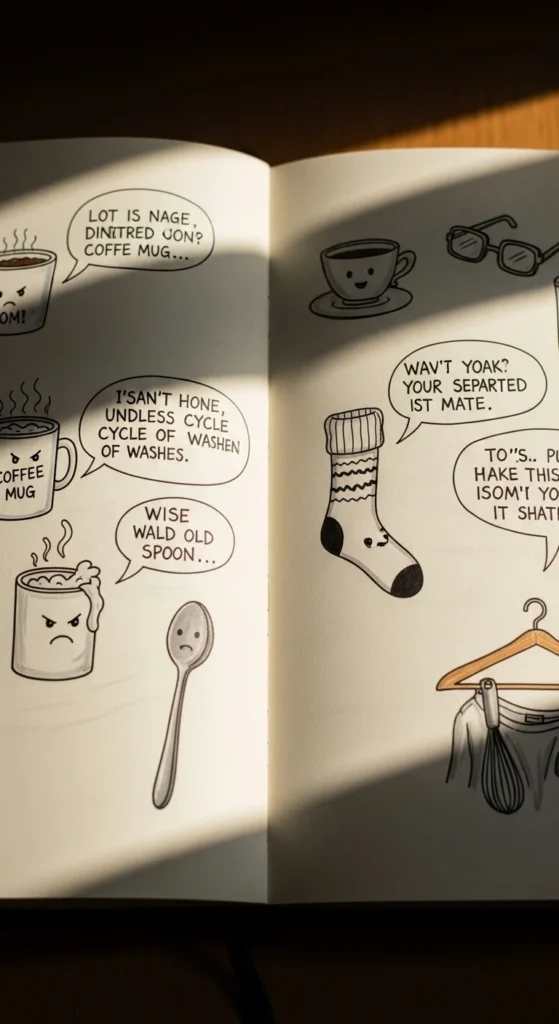
Writing conversations between objects removes pressure. Imagine your backpack talking to you. Or your phone complaining about screen time.
Dialogue format feels playful and creative.
Budget tip: simple pen sketches of objects add personality.
These entries often reveal thoughts indirectly. Humor makes difficult topics easier to explore.
Short conversations work well. No need for long stories.
16. Weekly Theme Journaling
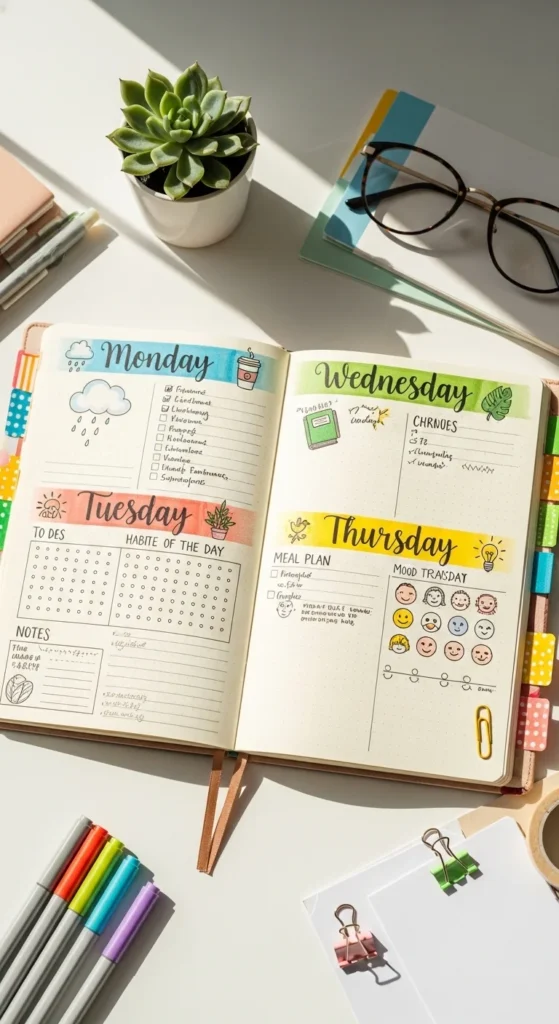
Weekly themes prevent routine from feeling repetitive. Example themes: memory week, creativity week, future week.
Each day follows the theme loosely.
Budget tip: color-code themes using pens instead of buying stickers.
Themes create direction without strict rules.
Switch themes monthly to maintain variety.
17. Nature Observation Pages
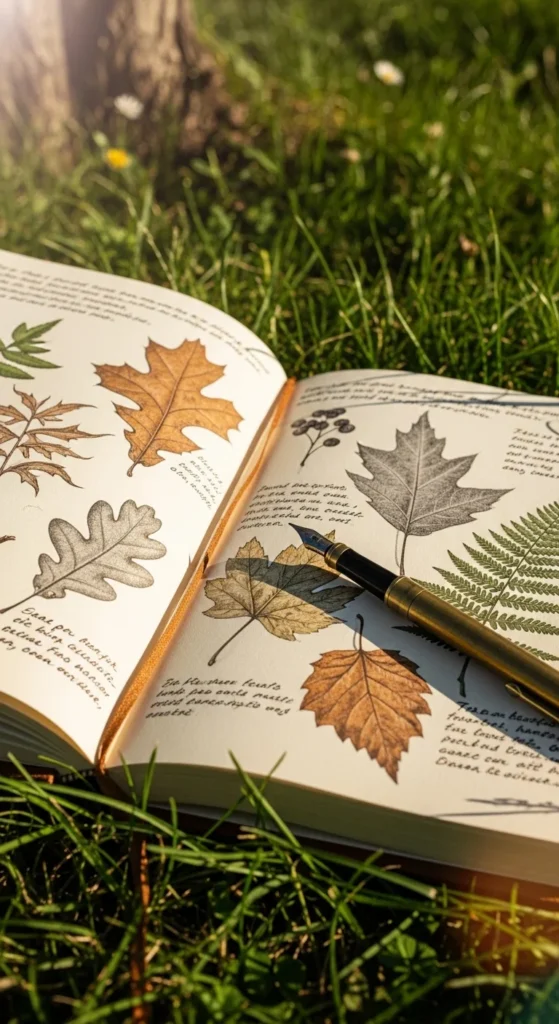
Nature journaling focuses on observation. Draw leaves, describe weather, record sounds.
Entries feel calm and grounded.
Budget tip: pencil sketches work well outdoors.
Short descriptions capture moments effectively.
These pages slow thinking and encourage noticing details.
18. Micro Story Experiments
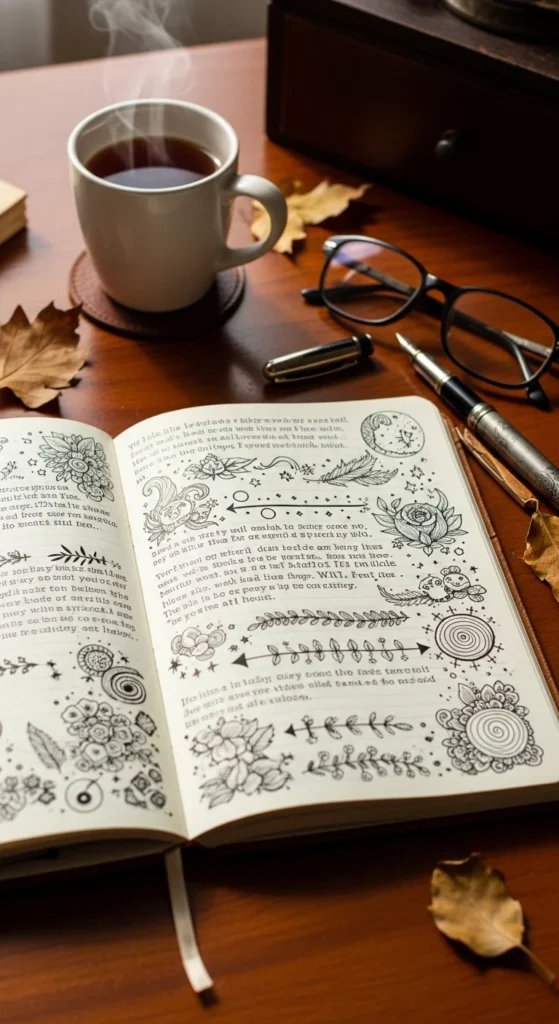
Micro stories are tiny narratives. One paragraph. One scene. One idea.
This format keeps writing manageable.
Budget tip: reuse prompt lists for story starters.
Micro stories build storytelling skills without pressure.
Try writing alternate endings for the same idea.
19. Emoji Language Journaling
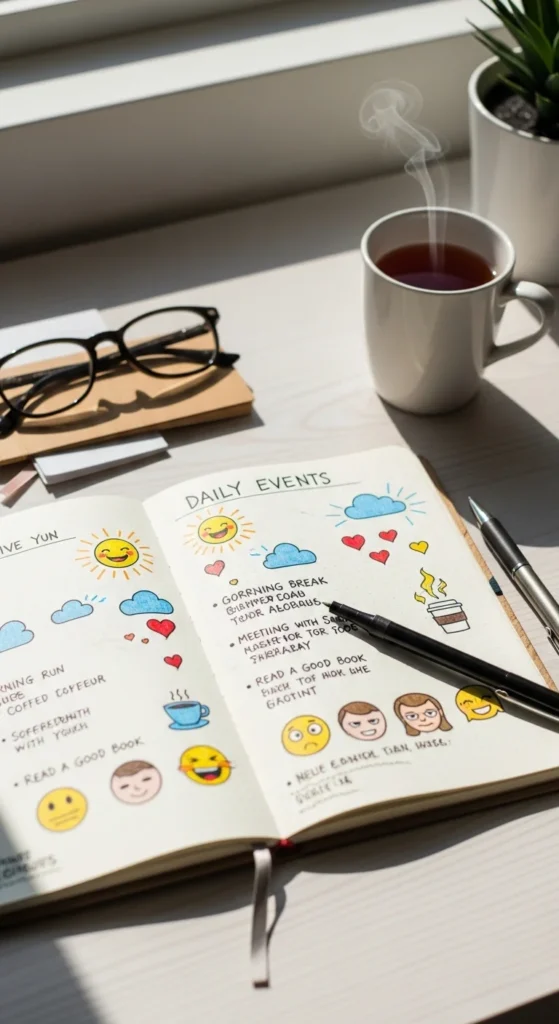
Emoji journaling replaces words with symbols. Draw emojis to describe your day.
Add small notes for context.
Budget tip: hand-draw icons instead of stickers.
This method works well on busy days.
Visual language makes journaling playful and quick.
20. Rule-Breaking Layout Pages
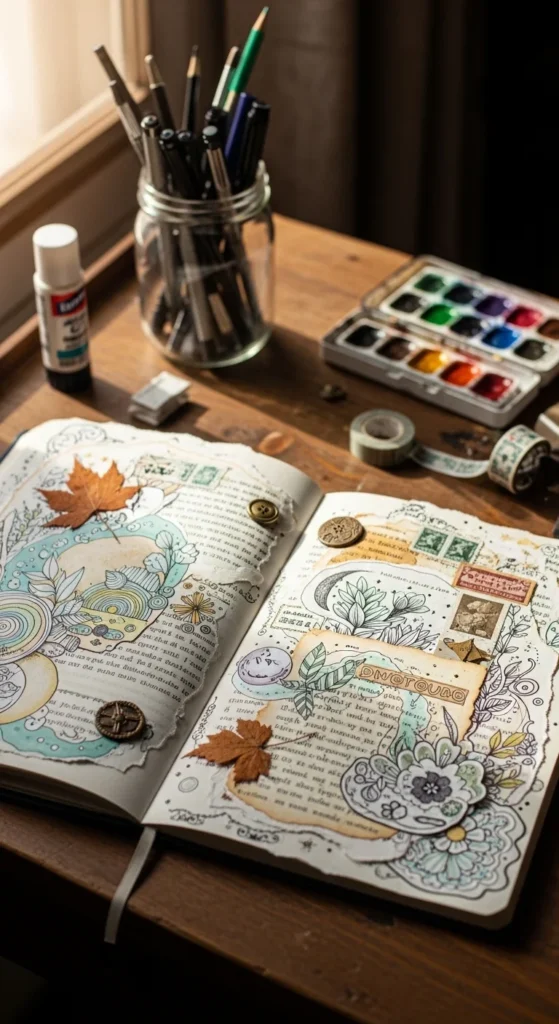
Rule-breaking layouts remove perfection. Tear paper. Write over drawings. Use different pens on one page.
Imperfect pages feel freeing.
Budget tip: scrap materials create texture cheaply.
These pages shift focus from neatness to expression.
They help overcome hesitation quickly.
21. Epistolary Journal Hacks
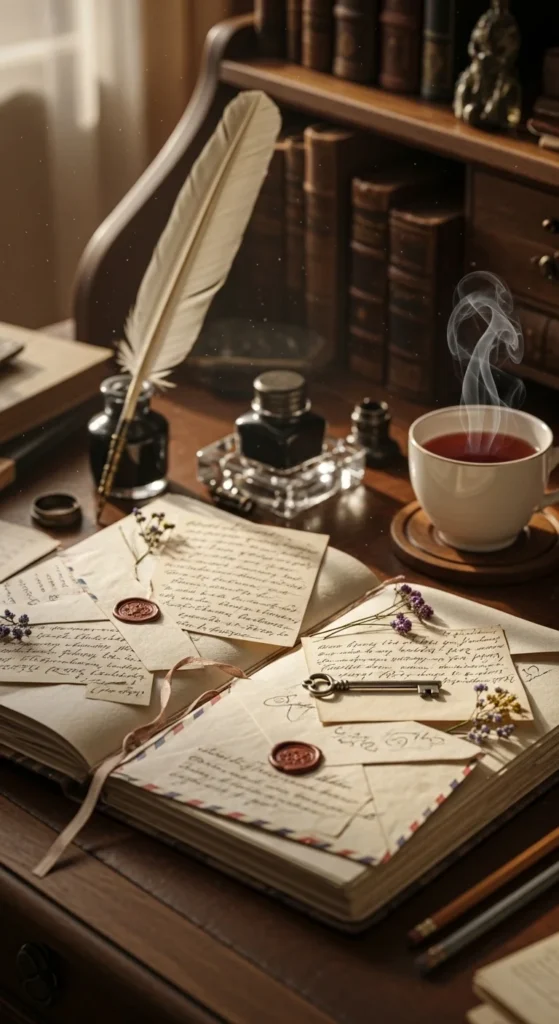
Letter-style journaling adds variety. Write to your future self, past self, or imaginary readers.
Different recipients change tone naturally.
Budget tip: draw envelope shapes on pages.
Letters often reveal thoughts more easily than standard entries.
22. Art Before Words Practice
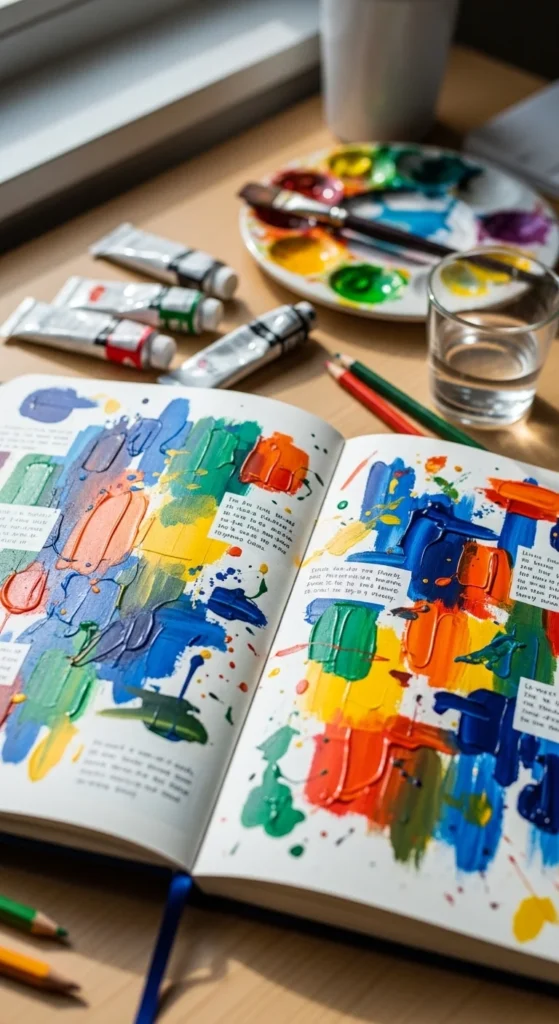
Start with paint, patterns, or textures. Write afterward.
Art loosens thinking and reduces pressure.
Budget tip: markers or colored pencils work instead of paint.
Words often flow more easily after visuals.
23. Moment Freeze Lists
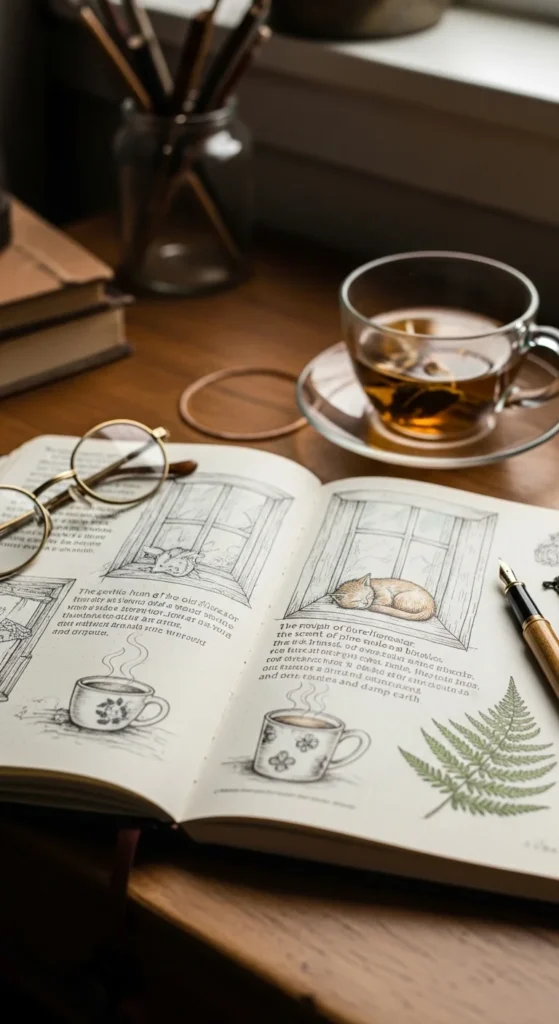
Moment lists capture present experiences. What you see, hear, smell, feel.
Short sensory notes create vivid entries.
Budget tip: quick bullet points are enough.
These pages build observation skills.
24. Tech-Meets-Paper Journaling
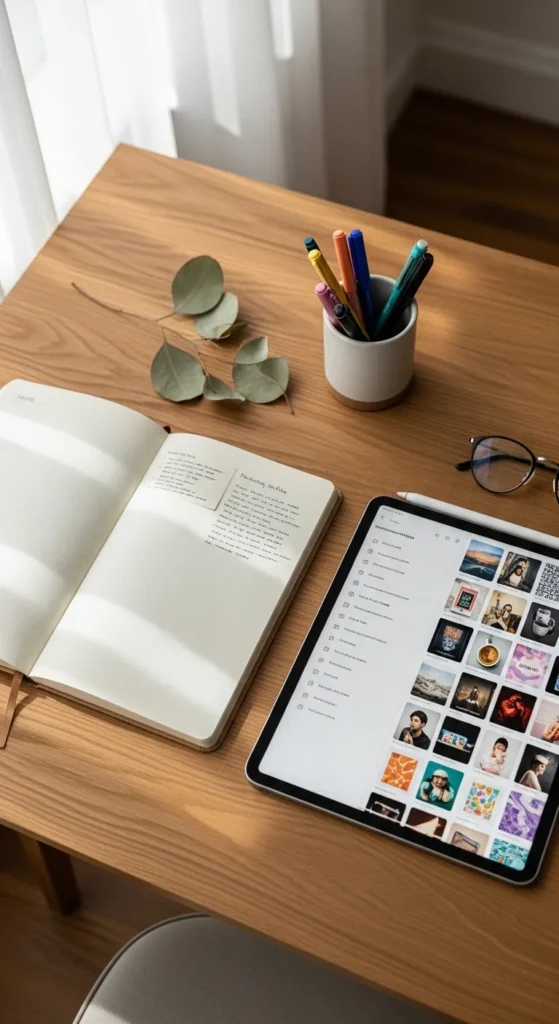
Digital prompts can guide paper journaling. Screenshot ideas and paste them into your notebook.
Budget tip: print in black and white.
Hybrid journaling combines flexibility with physical creativity.
25. Graphic Memory Panels
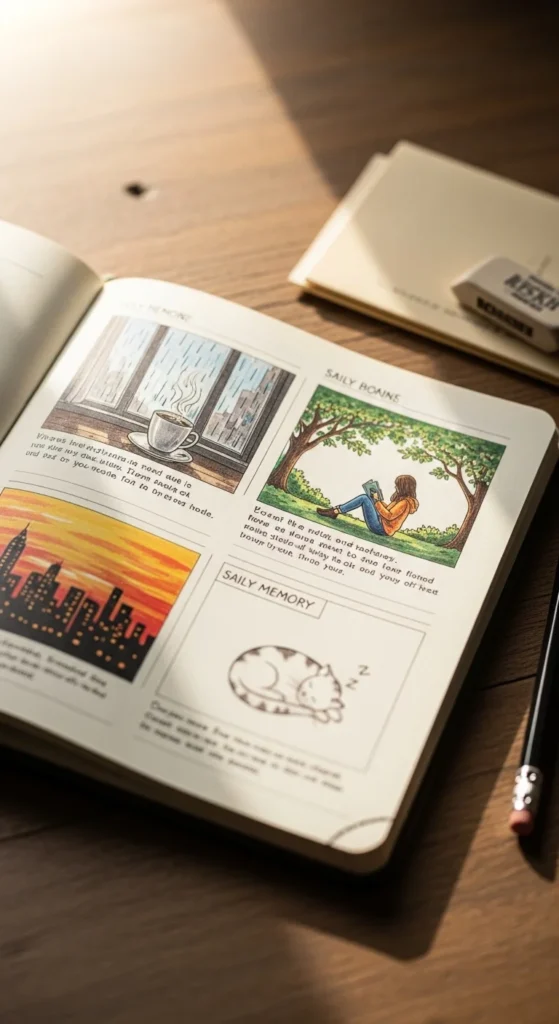
Panel layouts show daily highlights visually.
Small boxes keep entries manageable.
Budget tip: draw panels with pencil.
Panels help organize scattered thoughts.
26. Shadow Reflection Pages
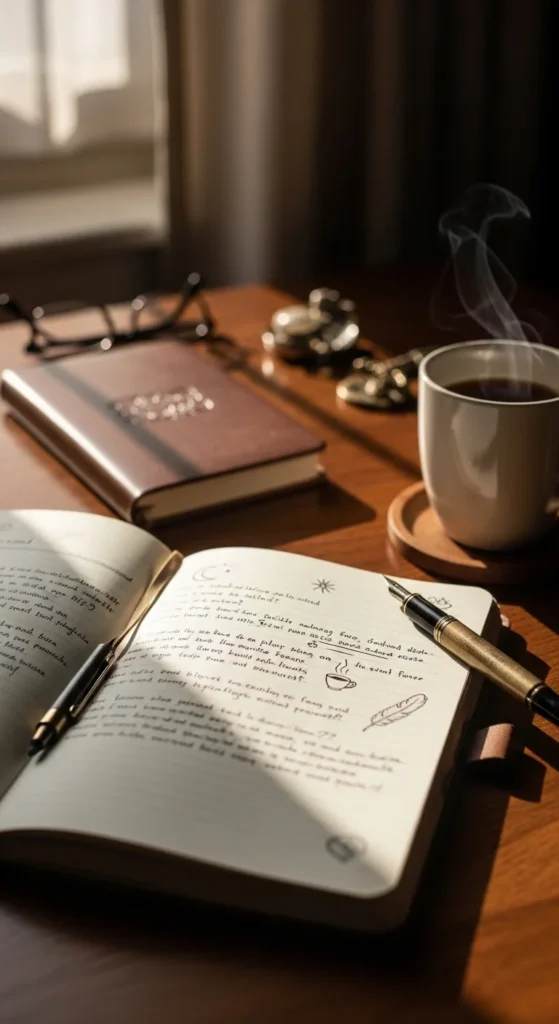
Reflection pages explore emotions gently. Write about patterns, reactions, or lessons.
Short prompts help start.
Budget tip: keep entries private to encourage honesty.
These pages support deeper understanding without pressure.
27. Creative Habit Builder Pages
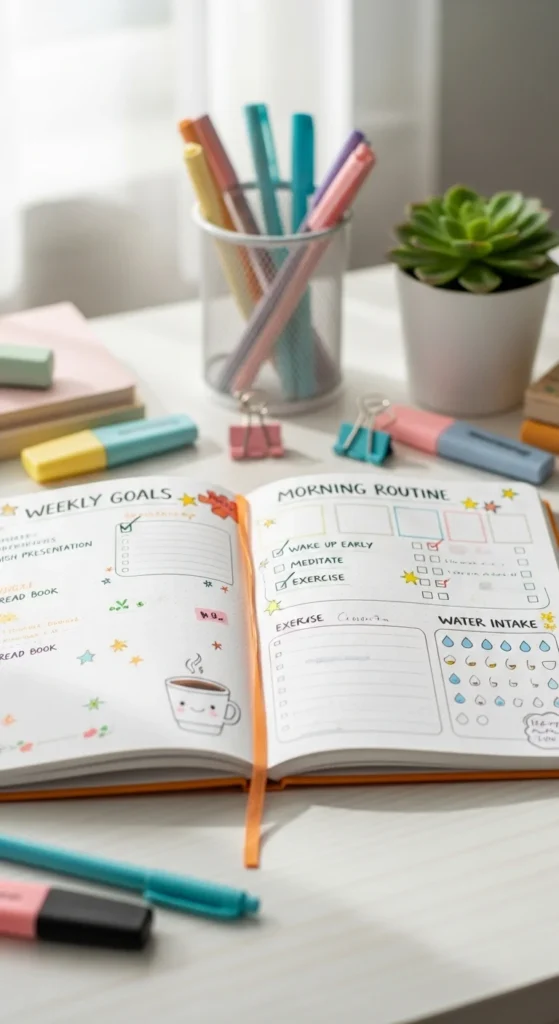
Habit pages track writing consistency visually.
Use check marks, symbols, or progress bars.
Budget tip: hand-drawn trackers work well.
Tracking makes journaling feel structured yet creative.
Small daily marks build long-term consistency.
Conclusion
Creative journal ideas make writing feel lighter and more playful. Mixing prompts, visuals, lists, and unusual layouts keeps pages interesting and reduces pressure. Small daily actions build consistency naturally. Start with one idea, keep supplies simple, and allow pages to stay imperfect. That freedom is what makes journaling enjoyable again.

Leave a Reply