

Crochet dishcloths are one of those small projects that make everyday life feel a little nicer. They’re practical, reusable, and surprisingly satisfying to use. Plus, they’re perfect if you want a quick win—something you can finish in an evening and actually put to work the next morning.
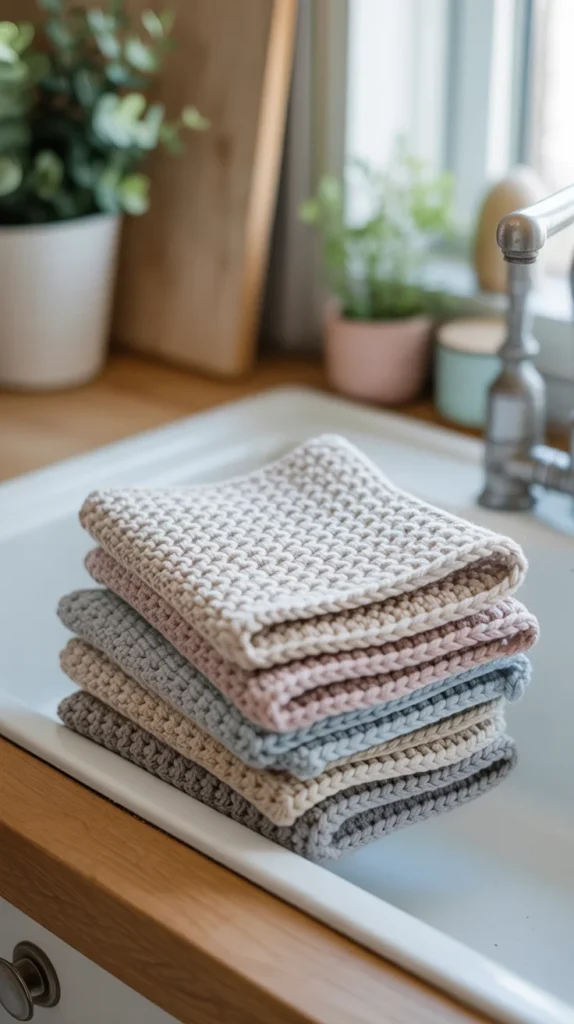
Whether you’re brand new to crochet or just want a relaxing project, dishcloths are a great place to start. They use basic stitches, inexpensive materials, and give you plenty of room to practice without pressure.
Choose the Right Yarn for Dishcloths
Yarn choice is the most important step for kitchen dishcloths. Since they’re used for washing, wiping, and scrubbing, the yarn has to handle moisture and frequent washing.
Best yarn for crochet dishcloths
- 100% cotton yarn – Absorbent, durable, and heat-safe
- Cotton worsted weight – Easy to find and easy to work with
Avoid acrylic yarn. It doesn’t absorb water well and can soften or warp with heat.
Color tips for the kitchen
- Light colors show dirt quickly but look clean and classic
- Darker colors hide stains better
- Using multiple colors makes it easier to rotate cloths
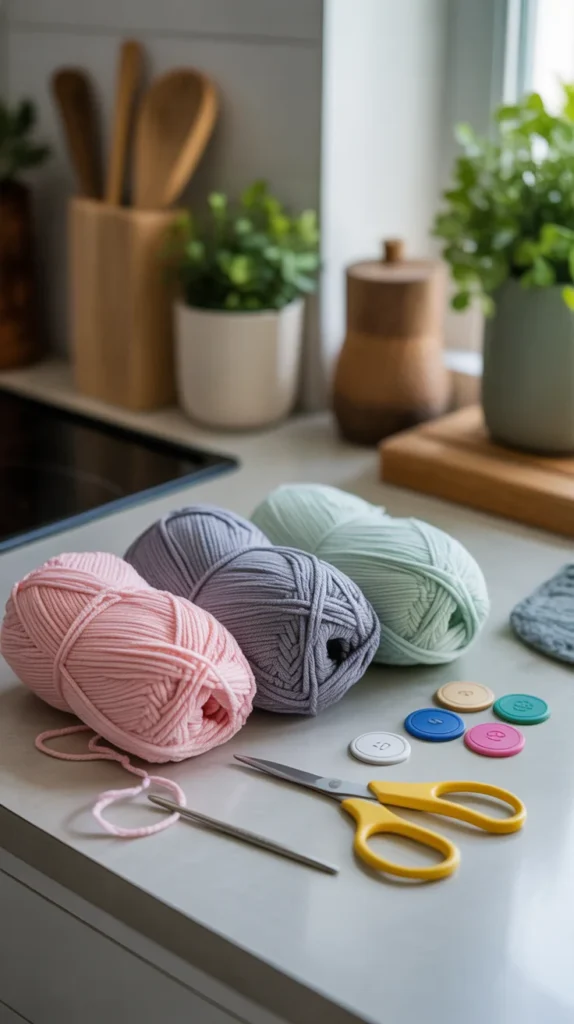
Cotton yarn is affordable and widely available, making dishcloths a budget-friendly project.
Pick a Simple Stitch That Works Hard
Dishcloths don’t need fancy stitches. In fact, simple stitches often work better because they create texture that helps with scrubbing.
Beginner-friendly stitch options
- Single crochet – Dense and sturdy
- Half double crochet – Slightly softer with good texture
- Double crochet (used carefully) – Lighter and faster
Textured stitches like moss stitch or waffle stitch also work well if you want extra scrubbing power.
Stitch tips
- Keep tension even so the cloth lays flat
- Avoid overly loose stitches
- Use stitch markers if counting rows helps you stay consistent
Decide on Size and Shape
Dishcloths are forgiving, but having a general size in mind helps.
Common dishcloth sizes
- Square: 7 × 7 or 8 × 8 inches
- Rectangle: 7 × 9 inches
Squares are great for beginners because they’re easy to measure and stack.
You can make dishcloths:
- Worked row by row
- Or crocheted in the round
Both methods work equally well.
Crochet the Dishcloth Step by Step
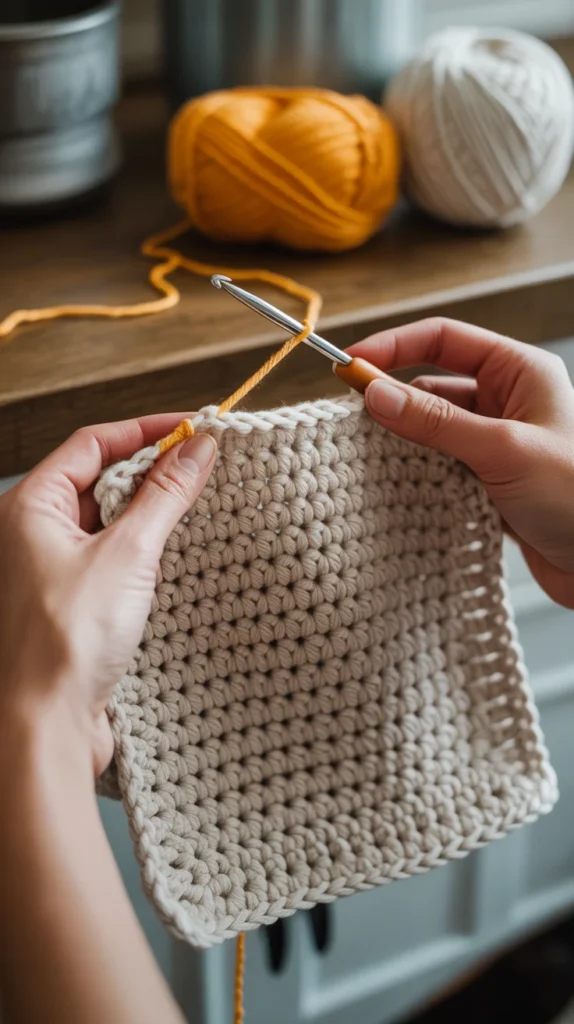
Let’s walk through a simple square dishcloth made in rows.
Basic method
- Chain enough stitches to reach your desired width
- Single crochet into each chain across
- Chain one, turn, and repeat
- Continue until the dishcloth is as tall as it is wide
Helpful tips
- Count stitches at the end of each row
- If edges curve, loosen your turning chains slightly
- Lay the cloth flat every few rows to check shape
If you prefer a round dishcloth:
- Start with a magic ring
- Increase evenly each round
- Stop when the cloth reaches the right size
Add a Simple Border for a Clean Finish
A border isn’t required, but it makes dishcloths look more polished and helps edges last longer.
Easy border ideas
- One round of single crochet around all sides
- Slip stitch edging for a flatter finish
- A contrasting color for subtle detail
Borders also help hide small tension inconsistencies, which is great for beginners.
Finish and Prepare for Use
Finishing properly makes your dishcloth more durable.
Finishing checklist
- Fasten off securely
- Weave in all ends neatly
- Trim excess yarn
Before using:
- Wash the dishcloth once to soften the yarn
- Let it air dry
Cotton dishcloths get better with use and washing.
Make Dishcloth Sets for Your Kitchen or Gifts
Dishcloths are even more useful when you have several.
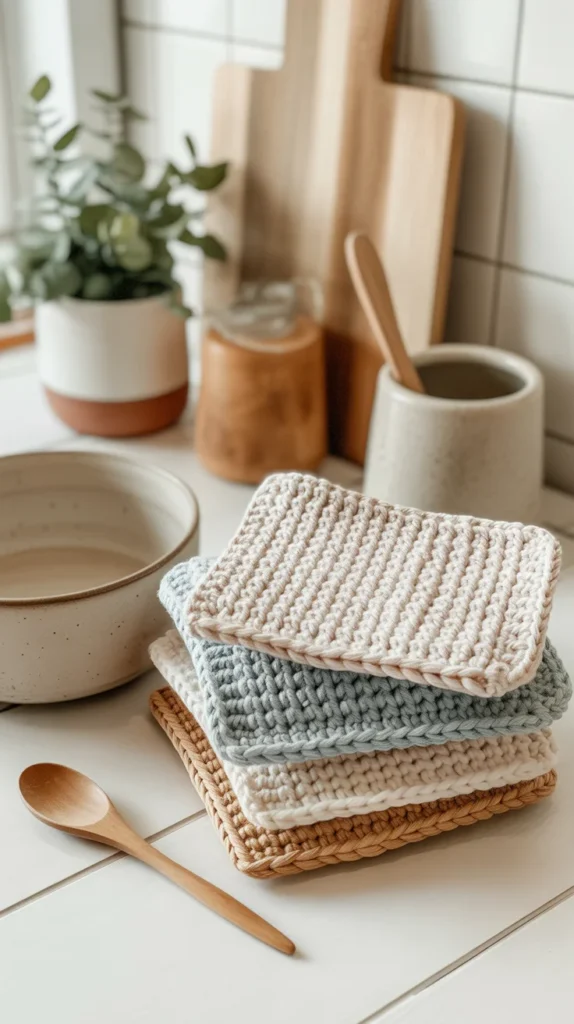
Easy set ideas
- All one color for a clean look
- Two or three coordinating colors
- Different stitch patterns in the same color
Sets are great for:
- Everyday kitchen use
- Housewarming gifts
- Adding to handmade gift baskets
Tie a stack with twine or ribbon for a simple, thoughtful presentation.
Care Tips for Crochet Dishcloths
Crochet dishcloths are easy to maintain.
Basic care
- Machine wash warm or hot
- Tumble dry low or air dry
- Replace when they become too worn
Cotton can handle frequent washing, which makes it ideal for kitchen use.
Common Beginner Mistakes to Avoid
- Using acrylic yarn → poor absorbency
- Loose stitches → less effective scrubbing
- Skipping flatness checks → warped cloths
- Not weaving in ends securely → unraveling
These are easy fixes and part of the learning process.
Final Thoughts
Crocheting simple dishcloths is one of the most practical and rewarding crochet projects you can make. They’re fast, affordable, and genuinely useful in everyday life. Plus, they’re a great way to practice stitches and build confidence without committing to a big project.
🧶 Save this tutorial for later, grab some cotton yarn, and start crocheting dishcloths that make your kitchen a little more handmade and cozy.

Leave a Reply