


Manifestation journaling is a simple writing practice where people put goals, feelings, and imagined future moments onto paper. Many use it to stay focused on what they want in life, from personal goals to relationships and finances. The idea is not about complex systems or strict rules. It is about writing clearly, often in present tense, and keeping attention on desired outcomes. This guide shares 27 structured journal ideas designed to help you shape daily writing habits that support clarity, reflection, and direction. Each idea is practical, low-cost, and can be done with a basic notebook and pen.
1. “I Am” Identity Statements Journal
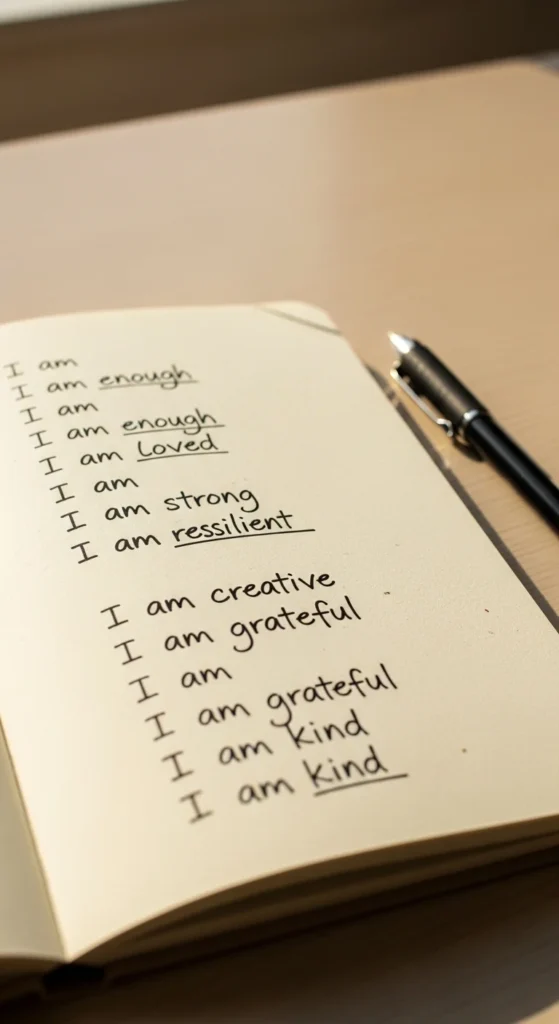
This journaling style centers on identity-based writing. You write sentences starting with “I am,” followed by traits or roles that match your goals. For example: “I am focused on my goals,” or “I am building steady habits.” The goal is repetition and clarity.
Use a basic notebook. Write 10–15 lines daily. Keep sentences short. No need for fancy structure. Over time, the pages become a record of how you see yourself shifting.
A budget-friendly approach is to dedicate a single notebook only for identity statements. This separation helps you keep focus without mixing other thoughts.
Try writing in the morning when your mind is less distracted. Keep the tone steady and simple. Avoid overthinking wording. The practice works best when it feels natural and easy to repeat daily.
2. Future Self Morning Letter

This method involves writing a letter from your present self to your future self. You describe where you want to be in a few months or a year. Write as if it already happened.
Start with a greeting like you are speaking to yourself later in time. Describe daily life, habits, and feelings. Keep sentences direct and personal.
A simple notebook works fine. No special tools needed. You can date each letter and revisit older ones later.
To keep costs low, reuse any notebook you already have. The focus is writing consistently, not presentation.
This practice helps you stay aware of direction without overcomplicating planning. Keep it short if needed, even a half page works.
3. Daily Gratitude + Desire Pairing

This journal style combines appreciation with future goals. One side lists things you are thankful for. The other side lists what you want to experience next.
Write 3–5 gratitude points first. Then write 3–5 desires in present tense.
Use simple language like “I am thankful for steady income” and “I live with financial stability.”
A cheap notebook is enough. You can draw a line down the page to separate sections.
This structure keeps writing balanced. It prevents focus from staying only on what is missing.
Keep entries short. A few minutes daily is enough.
4. “Day in My Future Life” Script

This technique involves writing a full day in your future life. You describe waking up, daily routines, work, and evening time as if it is already happening.
Write in present tense. Example: “I wake up early and feel calm.”
Use simple storytelling. No need for long descriptions. Focus on flow of the day.
A regular notebook works. Keep each entry dated.
To save cost, use any pen and paper available. Consistency matters more than design.
This method helps shape clear mental pictures of routine goals.
5. Money Flow Journal
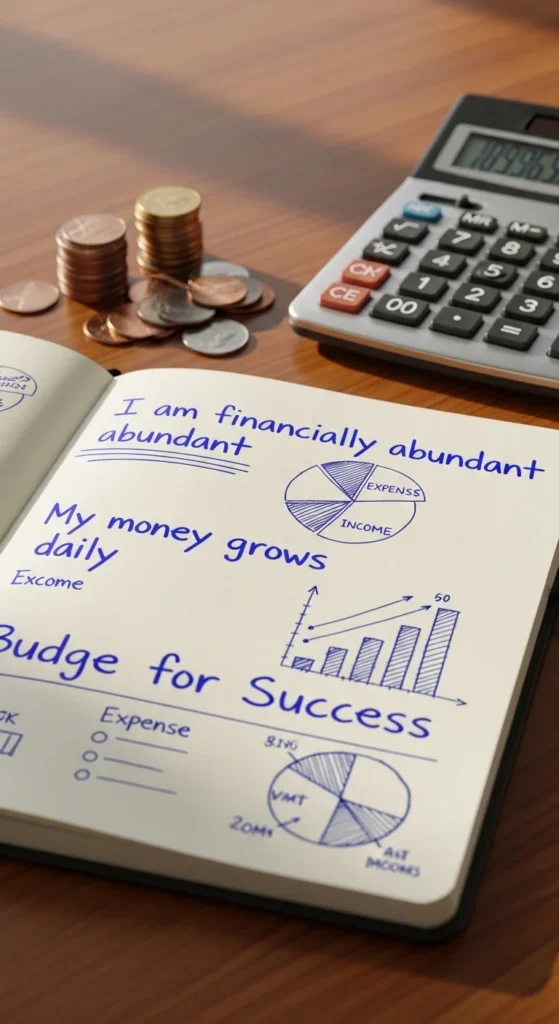
This journal focuses on financial goals. Write about income, savings, and money habits as they already exist.
Examples: “Money flows steadily into my life” or “I manage my expenses with ease.”
Keep entries short and repeated daily.
A basic notebook is enough. No financial planner needed.
You can also track small money wins like saving a small amount or avoiding unnecessary spending.
The goal is awareness of financial direction without pressure.
6. Relationship Vision Writing

This practice focuses on relationships. Write about the type of connections you want in life.
Describe qualities like communication, respect, and shared time.
Example: “I am surrounded by supportive relationships.”
Use simple emotional language. Avoid long explanations.
A low-cost notebook is enough. Keep entries private if preferred.
This helps clarify emotional direction in personal connections.
7. Abundance Mindset Notes
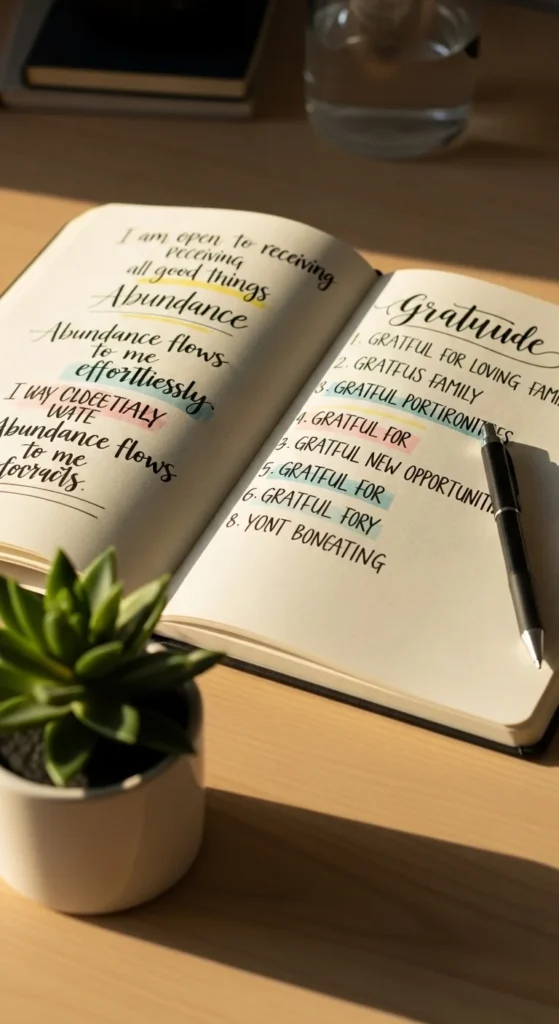
This journaling style focuses on shifting attention toward abundance. Write statements that describe enoughness in daily life.
Examples: “I have enough time for what matters” or “Opportunities appear regularly.”
Keep sentences short and repeated.
A simple notebook works well.
This practice helps reduce focus on lack and keeps writing steady.
8. Morning Focus Pages

This journal entry is written right after waking up. It sets direction for the day.
Write 3 goals or intentions for the day. Keep them realistic.
Example: “Stay focused on work tasks” or “Complete planned exercise.”
Use any notebook. No setup required.
This habit creates daily structure in writing form.
9. Visual Outcome Descriptions
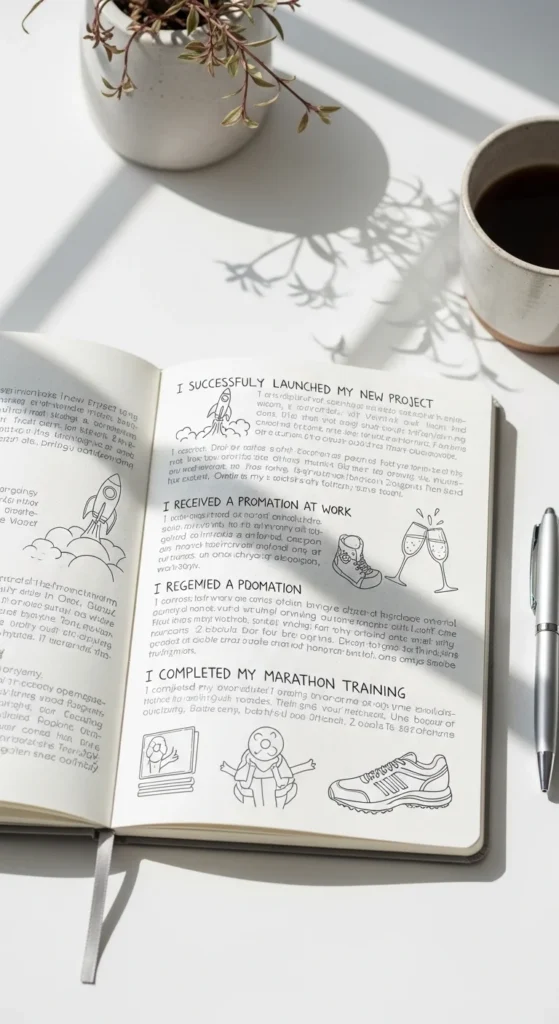
Write detailed descriptions of desired outcomes. Keep them grounded and simple.
Example: “My workspace is organized and calm.”
Focus on sensory details like environment, routine, and feelings.
Use a basic notebook.
Keep writing short paragraphs.
10. Limiting Belief Rewrite Pages

Write a limiting belief on one line. Then rewrite it in a more supportive form.
Example: “I cannot succeed” becomes “I learn and improve steadily.”
Keep language simple.
Use any notebook.
This practice builds awareness of thought patterns.
11. Goal Breakdown Writing

Write one goal. Then break it into small actions.
Keep steps realistic and short.
Example: “Improve fitness → walk daily → drink more water.”
Use a basic notebook.
This helps organize thoughts into clear direction.
12. Weekly Reflection Pages

At the end of each week, write what felt steady and what felt off track.
Keep tone neutral.
Example: “Some habits stayed consistent.”
No need for long analysis.
A simple notebook is enough.
13. Emotional Check-In Writing
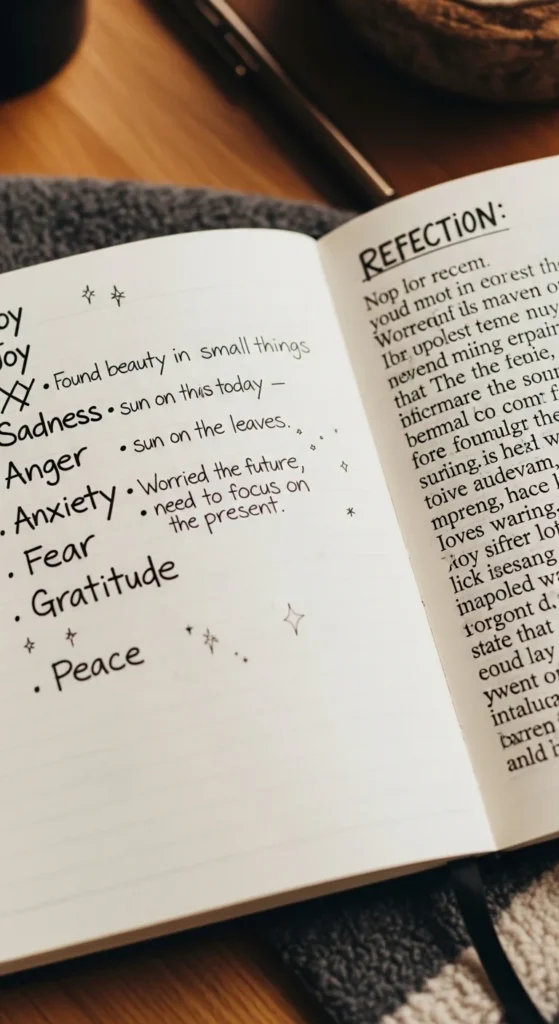
Write how you feel at the moment. Keep it short and honest.
Then write one small supportive action.
Example: “Feeling distracted → take a short walk.”
Use any notebook.
14. Affirmation Repetition Pages

Pick 1–3 affirmations. Write them repeatedly.
Example: “I stay focused on my goals.”
No decoration needed.
Use a basic notebook.
Repetition helps structure consistency.
15. Life Area Balance Journal

Divide page into areas like work, health, and personal life.
Write one note for each area.
Keep entries short.
A notebook and pen are enough.
16. Visualization Mapping Notes

Write imagined scenes of achieving goals.
Keep descriptions simple and present tense.
Example: “I complete my work calmly.”
Use any notebook.
17. Habit Tracking Reflections
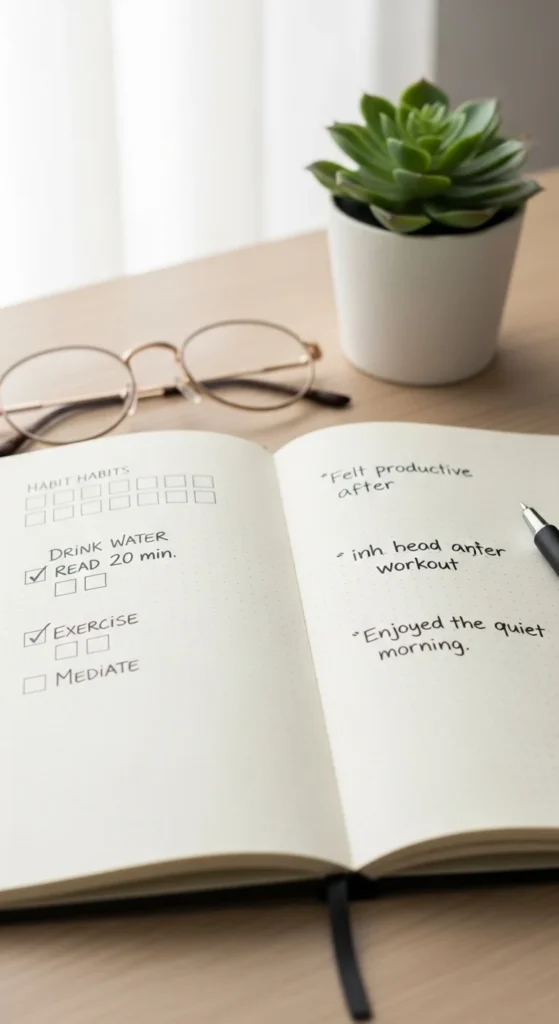
Write daily habits and mark completion.
Add short notes on progress.
Keep layout simple.
No planner required.
18. Self-Trust Writing Pages

Write statements that reinforce self-reliance.
Example: “I trust my decisions.”
Keep tone steady.
Use a basic notebook.
19. Career Direction Notes

Write about work direction and goals.
Keep ideas simple and realistic.
Example: “I build steady work progress.”
Notebook only needed.
20. Evening Release Writing

Write thoughts from the day and release them onto paper.
Keep sentences short.
Example: “Today felt busy.”
This helps clear mental load.
21. Opportunity Awareness Journal

Write small opportunities noticed during the day.
Example: “New idea for work task.”
Keep entries short.
22. Self-Respect Notes
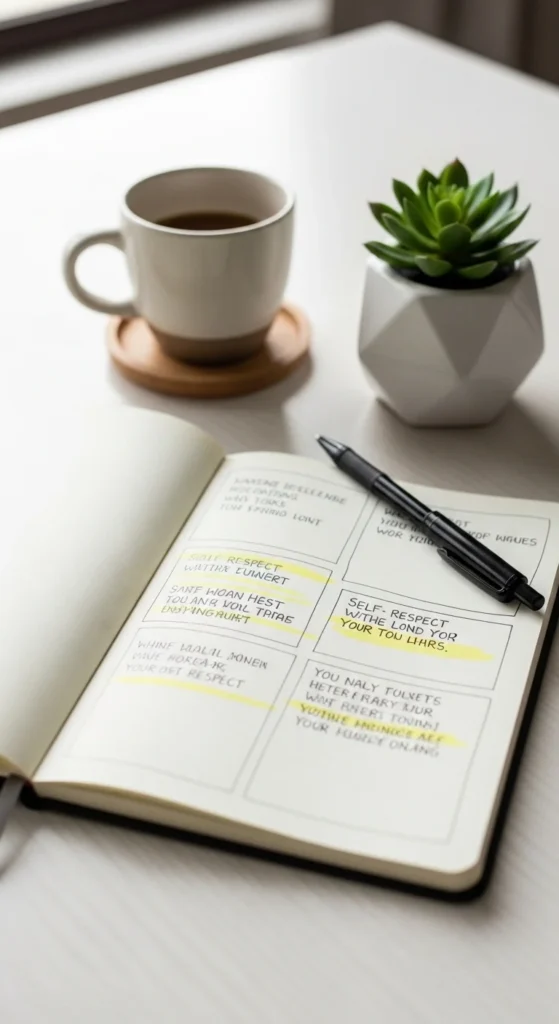
Write statements about personal boundaries.
Example: “I respect my time.”
Keep language simple.
23. Skill Growth Writing

Write one skill and small progress notes.
Example: “Improving writing consistency.”
Use basic notebook.
24. Calm State Journaling
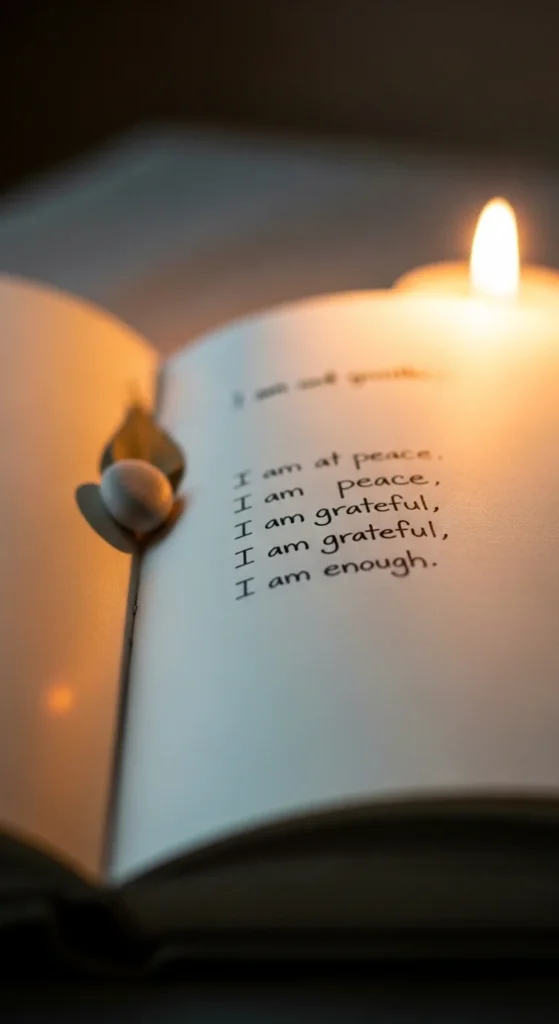
Write short lines describing calm moments.
Example: “I feel steady right now.”
Keep writing simple.
25. Decision Clarity Pages
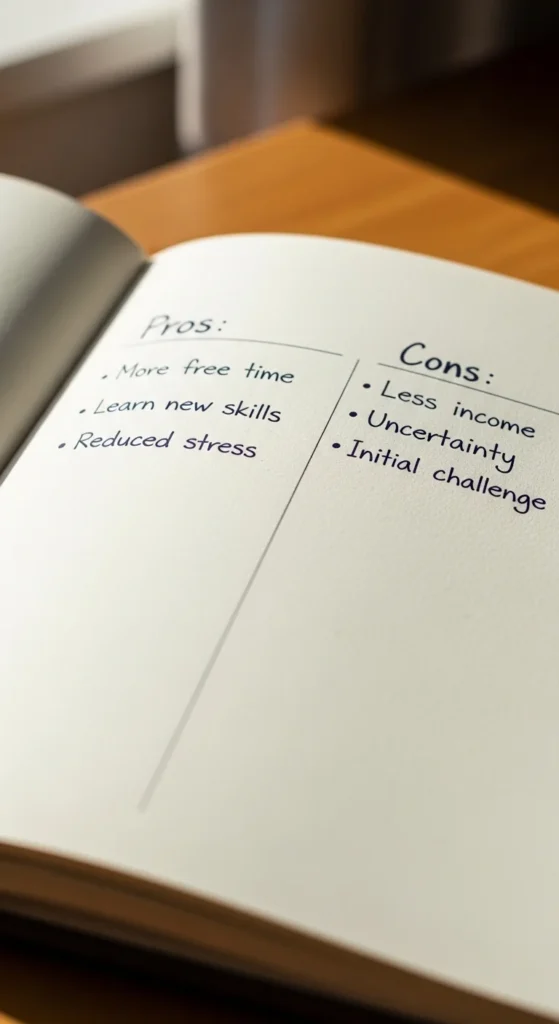
Write one decision and short points about it.
Keep format minimal.
Notebook is enough.
26. Self-Appreciation Writing

Write small acknowledgments about yourself.
Example: “I stayed consistent today.”
Keep tone neutral.
27. Monthly Vision Summary

Write a short summary of the month.
Include what felt steady and what you want next month.
Keep it brief.
Conclusion
Manifestation journaling becomes more structured when broken into simple writing ideas that focus on daily clarity, emotional awareness, and goal direction. Each practice in this list offers a small way to keep thoughts organized without complex systems or costly tools. A basic notebook and consistent writing habit are enough to build momentum over time.

Leave a Reply