

If you’ve ever dreamed of earning passive income from real estate—without the stress of owning or managing properties—REITs (Real Estate Investment Trusts) could be your best friend. They allow you to invest in real estate portfolios, earn dividends, and build wealth—all from your phone or laptop.

What Are REITs?
A REIT is a company that owns, operates, or finances income-producing real estate. Think of it like buying a slice of multiple rental properties, shopping centers, hospitals, or office buildings—all at once.
Instead of buying an entire property, you can buy shares of a REIT, just like you would buy shares of a company on the stock market. These shares give you access to rental income and appreciation—without the hassle of tenants or maintenance.
Key benefits:
- You earn dividends regularly (usually quarterly).
- You can start with small amounts—even $10 on some apps.
- REITs are liquid investments, meaning you can buy or sell shares anytime.

Step 1: Understand the Types of REITs
Before diving in, it’s smart to know what kinds of REITs exist. Each focuses on a specific real estate sector.
- Equity REITs – Own and operate income-generating real estate, such as apartments, malls, or warehouses. These are the most common type.
- Mortgage REITs (mREITs) – Invest in mortgages or mortgage-backed securities and make money from the interest.
- Hybrid REITs – Combine both equity and mortgage investing strategies.
For beginners, Equity REITs are typically the most stable and predictable way to start.

Step 2: Choose How You Want to Invest
You can invest in REITs in two main ways:
- Publicly Traded REITs
These are listed on stock exchanges like the NYSE. You can buy them easily through platforms such as Robinhood, Fidelity, or Vanguard. Examples include Realty Income (O) and Prologis (PLD). - Private or Non-Traded REITs
These aren’t traded on exchanges and may require higher minimum investments. They can be less liquid but sometimes offer higher returns.
If you’re a beginner, start with publicly traded REITs for flexibility and transparency.
Quick tip:
Diversify! Don’t put all your money into one REIT—spread it across different sectors like housing, storage, and retail.

Step 3: Focus on Dividend Income
One of the biggest perks of REITs is the steady flow of dividends. By law, REITs must pay out at least 90% of their taxable income to shareholders. That’s how they maintain their special tax status.
This means you can earn:
- Monthly or quarterly dividends directly deposited into your account.
- Reinvested dividends, where your earnings buy more shares automatically—helping your income grow faster.
Over time, these dividends can become a reliable passive income stream, especially if you reinvest consistently.
Step 4: Analyze REIT Performance Before Investing
Not all REITs are created equal. Always check the fundamentals before buying.
Here’s what to look for:
- Dividend yield – How much income you’ll earn compared to your investment.
- Payout ratio – A lower ratio means the REIT has room to grow.
- Sector performance – Some sectors thrive more than others depending on the economy (e.g., industrial REITs during e-commerce booms).
- Track record – Look at historical performance and consistency in dividend payments.
Tools like Morningstar, Yahoo Finance, or Seeking Alpha make this research easy.

Step 5: Build Long-Term Wealth With REITs
REITs can be a game-changer for long-term wealth building. If you reinvest your dividends, your income compounds year after year. Over time, you’ll notice your earnings grow faster—even if you don’t add new money.
Pro tips for growth:
- Use DRIP (Dividend Reinvestment Plans) to automatically reinvest payouts.
- Combine REITs with index funds for a balanced portfolio.
- Stay patient—compounding takes time but delivers big rewards.
Step 6: Use REIT ETFs for Extra Diversification
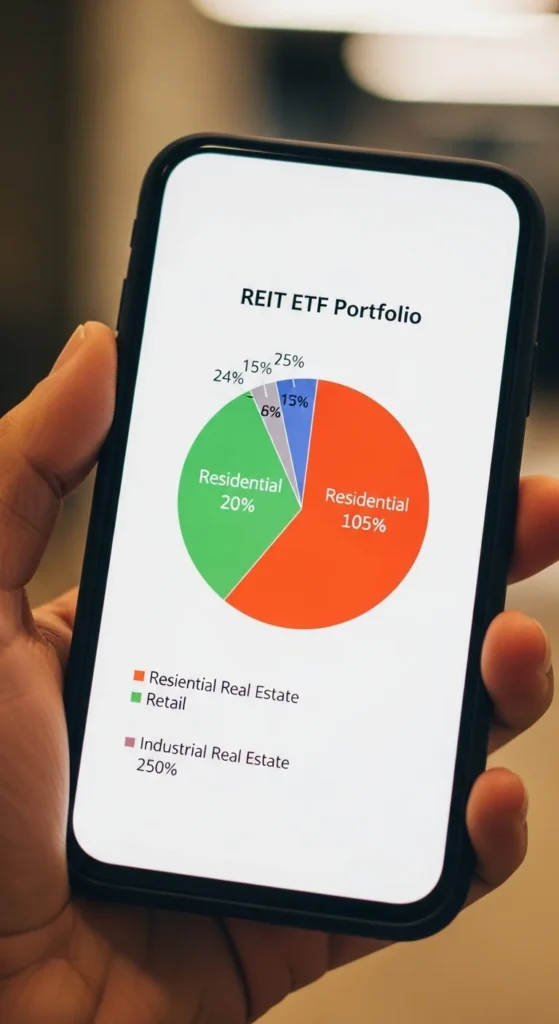
If choosing individual REITs feels overwhelming, REIT ETFs are a simple alternative. These funds hold multiple REITs in one package, giving you instant diversification.
Popular examples include:
- Vanguard Real Estate ETF (VNQ)
- Schwab U.S. REIT ETF (SCHH)
- iShares U.S. Real Estate ETF (IYR)
They’re perfect for beginners who want broad exposure to real estate without picking specific stocks.
Final Takeaway
REITs offer an accessible path to earn passive income through real estate—without buying or managing properties. Whether you invest in a single REIT or a diversified ETF, you can enjoy steady dividends, long-term appreciation, and freedom from landlord headaches.
Start small, stay consistent, and reinvest your earnings. Over time, your REIT portfolio could become a powerful engine for financial independence.

Leave a Reply