

If you’ve ever heard background music in a YouTube video, podcast, or ad, chances are someone got paid for it—and that could be you. Selling stock music online is one of the best ways for musicians, producers, and sound designers to earn passive income. Once you upload your tracks, they can sell over and over again, even while you sleep.

The best part? You don’t need to be famous or sign a record deal. With a bit of creativity, consistency, and smart marketing, you can turn your melodies into money. Let’s explore how to start selling stock music and build a steady income stream.
Step 1: Understand What Stock Music Is
Stock music is royalty-free audio created for businesses, creators, and brands to use in their content. It’s used in:
- YouTube videos
- Ads and promotional reels
- Podcasts and documentaries
- Video games and apps
You create tracks that others can license—meaning they pay you for permission to use your music. It’s a win-win: they save time, and you earn income from your creativity.

Step 2: Pick a Profitable Niche
Before you start composing, identify what kind of music sells best. Stock buyers usually want simple, versatile tracks that blend easily into their projects.
Here are some popular and profitable genres:
- Corporate and motivational – upbeat, positive background music for business videos.
- Cinematic – emotional or dramatic scores for short films and trailers.
- Lo-fi and chill beats – great for vlogs or study channels.
- Ambient soundscapes – calm, atmospheric tracks for meditation or relaxation apps.
- Holiday and seasonal themes – Christmas jingles, spooky Halloween tunes, etc.

Start with what you love to make, but tweak it to fit commercial demand. Listen to what’s trending on major stock music platforms before uploading your own.
Step 3: Create High-Quality Tracks
You don’t need a million-dollar studio—just clear audio, balanced mixing, and creativity. Focus on making clean, loopable, and easy-to-edit compositions.
A few quick tips:
- Use royalty-free samples or record your own sounds.
- Keep your tracks between 1–3 minutes long.
- Avoid lyrics—instrumentals perform better for commercial use.
- Export in WAV or high-bitrate MP3 format.

If you’re new to producing, software like GarageBand, FL Studio, or Ableton Live is beginner-friendly and widely used by stock music creators.
Step 4: Upload to the Right Platforms
Now it’s time to share your tracks with the world. There are plenty of stock music websites that let you upload and sell your songs. Some offer higher payouts but require exclusivity, while others let you list your tracks everywhere.
Top stock music platforms:
- AudioJungle (Envato Market) – One of the largest marketplaces.
- Pond5 – Popular with filmmakers and advertisers.
- PremiumBeat – High-quality curation with premium pricing.
- Motion Array – Subscription-based platform that pays contributors monthly.
- Epidemic Sound – Focused on YouTubers and creators.
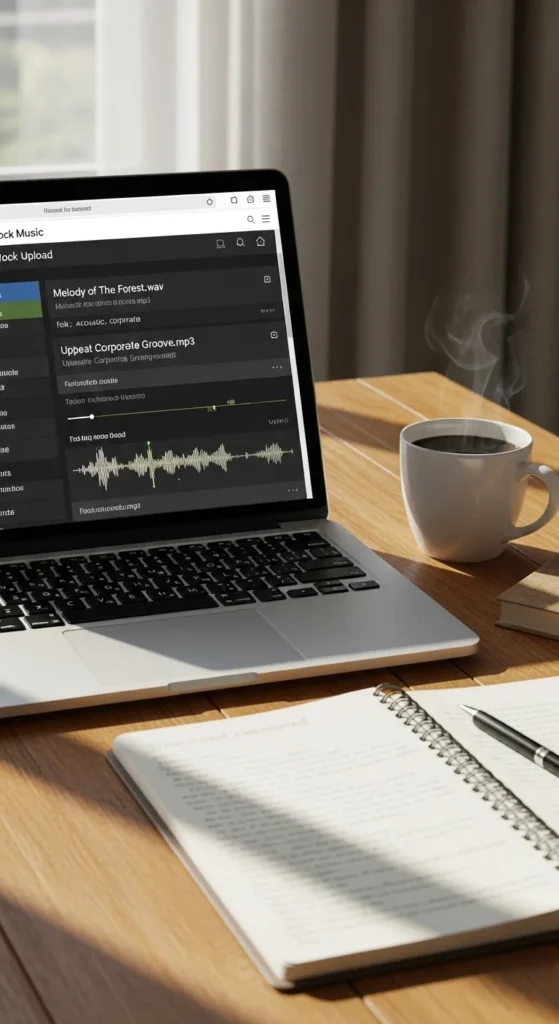
When uploading, be sure to:
- Write clear, keyword-rich titles (“Upbeat Corporate Background Music” sells better than “Track 12”).
- Add tags that describe the mood, genre, and purpose (e.g., “uplifting, motivational, inspiring”).
- Include a short description of how it can be used.
Step 5: Promote Your Music
Uploading your tracks is just the start. To stand out, you need to promote your music like a small business.
Here’s how to drive more sales:
- Build a personal website or portfolio to showcase your catalog.
- Create a YouTube channel sharing previews or behind-the-scenes clips.
- Post short demos on TikTok or Instagram Reels.
- Collaborate with video creators or content editors who need consistent background music.

You can also start building a small email list to notify fans or buyers when you upload new tracks. A little personal branding goes a long way in this creative industry.
Step 6: Reinvest and Scale Up
Once your tracks start selling, don’t stop! The beauty of stock music is that your catalog keeps earning as long as it’s available online.
Reinvest your early earnings into:
- Better microphones or plugins
- Mixing and mastering services
- Licensing visuals for promo videos
- Expanding your catalog into new genres
Consistency is key—the more high-quality tracks you upload, the more potential sales you’ll have across multiple platforms.
Final Takeaway
Selling stock music online is like planting seeds that keep growing. With every track you create, you’re building a digital asset that can earn you passive income for years.
Start simple: create one track this week, upload it, and learn from the process. Over time, your catalog—and your income—will grow.

Leave a Reply