

Have you ever snapped a beautiful photo and thought, “Someone would pay for this”? If yes, then selling stock photos online is a smart way to turn your creativity into passive income. Whether you’re a hobbyist or a professional photographer, your images can earn money for years — even while you sleep.

Let’s break down how to get started, step by step.
Choose Your Niche Wisely
Before uploading hundreds of random photos, take a step back and think about what sells. Stock photo buyers look for images that solve problems — whether it’s for blog posts, ads, websites, or product packaging.
Popular niches include:
- Business & workspaces
- Lifestyle & candid moments
- Travel & landscapes
- Flat lays for social media
- Seasonal themes (e.g., Christmas, summer, weddings)
Look through popular stock platforms and analyze the best-selling photos. Notice composition, lighting, and subject matter. This research gives you a solid foundation.

Create High-Quality, Marketable Images
To stand out in crowded marketplaces, quality is everything. That doesn’t mean you need expensive equipment — but your photos must be:
- Sharp and well-lit
- Free from noise and blur
- Professionally composed with clear subjects
- Edited with natural, balanced colors (avoid over-filtering)
Think like a marketer. Imagine your image on a blog post, magazine cover, or product brochure. Would someone pay to use it?
Pro Tip: Include copy space (empty areas) where designers can place text. This makes your images more versatile and desirable.

Choose the Right Platforms
There are plenty of stock websites where you can upload your work, both free and premium. Some of the most popular options include:
- Shutterstock – Known for huge reach and steady earnings.
- Adobe Stock – Integrates directly with Adobe products, loved by designers.
- iStock / Getty Images – High standards but great payouts for exclusives.
- Alamy – Excellent for editorial and niche images.
- Unsplash / Pexels – Good for exposure, but not ideal for revenue.
Start with 2–3 platforms so you can learn the submission process without feeling overwhelmed. Each site has its own rules for image size, tagging, and categories, so read their guidelines carefully.
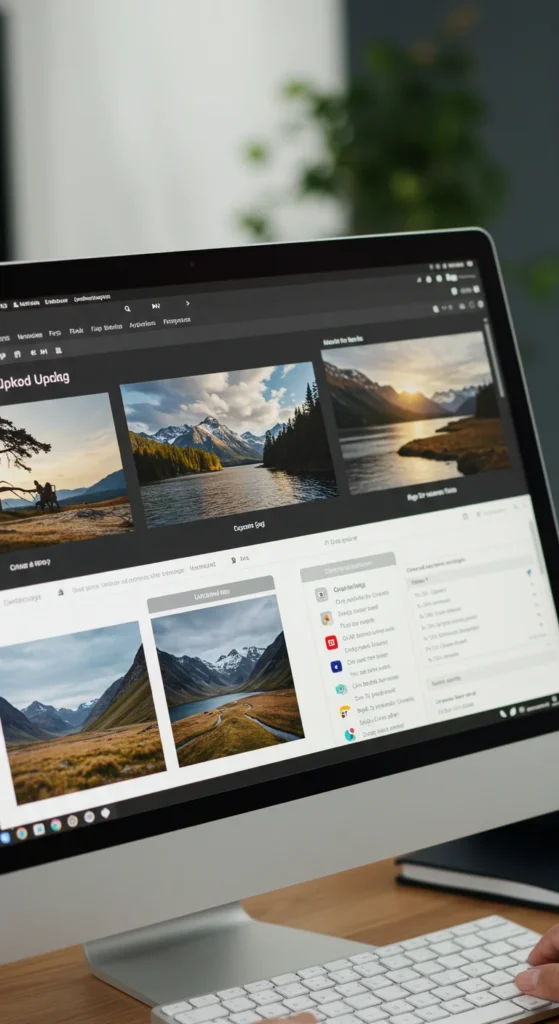
Optimize Your Titles and Tags for SEO
Uploading photos isn’t enough — they need to be discoverable. Use descriptive titles and relevant keywords that buyers might search for.
For example, instead of:
“Photo1.jpg”
Use:
“Woman working on laptop in cozy home office with plants”
Tips for better SEO:
- Use all available tag slots (usually 30–50)
- Add synonyms and related phrases
- Include location or context when relevant
- Avoid keyword stuffing — keep it natural
This step is crucial because search visibility = more downloads = more income.
Be Consistent and Build a Portfolio
Success in stock photography rarely happens overnight. The key is consistency. Regularly upload new images to build a diverse and searchable portfolio.
Consider setting a schedule:
- 10–20 new uploads per week
- Focus on both evergreen content (timeless themes) and seasonal trends
As your portfolio grows, so does your earning potential. Many photographers report that their older images keep earning for years.

Track Your Performance and Adapt
Most platforms provide analytics showing which images are downloaded the most. Pay attention to these insights:
- Which themes are popular?
- Which keywords lead to sales?
- Which styles or angles get more attention?
Use this data to guide your future shoots. If flat lays of home offices perform well, create more variations with different props and angles.
Final Takeaway
Selling stock photos is a realistic way to build passive income, especially if you enjoy photography. With the right strategy — quality content, smart keywords, and consistency — your portfolio can turn into a steady revenue stream.

Leave a Reply