

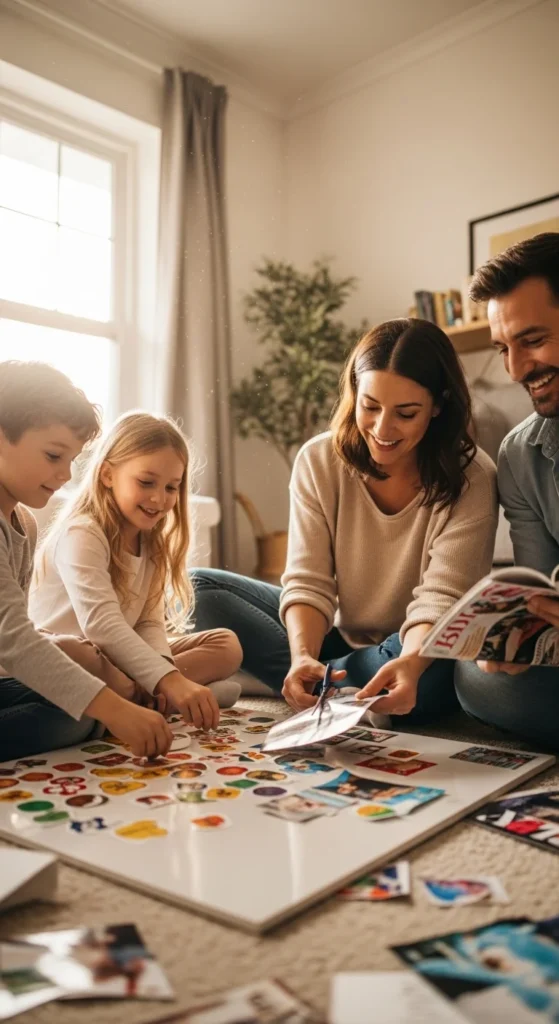
A family vision board gives everyone a shared space to talk about dreams, routines, and future plans. It helps children feel included while giving parents clarity around priorities. Visual goals turn conversations into daily reminders. Whether focused on travel, learning, health, or traditions, a board encourages teamwork and meaningful family time without requiring expensive materials.
1. Dream Vacation Wall
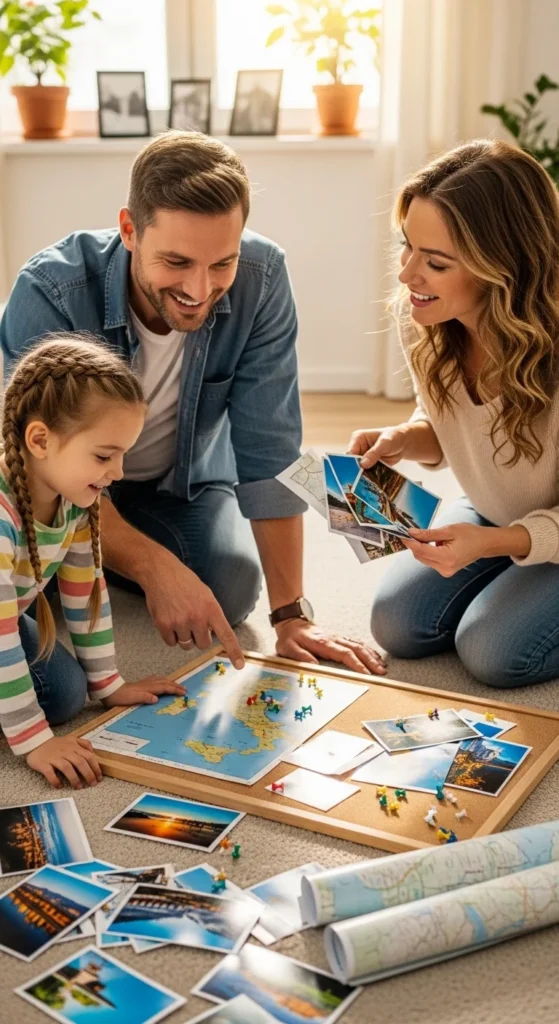
Travel themes excite every age group. Ask each person to choose one destination. Print photos or cut magazine images. Keep the list realistic so plans feel possible.
Add small action notes such as saving coins in a jar or researching activities. Include nearby trips so children see progress sooner.
Display the section where everyone passes daily. Seeing travel visuals keeps excitement alive and encourages planning conversations.
2. Family Values Section
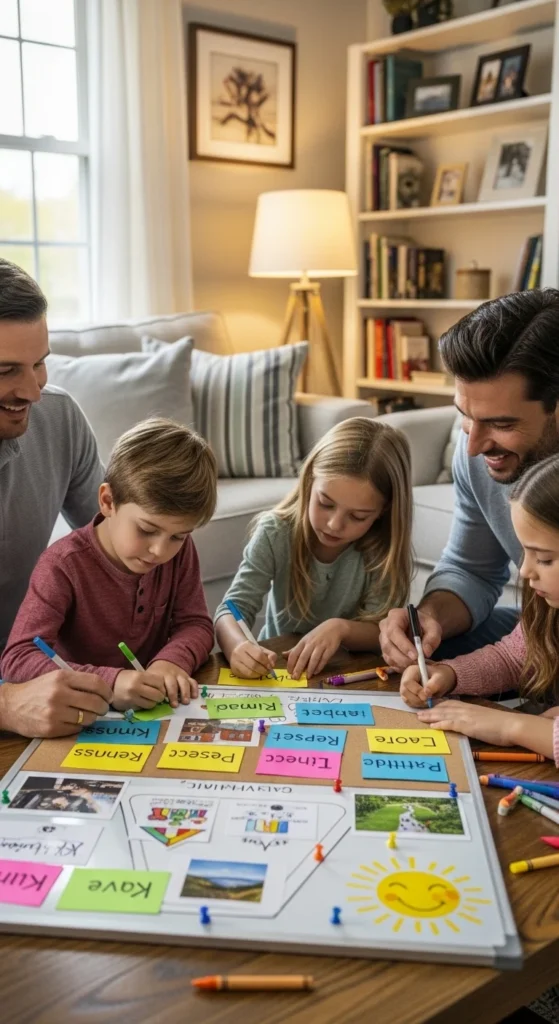
Values guide behavior. Choose a few words like kindness, teamwork, and patience. Let children decorate the cards with drawings or stickers.
Discuss what each value looks like in daily life. This turns abstract ideas into practical actions. Keep this section central so it acts as a reminder.
3. Health & Fitness Goals
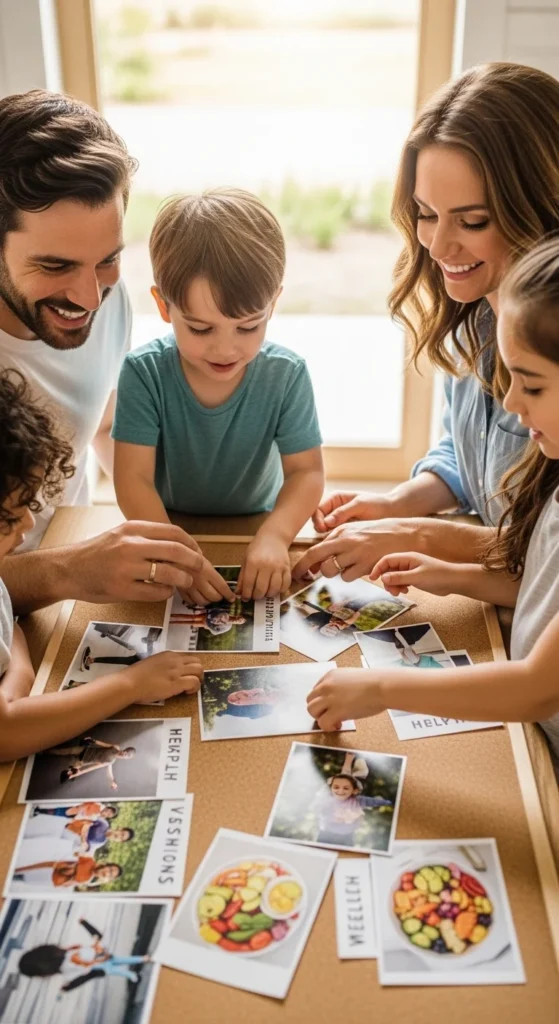
Health visuals encourage shared habits. Add walking goals, sports, or meal ideas. Focus on small routines such as weekend walks.
Children engage more when goals feel fun. Include games, outdoor play, or family challenges. Write simple action notes like “bike ride Sunday.”
4. Savings & Money Goals
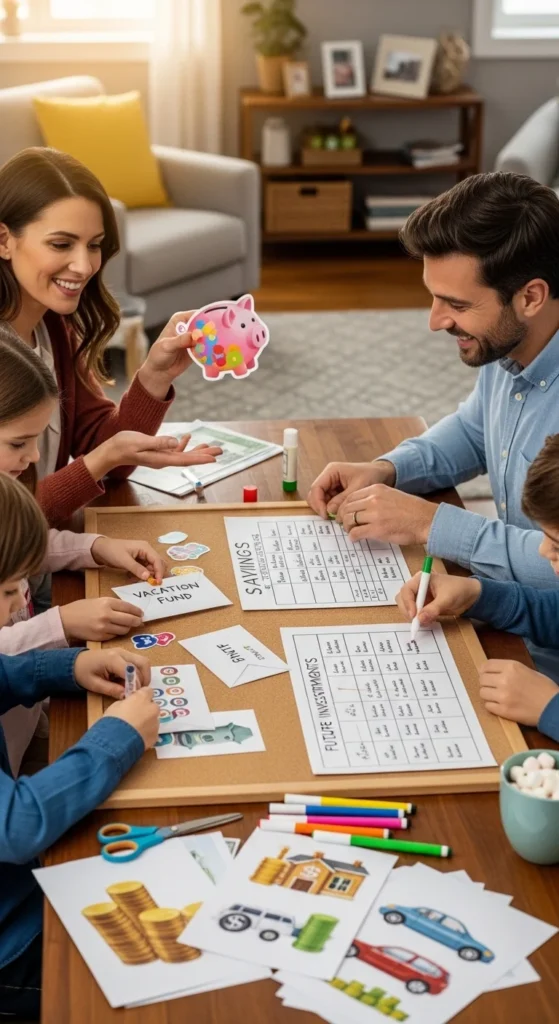
Financial visuals teach teamwork. Add goals like saving for trips, toys, or home upgrades. Use piggy bank drawings or envelopes.
Break goals into small steps. Mark progress visually with stickers. This helps children understand patience and planning.
5. Learning & Education Dreams
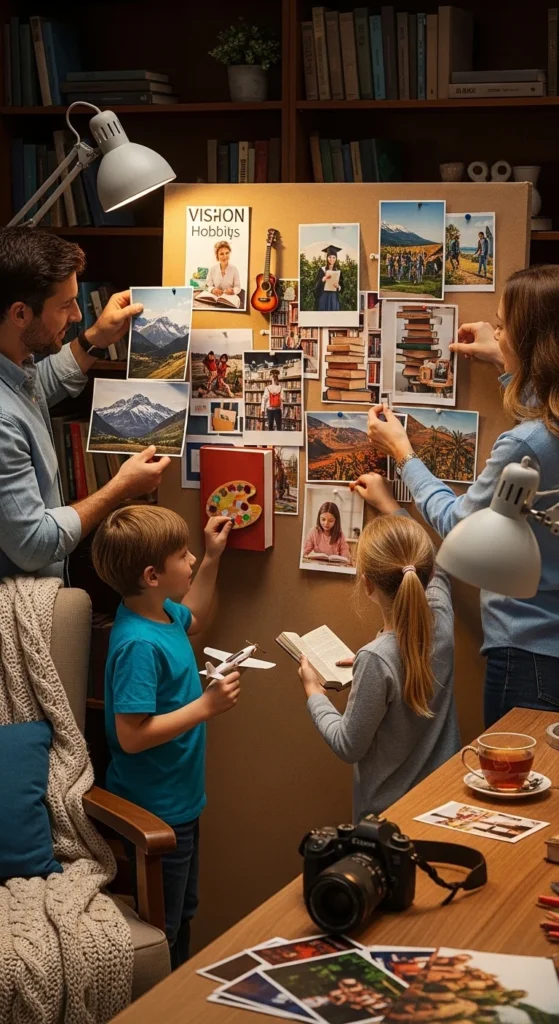
Learning goals support growth. Add books to read, skills to learn, or school milestones. Let each child choose something personal.
Include low-cost ideas such as library visits or online tutorials. This keeps learning accessible and visible.
6. Family Traditions Board
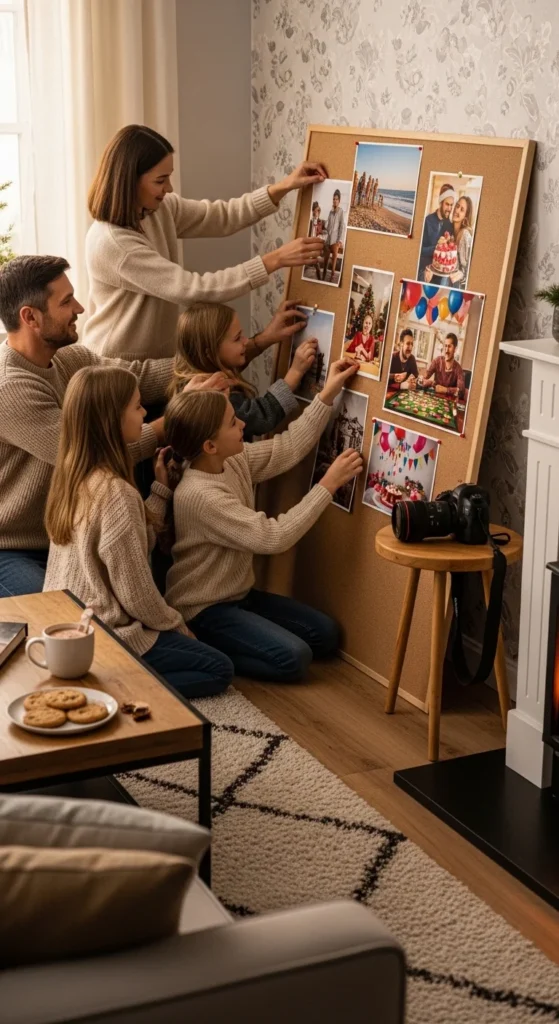
Traditions create stability. Add holiday ideas, birthday rituals, or weekly game nights. Visual reminders make traditions consistent.
Write simple notes such as “movie night Friday.” This supports routine without pressure.
7. Outdoor Adventure Goals
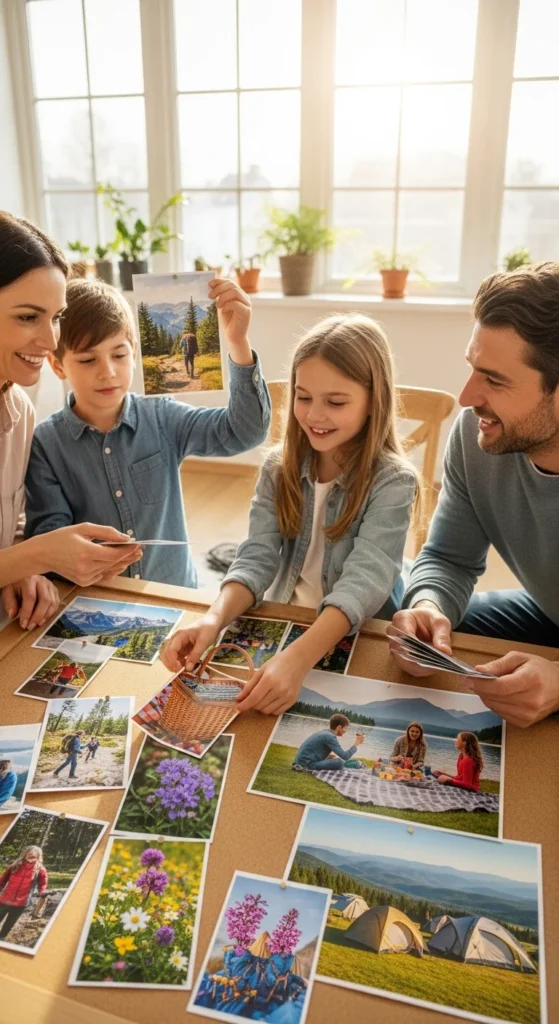
Outdoor goals reduce screen time. Add parks, trails, or seasonal activities. Keep ideas simple like picnics or bike rides.
Children feel excited when adventures feel achievable. Include check marks for completed activities.
8. Gratitude Corner
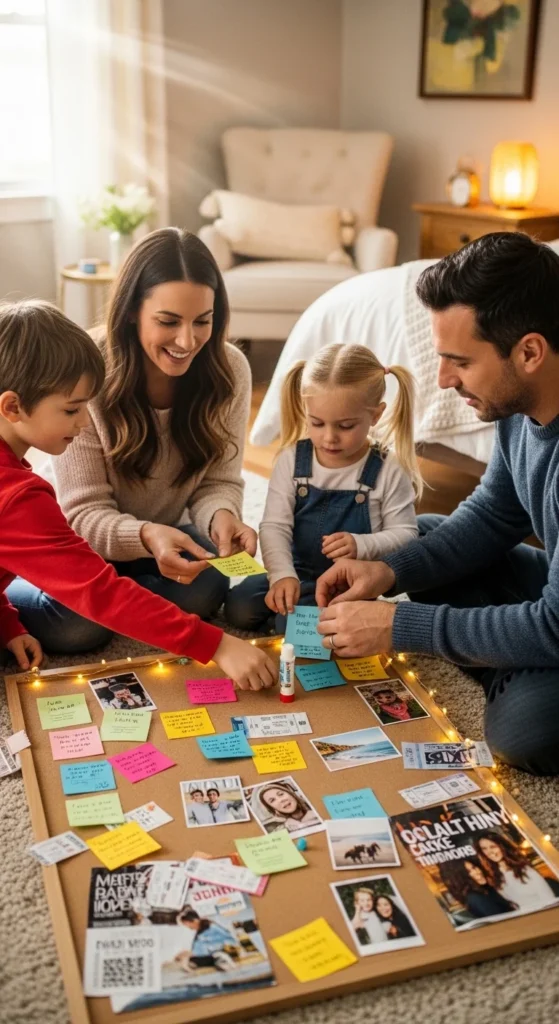
Gratitude encourages positivity. Add small notes about moments you appreciate. Update weekly so the section stays active.
Children can draw pictures instead of writing. This keeps participation inclusive.
9. Home Organization Dreams
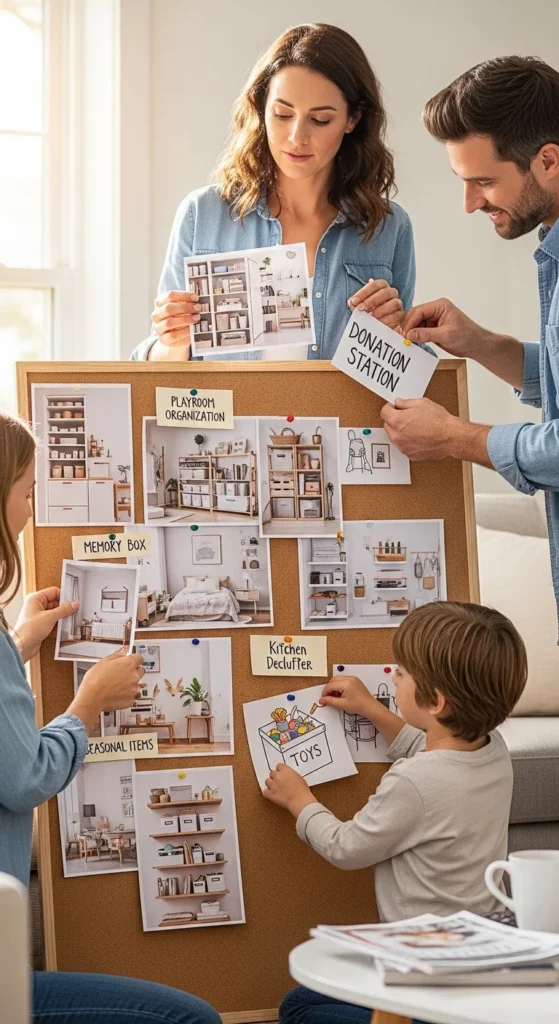
Organization reduces stress. Add ideas like tidy rooms, storage solutions, or chore charts. Choose one small area to work on monthly.
Visual progress helps children stay motivated.
10. Family Routine Visuals
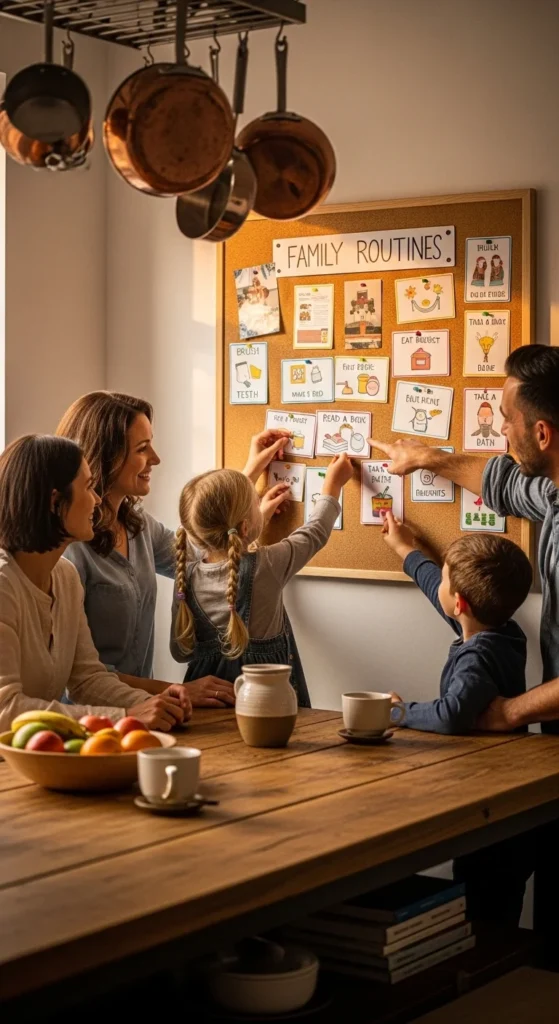
Routine visuals simplify busy schedules. Add morning habits, homework time, or bedtime rituals. Use icons for younger children.
Consistency becomes easier when routines are visible.
11. Community Service Goals
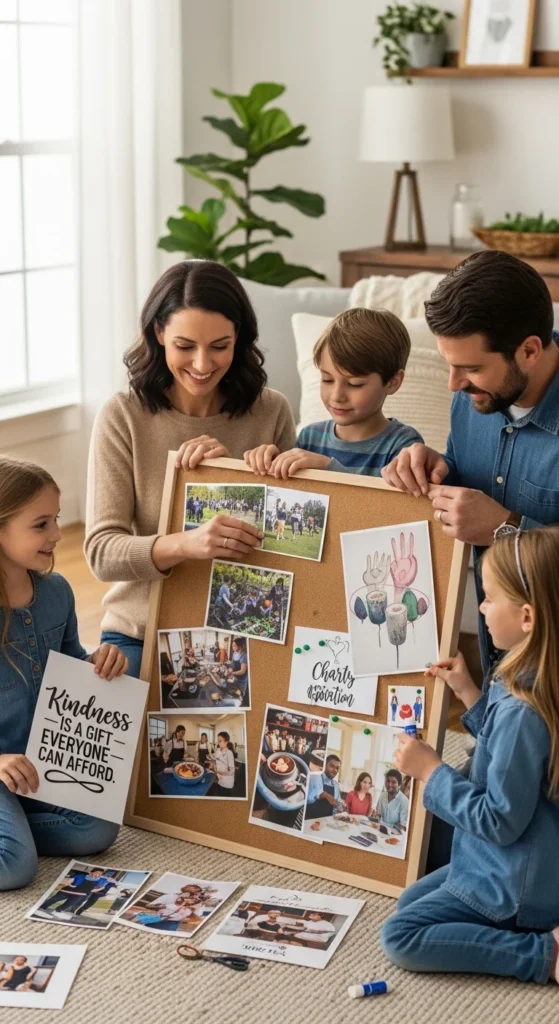
Giving back builds empathy. Add simple volunteer ideas such as donations or neighborhood help. Children learn purpose through action.
12. Creativity & Hobby Section

Hobbies support personal growth. Let each family member add one creative idea. Use low-cost materials for practice.
13. Celebration & Milestones
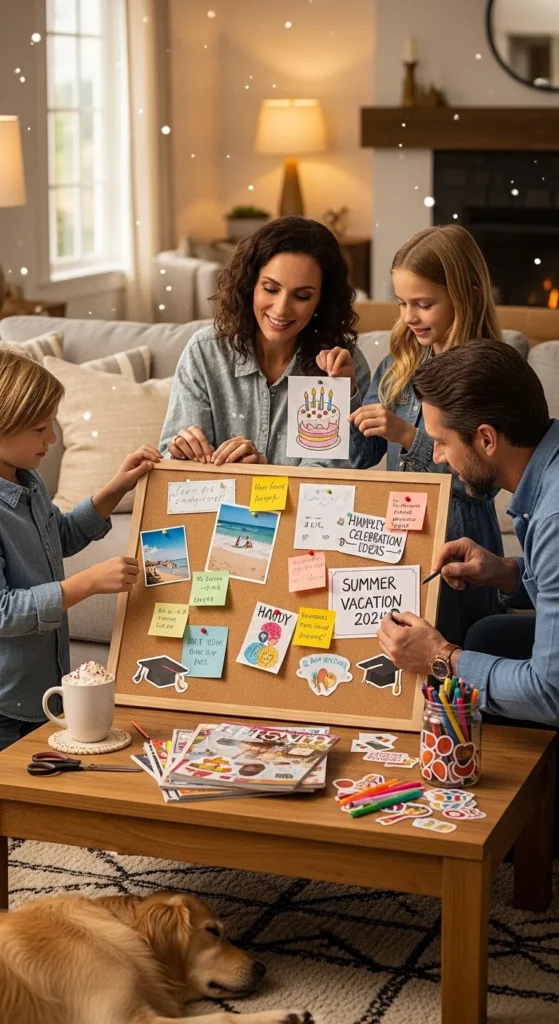
Tracking milestones keeps motivation alive. Add achievements such as school events or personal wins.
Celebrate progress visually.
14. Reading Together Corner
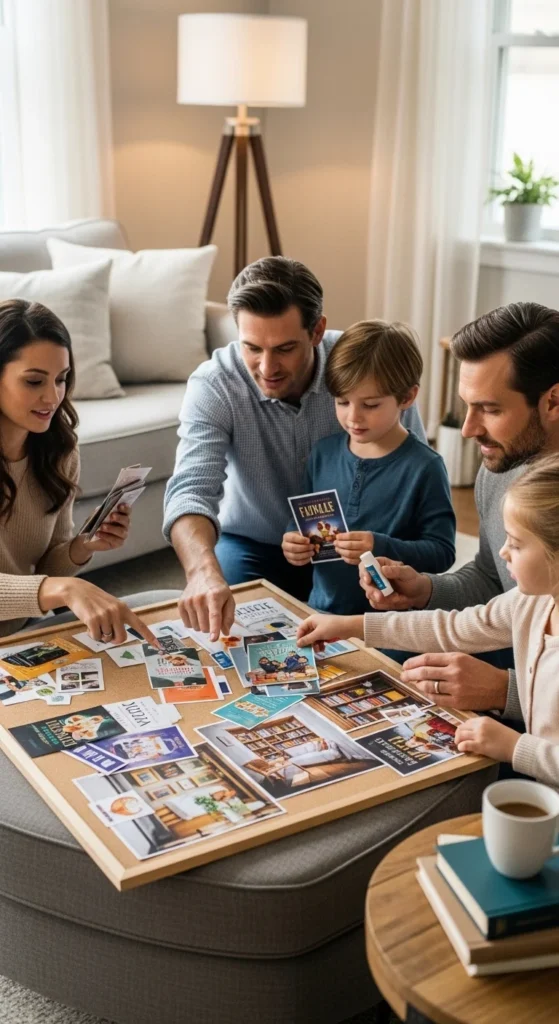
Reading rituals support bonding. Add book lists and cozy reading space ideas. Library visits keep this budget-friendly.
15. Digital Family Vision Board
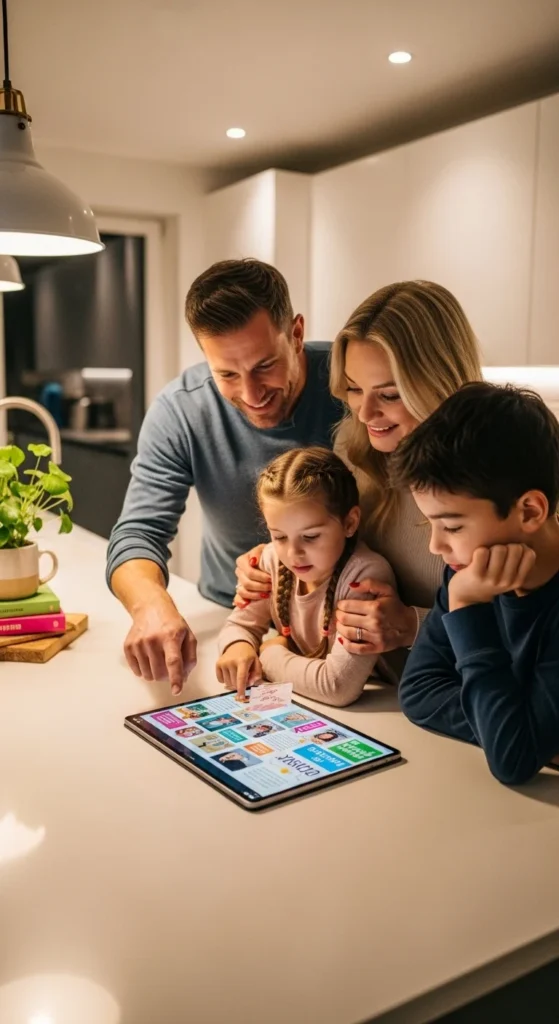
Digital boards help busy families collaborate. Combine physical and digital formats for flexibility.
16. Individual Spotlight Area
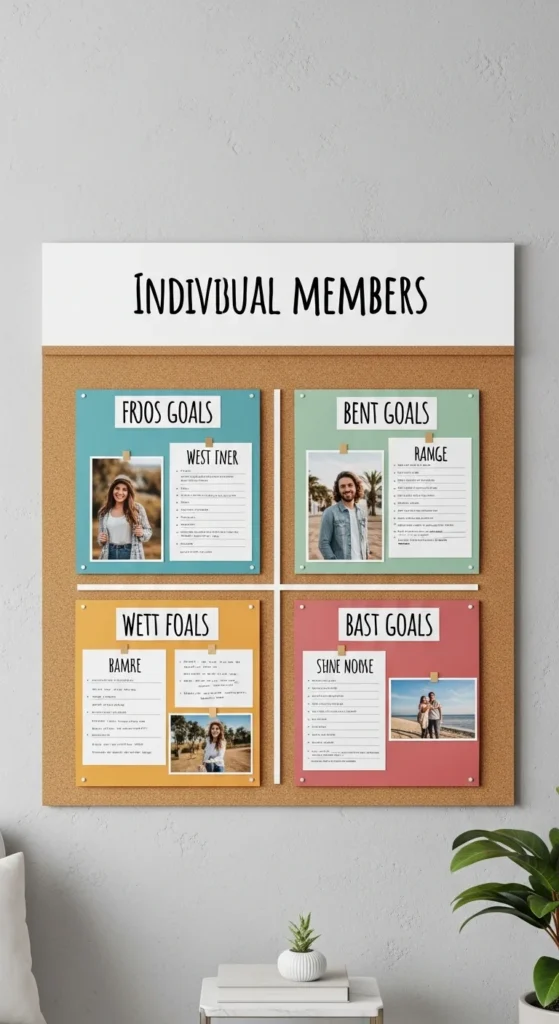
Individual sections help everyone feel included. Each person adds one personal goal.
17. Cooking Together Ideas
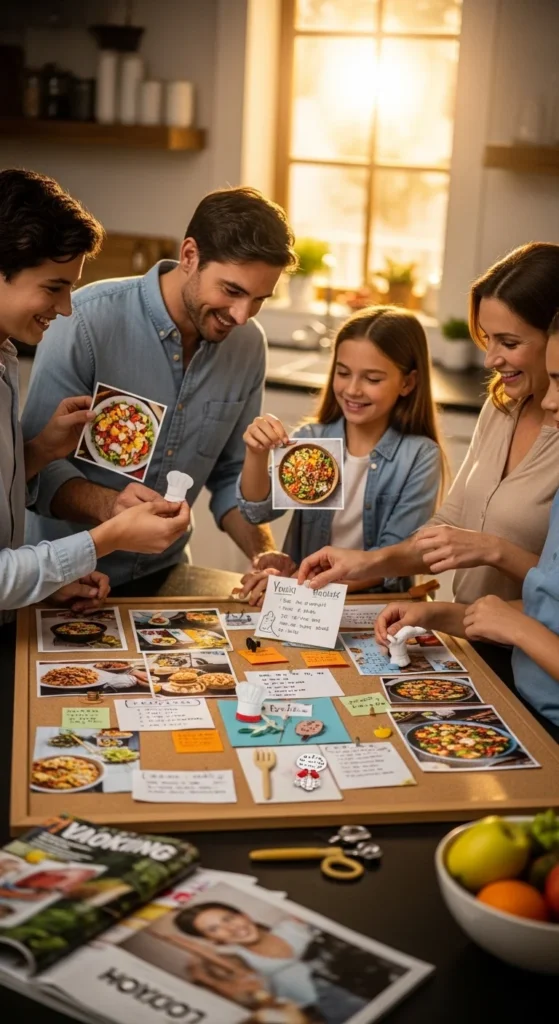
Cooking visuals encourage teamwork. Add recipes, meal themes, or baking days. This supports wellness and bonding.
18. Game Night Planner
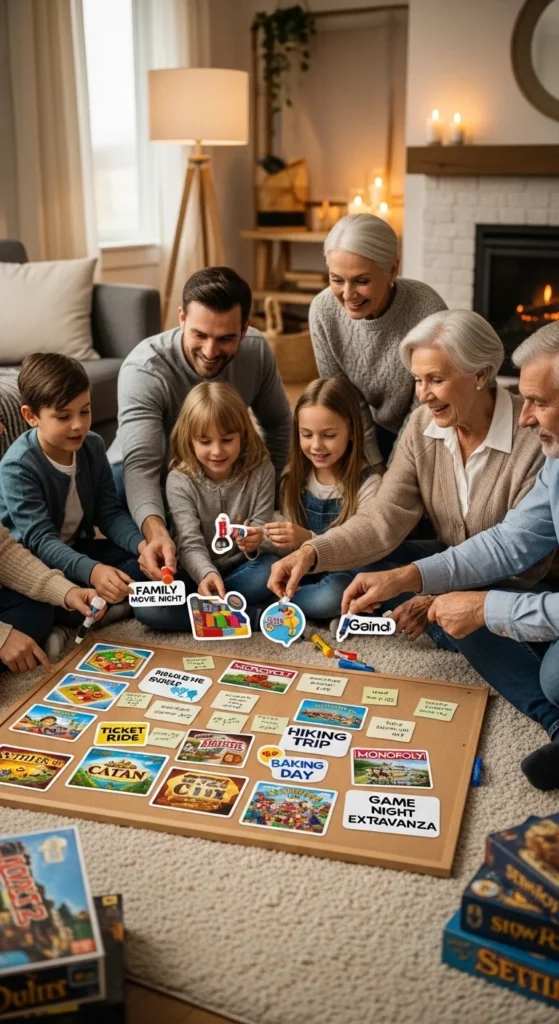
Game nights create connection. Rotate activities weekly to keep excitement.
19. Timeline Goals Map
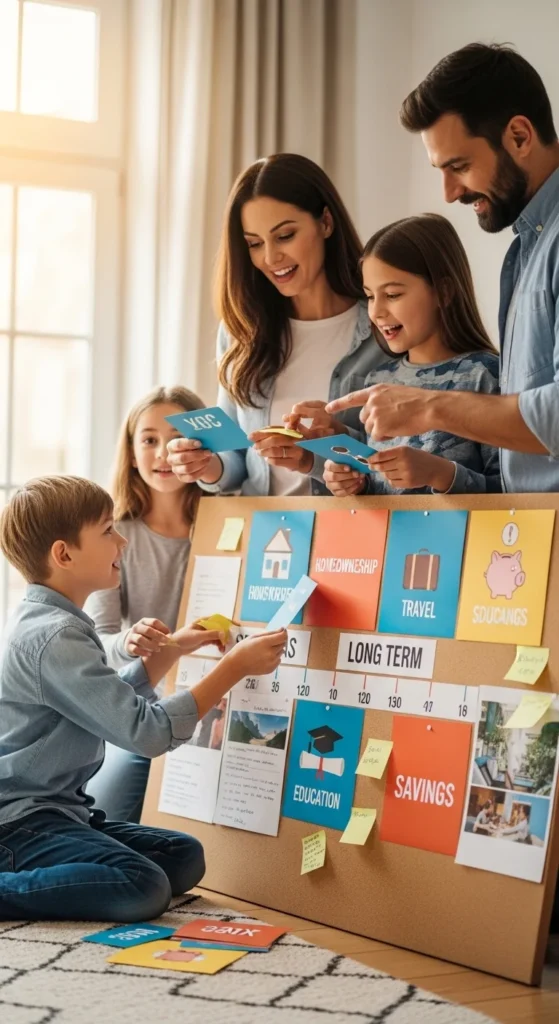
Timeline sections show progress. Use short and long-term areas so goals feel manageable.
20. Kindness Challenge Board
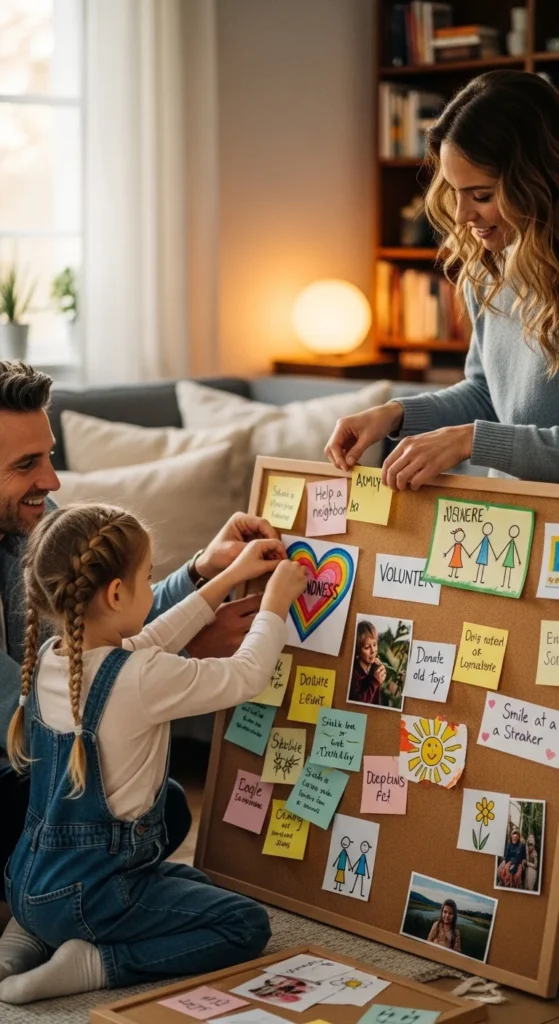
Kindness challenges create positive habits. Add small acts like helping siblings or sharing.
21. Display & Motivation Area
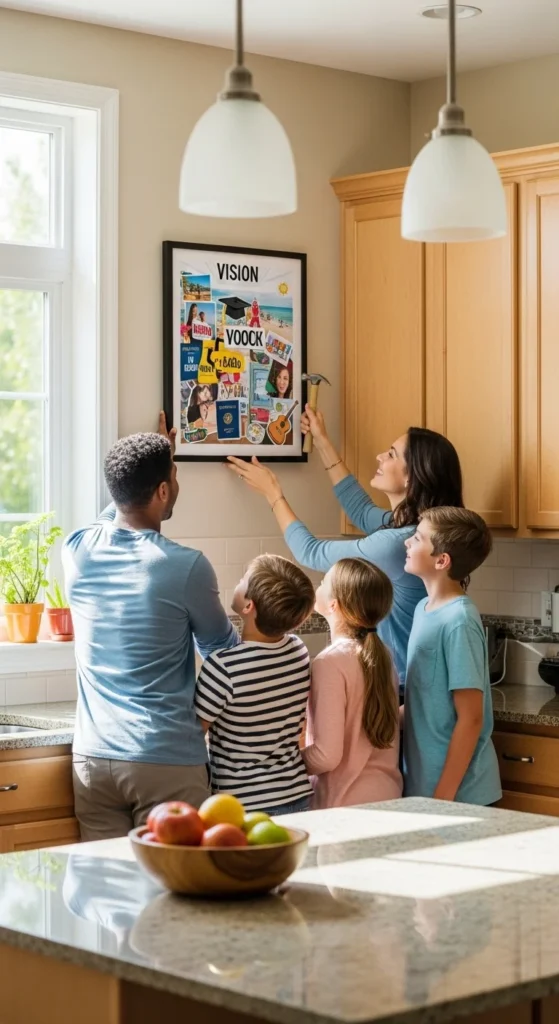
Placement matters. Keep the board visible so it stays relevant.
22. Monthly Review Section
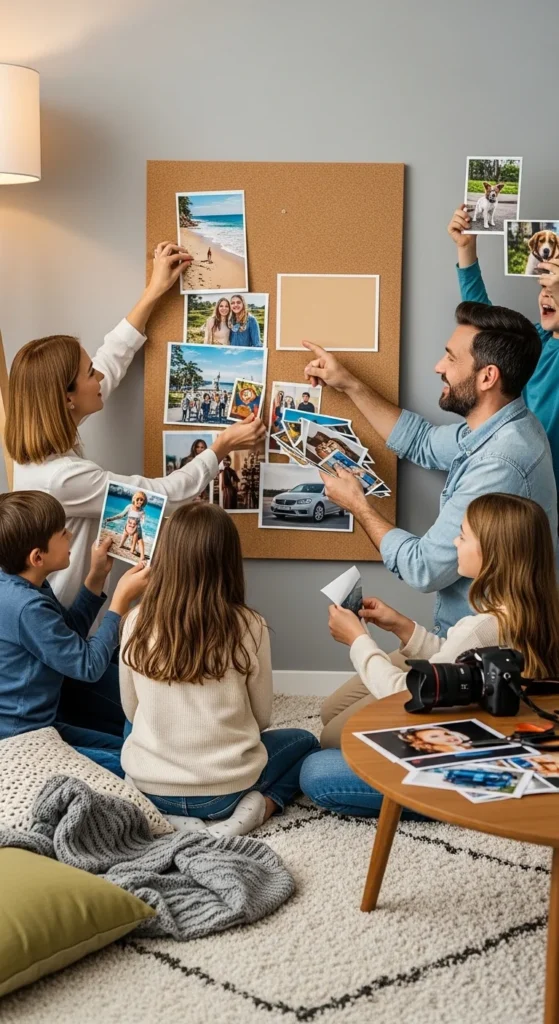
Reviews keep momentum alive. Replace completed goals with new ones.
23. Mental Load Relief Visuals
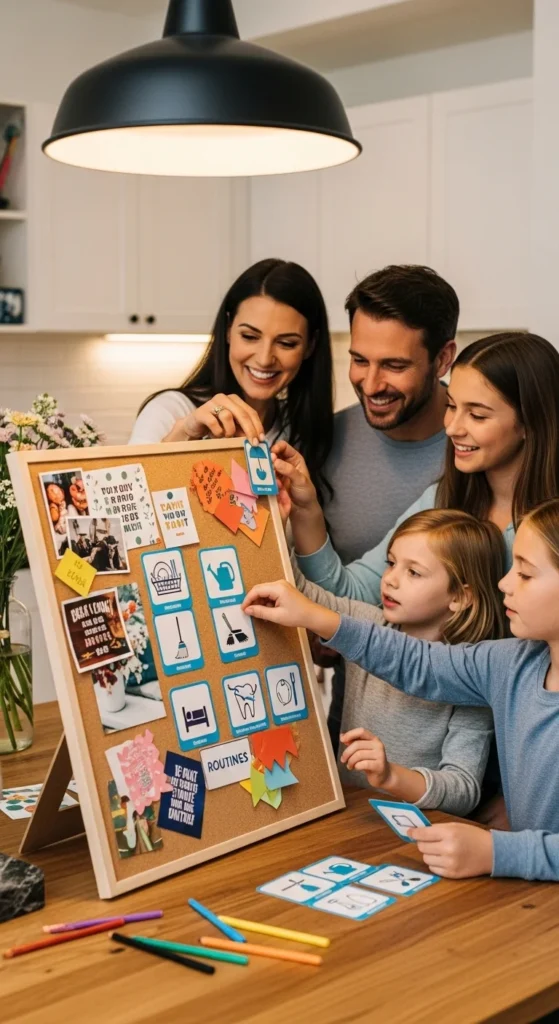
Visual planning reduces stress for parents. Show who does what in simple ways.
24. Seasonal Vision Boards
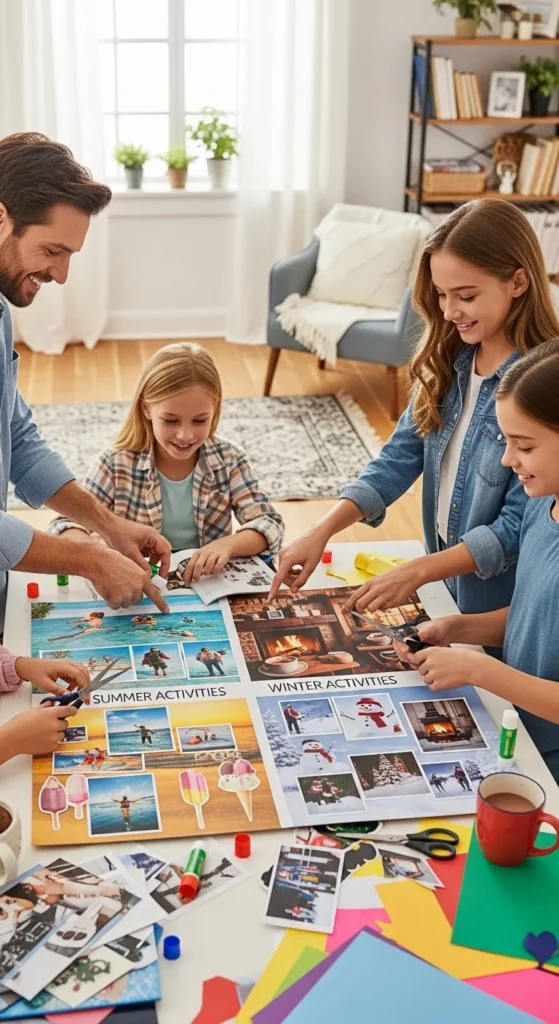
Seasonal boards keep ideas relevant and fun. Rotate themes throughout the year.
25. Annual Family Board Night
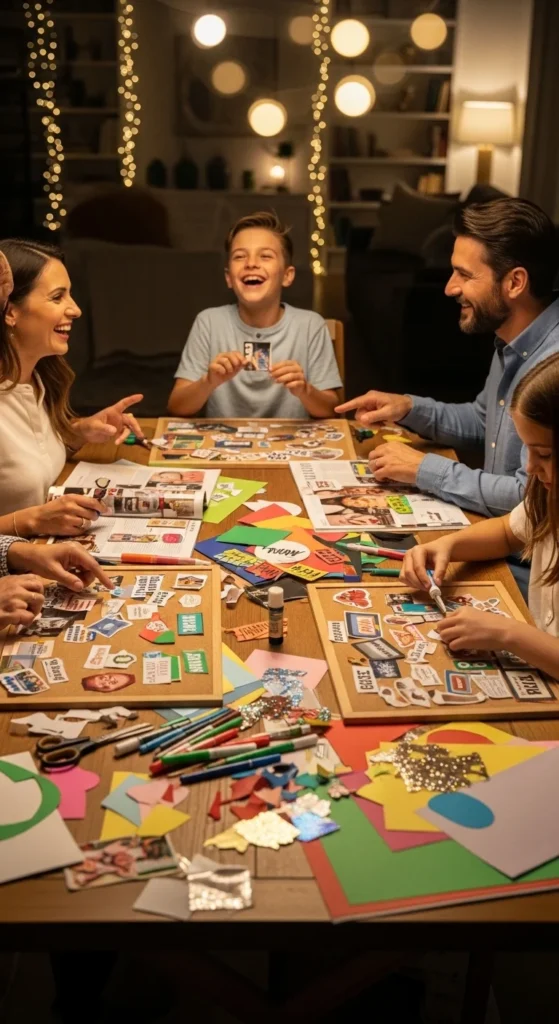
Make board creation a yearly tradition. This builds excitement and reflection.
26. Family Legacy Vision
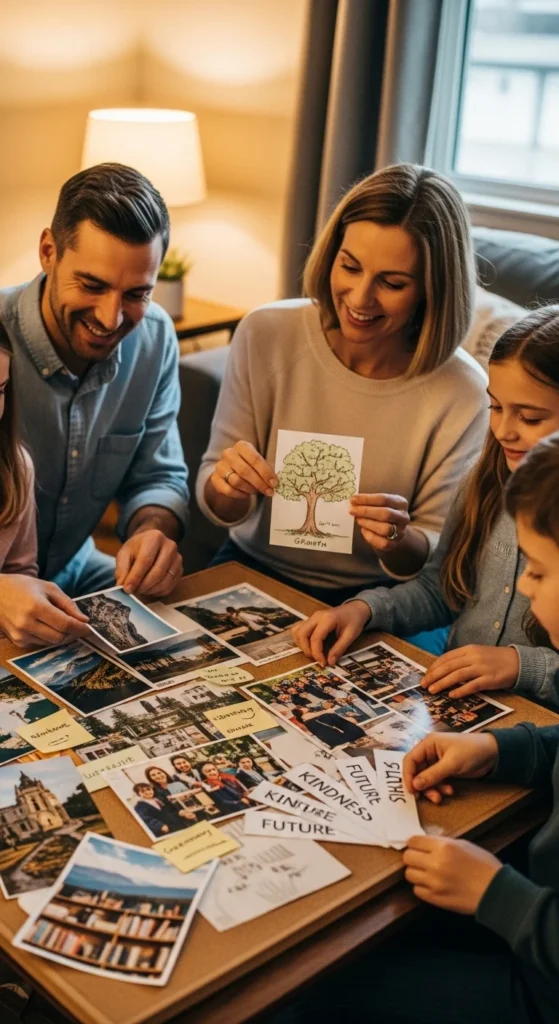
A legacy section reflects long-term meaning. Add values, memories, and impact goals. This creates purpose behind shared direction.
Conclusion
A family vision board creates alignment around shared goals, routines, and experiences. Start simple and let every family member contribute. Use affordable materials and keep the board visible. Review it regularly so ideas evolve. The value comes from the conversations, teamwork, and small actions that happen afterward.

Leave a Reply