

What if you could buy an existing website, make a few smart improvements, and sell it for double—or even triple—the price? Welcome to the world of website flipping, a digital version of house flipping that requires zero physical labor and all the potential of online income.
Whether you’re an SEO pro, a content creator, or just someone curious about online business, flipping websites can be one of the fastest ways to build wealth online—once you know what to look for.
Why Website Flipping Is So Profitable
Think of a website as a digital asset. Just like real estate, it has value based on its traffic, income, and potential for growth.
People are always buying websites that already generate:
- Advertising revenue (from Google AdSense or Mediavine)
- Affiliate commissions
- E-commerce or dropshipping sales
- Subscription income
You can buy a small site, improve its design, SEO, and monetization, then sell it for a nice profit. The beauty? It’s all digital—no inventory, no employees, and no office rent.
Step 1: Find Websites With Profit Potential
The first step is finding undervalued websites—ones that are performing okay but could do much better with a few improvements.
Great places to find them include:
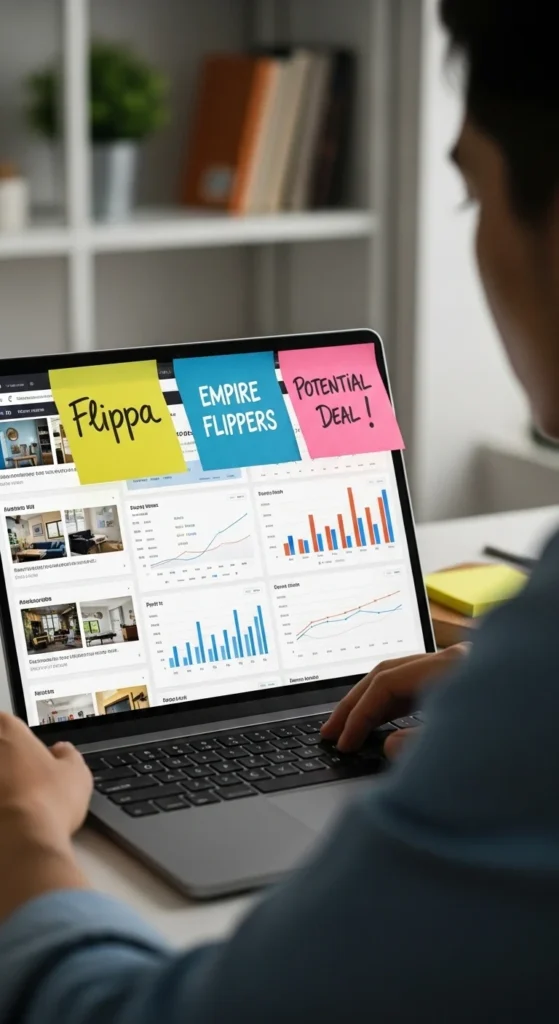
- Flippa.com – Perfect for beginners.
- Empire Flippers – Curated listings with verified income.
- Motion Invest – Affordable starter sites.
- Investors Club – Great for established websites.
When browsing listings, look for:
- Sites with steady traffic but low monetization.
- Sites with good content but weak SEO.
- Businesses that you understand or have experience in.
Example: A blog making $200/month could be earning $800/month with proper keyword optimization and ad placement.
Step 2: Do Your Due Diligence
Before buying any website, take the time to analyze it carefully. You’re looking for hidden strengths—and potential red flags.
Here’s what to check:
- Traffic sources: Ensure most traffic comes from organic search, not paid ads or bots.
- Revenue verification: Request screenshots or access to Google Analytics and income reports.
- Niche stability: Avoid fads or trends that could die out.
- Content quality: Are articles well-written and unique?
- Backlinks: Check for spammy or low-quality links using tools like Ahrefs or SEMrush.
If everything looks solid and the numbers add up, you can negotiate a fair price—usually 20–40x the site’s monthly profit.

Step 3: Improve the Website
This is where the real magic happens—and where you add value.
Focus on a few key improvements that can boost traffic and income quickly:
🔹 Optimize for SEO
- Update old articles with fresh keywords and internal links.
- Add new, high-quality content that targets trending topics.
- Improve site speed, mobile layout, and metadata.
🔹 Increase Monetization
- Add display ads through Google AdSense or Ezoic.
- Promote affiliate products with higher commissions.
- Sell digital downloads, courses, or services.
🔹 Improve Design & User Experience
- Simplify navigation and use clean, modern themes.
- Add strong CTAs (calls-to-action) and better visuals.
- Ensure your site is mobile-friendly and loads fast.
These changes can double or triple your profit within months—making your site far more appealing to future buyers.
Step 4: Track Progress and Prepare to Sell
Once your improvements are live, track your results for 3–6 months. Watch for:
- Growth in organic traffic
- Increased ad revenue or affiliate sales
- Improved user engagement
When your metrics look strong, it’s time to list your website for sale.
Tips for selling:
- Showcase verified income reports and traffic screenshots.
- Write a compelling listing title and summary.
- Be transparent about operations and maintenance.
- Offer to help the buyer with the handover process.
Buyers love turnkey sites that require minimal work. The easier you make the transition, the faster you’ll close the deal.

Step 5: Reinvest and Scale
Once you’ve sold your first site for profit, don’t stop there—reinvest your earnings into buying more sites.
This is how successful flippers build portfolios:
- Buy multiple small websites and improve them simultaneously.
- Hire content writers and virtual assistants to scale faster.
- Diversify across different niches (finance, health, travel, etc.).
Over time, you’ll develop an eye for what works—and start flipping sites faster with higher profits.
Final Takeaway
Flipping websites isn’t about luck—it’s about spotting potential, making smart improvements, and understanding what buyers want.
Start small. Learn the process. Flip one site successfully, then grow from there. Soon, you could be running your own digital flipping empire—right from your laptop.

Leave a Reply