

Ever wondered how websites like Indeed, RemoteOK, or ProBlogger make money just by connecting employers and job seekers? Here’s the secret — they run job boards, and you can too! Whether you’re focused on a niche like remote work, creative jobs, or local gigs, launching a job board can turn into a steady source of passive income once it gains traction.

Why Job Boards Are a Smart Online Business
The job market is massive — and companies are constantly hiring. Instead of competing with big players, you can carve out a niche where your platform becomes the go-to space for specific roles or industries.
Here’s why this business model works:
- Low overhead: Mostly digital tools and hosting costs.
- Evergreen demand: People will always look for jobs.
- Recurring income potential: Through listings, ads, and memberships.
Whether you’re a blogger, a recruiter, or just someone who knows a specific industry well, a job board can become your next digital asset.
Step 1: Choose Your Niche and Target Audience
Instead of trying to serve everyone, focus on a specific audience. The narrower the niche, the easier it is to market and dominate that space.
Some niche ideas:
- Remote tech jobs
- Part-time student jobs
- Creative freelance gigs
- Nonprofit and NGO jobs
- Local jobs in your city or region
By picking a niche, you’ll attract both job seekers and employers who trust your platform to understand their needs.

Step 2: Set Up Your Job Board Platform
You don’t need to code from scratch — there are ready-made tools to launch a professional job board fast.
Popular options include:
- WordPress plugins like WP Job Manager or Jobify theme
- No-code platforms like Niceboard, JobBoard.io, or Airtable integrations
- Custom web apps if you want full control later
Keep your design clean and intuitive. The easier it is for users to post or browse jobs, the faster your platform grows.
Tips for setup:
- Add search filters (location, job type, category)
- Use mobile-friendly design
- Write clear posting instructions for employers

Step 3: Build Traffic and Community
Your job board is only valuable if people visit it. The key is to attract both job seekers and employers through consistent marketing.
Here’s how:
- SEO: Create blog posts like “Best Remote Jobs This Week.”
- Social media: Share featured listings on LinkedIn, Instagram, and X (Twitter).
- Email marketing: Send weekly job digests to subscribers.
- Partnerships: Collaborate with career coaches, universities, or niche blogs.
The more traffic you bring in, the more valuable your board becomes — both for visibility and monetization.

Step 4: Monetize Your Job Board
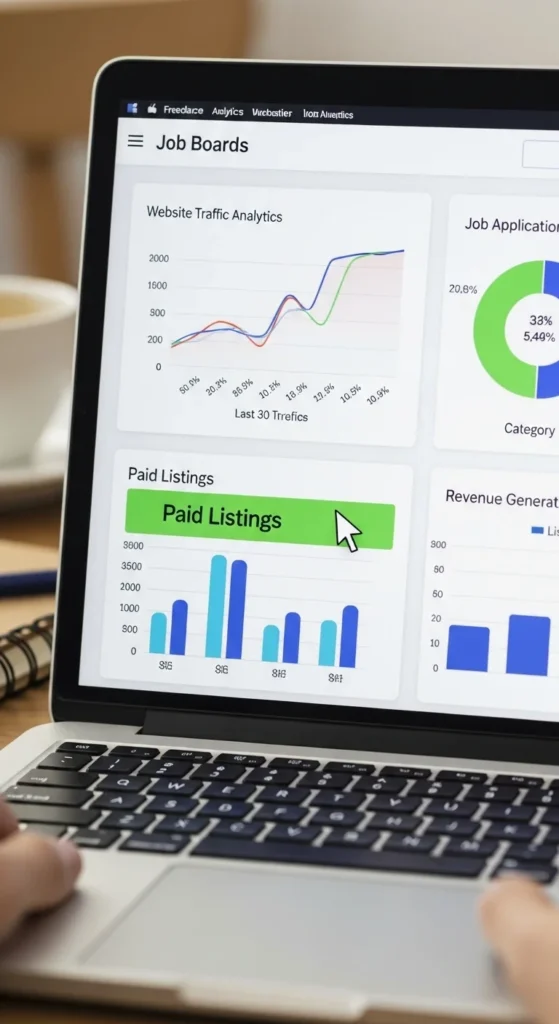
Once you have steady traffic, it’s time to turn it into revenue. There are multiple income streams you can combine:
💼 1. Paid Job Listings
Charge employers a fee to post a job — for example:
- $30 for one listing
- $100 for five listings
- Subscription plans for agencies
📣 2. Featured Listings
Offer premium placement at the top of the page or in newsletters.
🧾 3. Advertising and Sponsorships
Run ads or partner with relevant companies (like resume builders or recruitment tools).
💌 4. Memberships or Access Fees
Charge job seekers for premium access, such as early listings or career resources.
📊 5. Affiliate Partnerships
Recommend related services — like courses or software — and earn commissions.
With multiple streams, your platform can grow into a passive-income machine.
Step 5: Keep It Fresh and Scalable
A stale job board quickly loses credibility. Keep your listings up to date and your design evolving. Regular updates make visitors return again and again.
Ways to keep things fresh:
- Add new job categories as your niche grows.
- Highlight success stories from users who got hired.
- Introduce automated job feeds from partners.
- Offer AI resume scanning or job alerts for engagement.
Eventually, you can scale by hiring moderators, automating listings, or expanding into new industries.

Final Takeaway
Starting a job board is more than a tech project — it’s a way to connect people with opportunities while creating a sustainable business for yourself. Focus on solving a real problem for a specific audience, keep improving your platform, and use smart monetization to grow your income.
With patience, strategy, and a little marketing magic, your job board could become the next niche success story online.

Leave a Reply